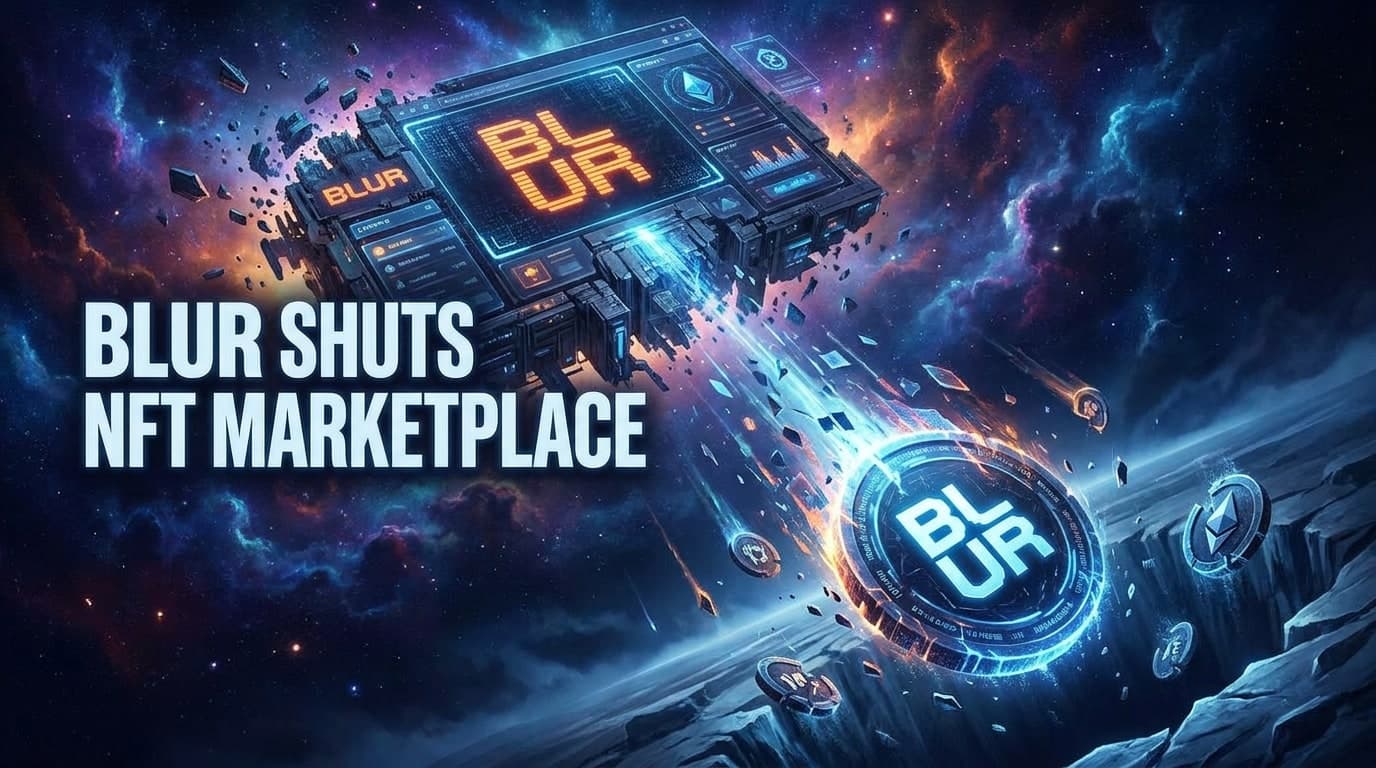
Blur will shut down its NFT marketplace frontend next month, while its underlying protocol stays onchain. The BLUR token fell more than 20% on the news, a sign of how much NFT trading activity has cooled.
What actually happened
The Block reported on 12 October 2026 that Blur, an NFT marketplace, will shut down its frontend next month. The underlying protocol stays onchain, meaning the smart contracts keep running even without the website. Following the news, the BLUR token fell more than 20%, according to The Block. The report gave no exact shutdown date, no specific trading volume numbers, and no statement from Blur's team explaining the decision. It is unclear what happens to active NFT listings, loan positions, or user funds tied to the platform after the frontend goes offline. The Block's headline noted that NFT trading volume has dwindled, without providing specific figures.
How we got here
NFT trading volume has dwindled across the market, according to The Block. Blur built its name as a major NFT marketplace, competing for traders during periods of heavier activity. The decision to shut down the frontend while keeping the protocol onchain separates the website from the underlying smart contracts. Those contracts can continue operating without a company behind the interface. The BLUR token fell more than 20% after the announcement, showing investors read the frontend closure as a signal about the project's direction, not simply a cost cutting move.
Why this matters for you
For BLUR token holders, the 20% drop shows the market views this as weakening confidence, not a routine update. For traders using Blur, losing the frontend next month means finding another way to reach the protocol, possibly through other interfaces or direct contract calls. For builders, the split between frontend and protocol raises questions about how NFT infrastructure survives when trading activity falls. Projects that keep protocols onchain but drop user interfaces may become more common if volumes stay low. Anyone with NFTs listed or loaned through Blur should watch for guidance on accessing funds after the shutdown.
The bigger question
Can an NFT protocol keep functioning without a company maintaining its frontend? Blur's shutdown tests whether decentralized infrastructure survives once the team behind the interface steps back. If the onchain protocol keeps processing trades and loans without a website, it could change how builders think about frontends. If activity stalls instead, it would suggest interfaces matter more than code for keeping a market alive.
What to watch
Blur's frontend is expected to close in November 2026, based on The Block reporting from 12 October 2026. No exact shutdown date has been given. Watch for official guidance on accessing the onchain protocol afterward, and whether the BLUR token stabilizes following its more than 20% drop.