










Vitalik Buterin told a Shanghai summit that Ethereum's zero-knowledge and privacy tools have moved from long-term roadmap talk into actual code. Two new EIPs, FOCIL and EIP-8288, are now targeted for an upcoming fork. Anyone building or holding on Ethereum should care because this changes how transactions get included and verified.
What actually happened
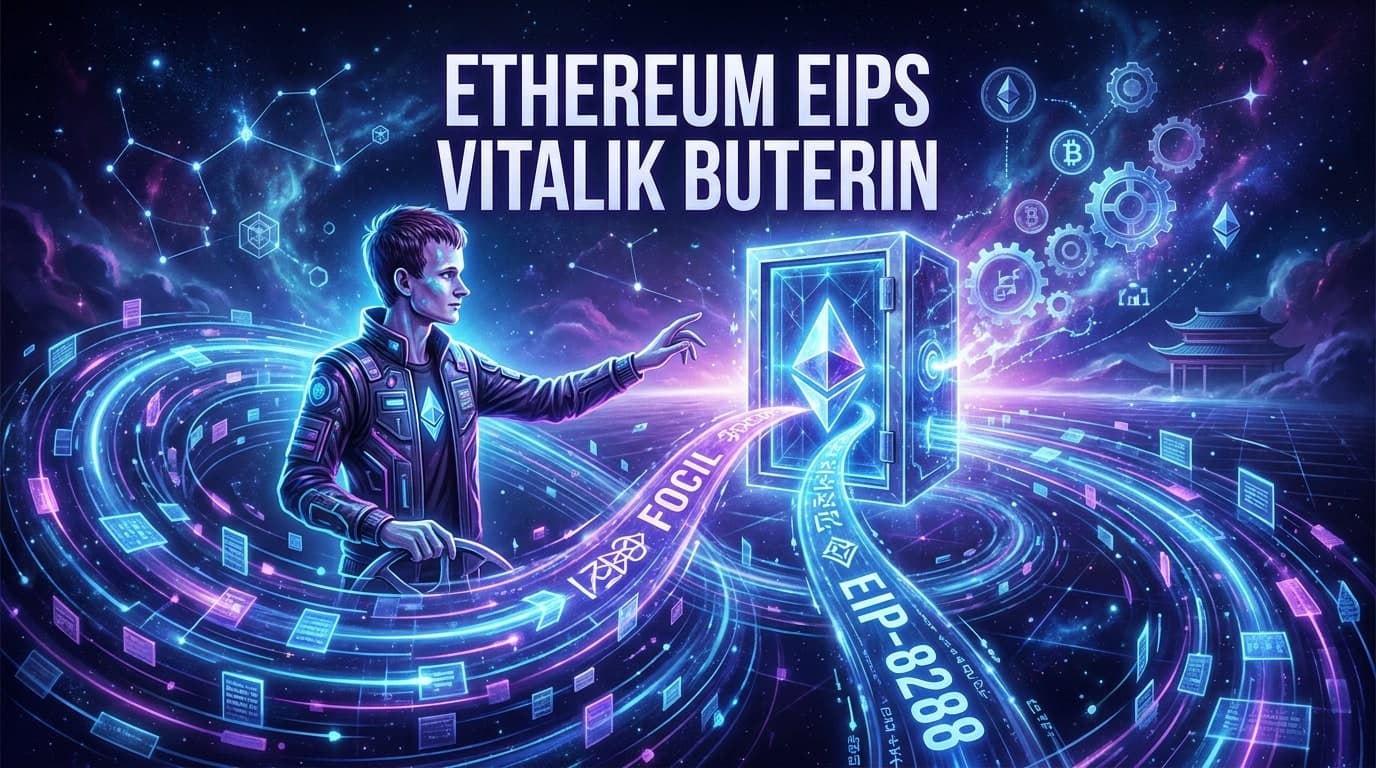
Speaking at the 12th Global Blockchain Summit in Shanghai on 24 September 2026, Ethereum co-founder Vitalik Buterin said plans to move Ethereum toward zero-knowledge proofs and programmable cryptography are 'no longer part of the far-future roadmap. They are now EIPs,' according to Wu Blockchain. He named EIP-8288, which verifies large batches of proofs off-chain before they reach a block, and FOCIL, which uses 16 inclusion-list creators plus one final builder per slot. Both target the H-Star fork, which he estimated is 'maybe two years' away, possibly sooner with AI assistance. He quoted Zcash creator Zooko's line that public blockchains are 'like Twitter for your bank account' to explain the push for stronger privacy. ETH traded at $2,692, up +0.80% over 24 hours, with a range of $2,662 to $2,740 and $15.88 billion in volume, per CoinGecko.
How we got here
Ethereum's roadmap has discussed zero-knowledge proofs as a distant goal for years. This year the ecosystem paired that theoretical work with real institutional demand. The Defiant reported a draft proposal for confidential real-world-asset tokens that keeps amounts private while preserving issuer enforcement, the kind of control regulated institutions ask for. Around the same time, Aave V4 on Base began accepting tokenized Apple, Nvidia, and Tesla shares as collateral for USDC loans, and ARK launched a tokenized venture fund on Ethereum with a $500 minimum through Securitize. Layer-2 activity moved too: Arbitrum replaced its Timeboost auction with per-transaction priority auctions, sending 97% of proceeds to its DAO treasury.
Why this matters for you
For builders, EIP-8288 and FOCIL give a concrete target instead of a vague promise, meaning wallets and rollups can start designing around guaranteed transaction inclusion and cheaper proof verification. For institutions, the confidential RWA draft and ARK's fund show compliant, permissioned products can sit directly on Ethereum rather than on separate private chains. For everyday holders, none of this changes portfolio math today, but it signals that privacy-preserving finance and tokenized collateral are becoming normal Ethereum use cases, not side experiments. Arbitrum's new fee model also matters for anyone using its apps, since treasury funding now depends on transaction-level auctions rather than time-based bidding.
The bigger question
Vitalik describes programmable cryptography as a way to let Ethereum decide who can see what, not just who can send what. If that succeeds, does it make permissioned, compliance-heavy assets feel more at home on a public chain, or does it quietly turn public blockchains into something closer to the private networks they were built to replace? That tension will shape Ethereum's next two years of protocol work.
What to watch
The H-Star fork carrying EIP-8288 and FOCIL is expected in roughly two years, per Buterin's Shanghai remarks, with the Straw Map roadmap at strawmap.org outlining what follows. Arbitrum's per-transaction priority auctions are already live. ARK's tokenized venture fund accepts subscriptions through Securitize now, with buybacks limited to quarterly offers. Ethereum's confidential RWA compliance draft has not been finalized. Bonuz readers tracking Ethereum's institutional pipeline should watch for further RWA and L2 fee developments.
This article is information, not financial advice. Prices are a snapshot and change constantly. Nothing here is a recommendation to buy or sell any asset. Do your own research.