












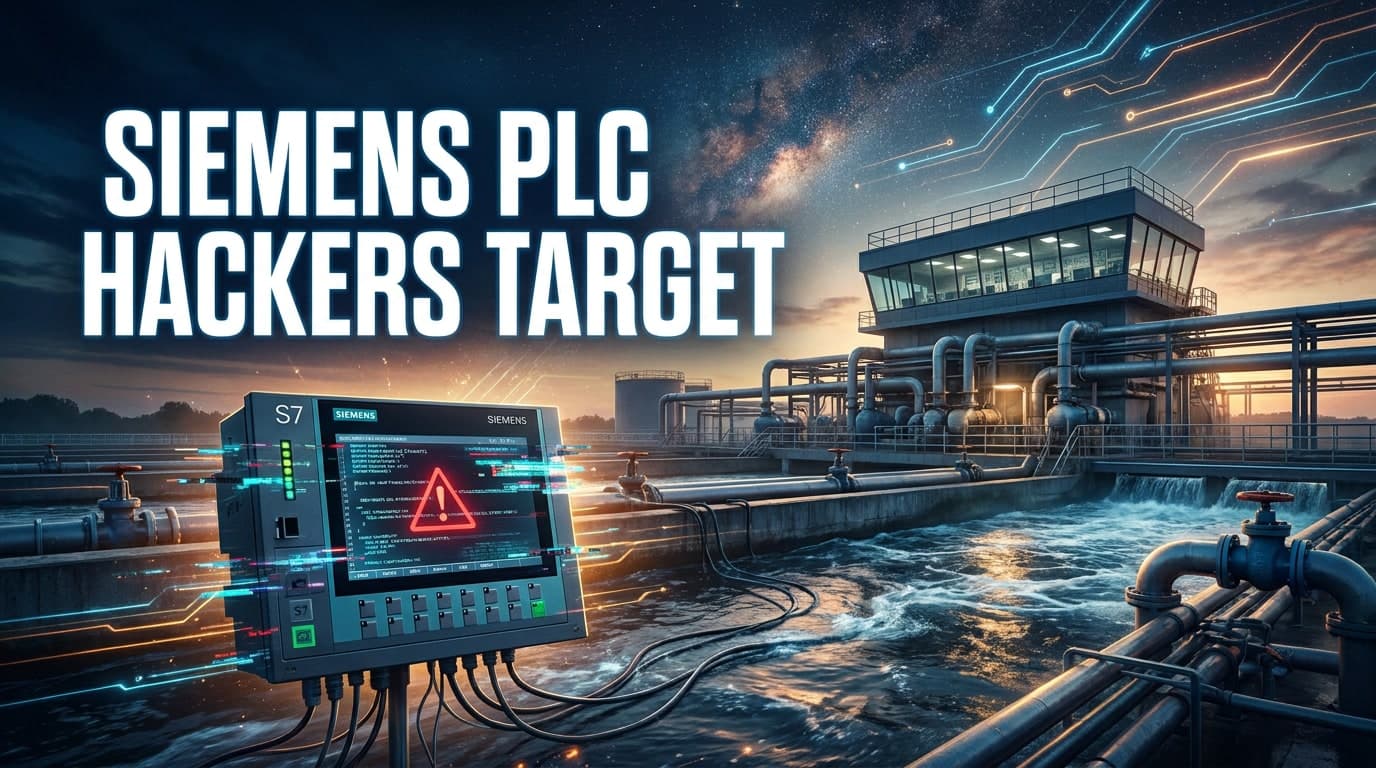
US authorities say hackers are targeting Siemens S7 programmable logic controllers used in water systems and other critical infrastructure. This matters because a successful attack could disrupt essential services, cause safety incidents, or damage equipment that people rely on daily.
What actually happened
US agencies say Siemens S7 PLCs, widely deployed across water treatment and other industrial facilities, are being actively targeted by threat actors, according to Tom's Hardware. Authorities claim attackers are using AI tools to generate exploitation scripts against these controllers. Potential consequences include disruption of industrial processes, safety incidents, downtime, and equipment damage, the report states. US agencies are advising operators to keep the systems updated with the latest patches. They also recommend disconnecting controllers from the internet where possible, to reduce exposure to remote attacks. The report does not name specific victims, attack dates, or the identity of the threat actors involved.
How we got here
Industrial control systems have been high-value targets for years, since early attacks on programmable logic controllers proved that software intrusions can cause physical damage. Siemens S7 controllers are among the most widely deployed PLCs in water treatment plants and other infrastructure, according to Tom's Hardware. The report ties the current warning to a broader trend. Attackers increasingly use AI tools to speed up exploit development against specialized industrial hardware, which once required rare, manual expertise to target effectively.
Why this matters for you
For utility operators, this warning is a call to patch Siemens S7 systems immediately and audit network exposure. For plant engineers, isolating controllers from the public internet reduces attack surface but may complicate remote monitoring. For hardware and cybersecurity builders, the report signals rising demand for tools that detect anomalous PLC behavior and AI-assisted exploit patterns. For everyday users, the risk is indirect. Disruptions to water or power systems could affect service reliability. Anyone building or investing in industrial IoT and OT security should treat AI-assisted attacks as a design requirement, not an afterthought.
The bigger question
If AI tools can now generate working exploits against decades-old industrial hardware, how should the balance shift between modernizing legacy infrastructure and defending what already exists? Utilities face a hard choice. Spend years replacing embedded systems built for durability, not security, or invest heavily in monitoring and isolation instead. As AI lowers the technical bar for attackers, the timeline for that decision keeps shrinking.
What to watch
No specific patch release date or advisory number was included in the report. Operators should watch for formal guidance from US cybersecurity agencies and any Siemens security advisories in the coming weeks. A confirmed incident affecting a water utility would likely trigger wider regulatory scrutiny of industrial control system security.