
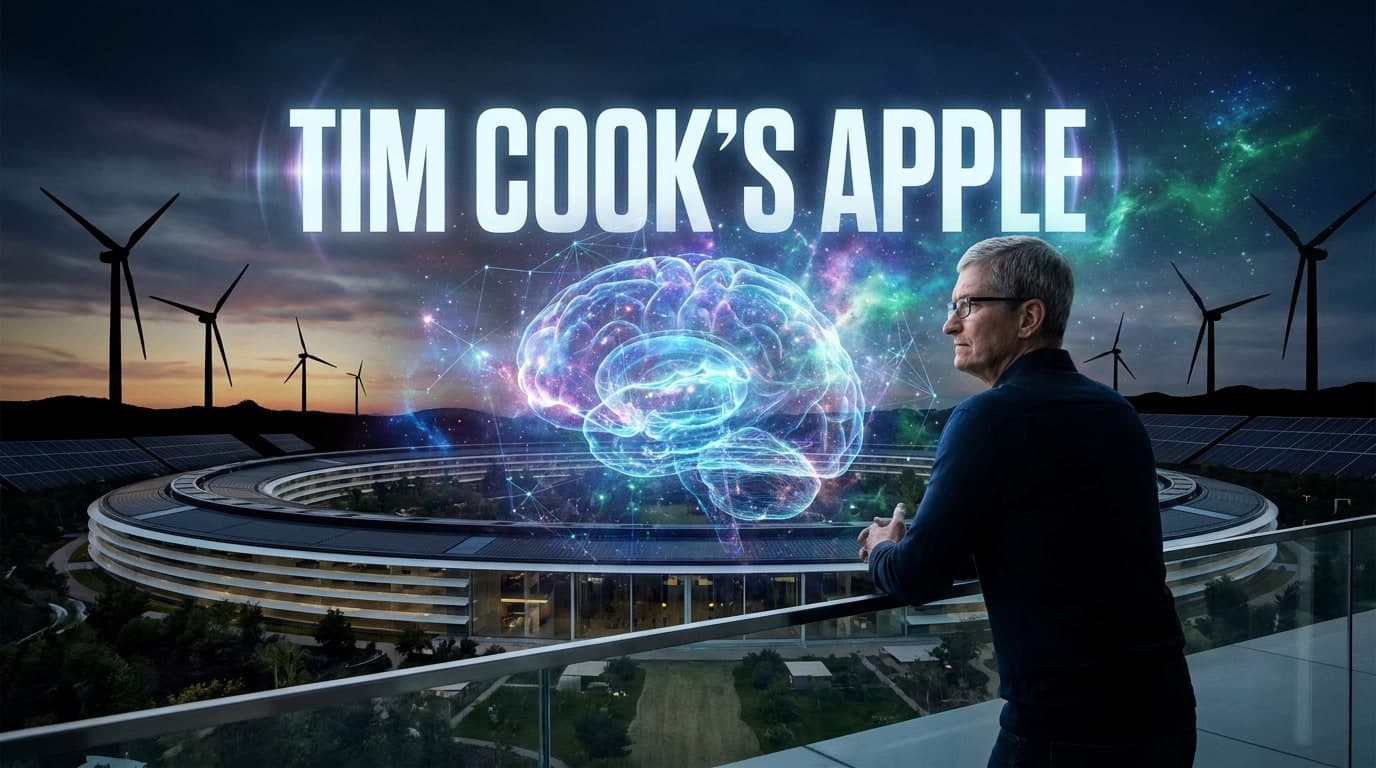
Tim Cook stepped down as Apple CEO on 1 September 2026, ending a tenure that left Apple with one of tech's stronger climate records. Now, as Apple races to catch up in AI, that record faces its toughest test yet, environmental groups warn.
What actually happened
Apple's latest environmental report shows the company emitted 15.3 million metric tons of gross carbon dioxide in 2025, roughly equal to pollution from 40 gas-fired power plants running for a year, according to The Verge. In 2020, Apple pledged to cut emissions 75 percent by 2030, compared to 2015 levels. It has reached 60 percent so far. Emissions fell every year since 2021, then flatlined between 2024 and 2025, holding constant from 2024 even in a year of significant business growth, Apple said. Rachel Kitchin, senior campaign manager at Stand.earth, said Cook 'may have chosen the right time to leave,' since 'the picture is comparatively rosy' now, but warned future choices could change that.
How we got here
Apple set itself apart from rivals under Cook. A 2023 Stand.earth report found Apple was the only major tech company, among Dell, Google, HP, Microsoft and Nvidia, with a 100 percent renewable electricity target for suppliers. In 2025, Greenpeace East Asia gave Apple a B+ for its supply chain renewable energy push. Meanwhile, Google's and Microsoft's emissions have grown as generative AI expands data center use. Apple has also faced setbacks, including a 2023 carbon neutral claim on select Apple Watch models that drew a lawsuit, later dismissed, and criticism after it stopped requiring suppliers to disclose emissions publicly.
Why this matters for you
For Apple users, the company's climate commitments have shaped product design, including longer-lasting devices and recycled materials, choices Cook argued made economic sense. For suppliers in Taiwan and South Korea, Greenpeace's Avex Li says Apple needs more direct investment in renewable capacity as chip demand grows. For investors, Apple's ability to keep emissions flat while expanding AI computing will signal whether its sustainability strategy scales, or starts resembling Google and Microsoft, whose emissions climbed sharply. New CEO John Ternus inherits this balancing act just as Apple accelerates its AI buildout.
The bigger question
Can any major tech company grow AI computing power without abandoning its climate targets? Apple held emissions flat through 2025, but Google and Microsoft did not, as data center and chip demand surged. Greenpeace's Avex Li says Apple's next moves, on renewable investment, transparency and product lifespan, will determine whether Cook's climate legacy survives the AI era or becomes another casualty of the industry's race for computing power.
What to watch
Apple's 2030 target of a 75 percent emissions cut, versus 2015 levels, remains five years away. New CEO John Ternus has already teased a huge product launch for next week, an early signal of how AI features will shape Apple's hardware roadmap. Whether that roadmap includes new efficiency commitments, or simply more compute, will show how much weight AI carries in Apple's climate math. Bonuz will track Apple's next environmental disclosures as AI hardware, including future smart glasses, scales up.