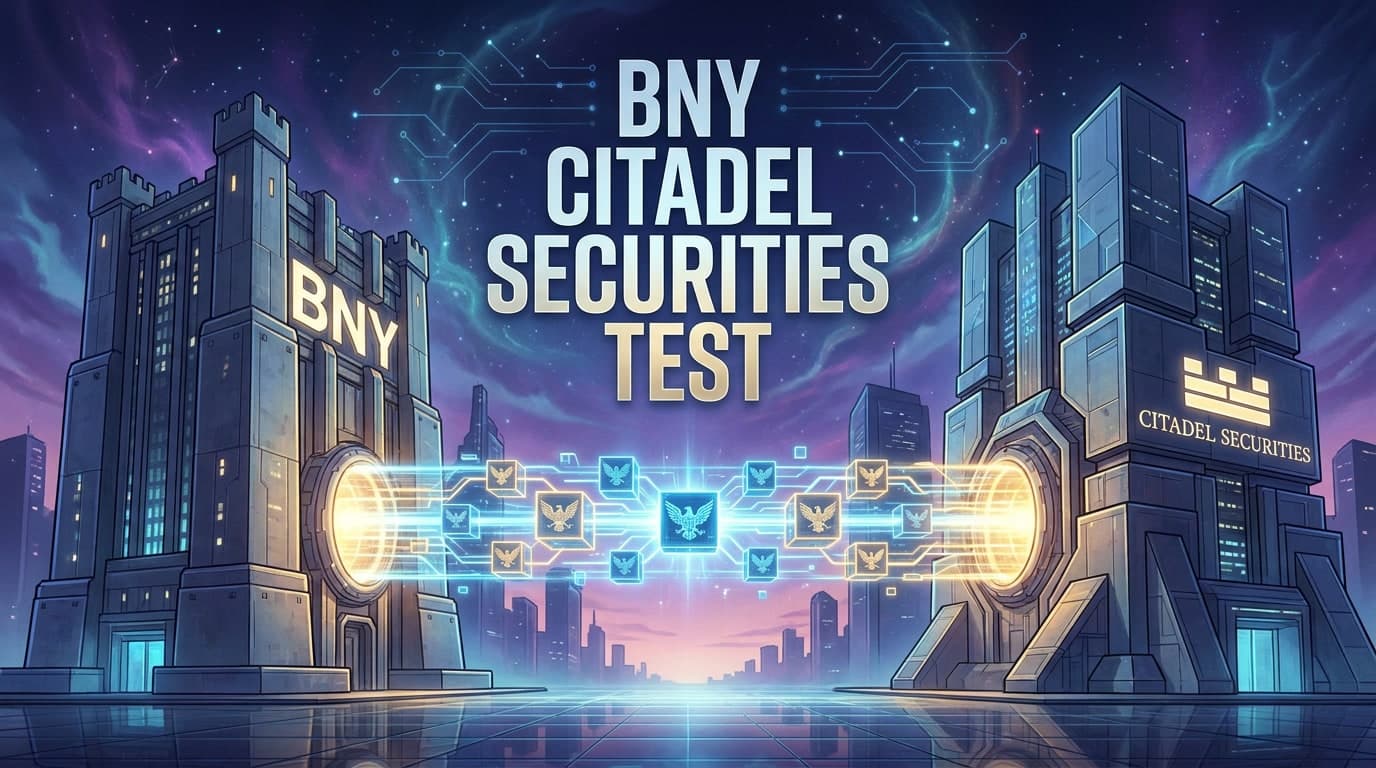
BNY and Citadel Securities tested moving tokenized U.S. Treasuries as collateral between settlement and financing systems. The trial explores whether blockchain can speed up how trading firms post government bonds to back short-term loans. This matters because faster collateral movement could lower costs and risk across Wall Street's financing markets.
What actually happened
According to CoinDesk, BNY and Citadel Securities completed a transaction testing tokenized U.S. Treasuries as collateral. The report states the deal demonstrates how blockchain-based government bonds could help trading firms move collateral faster between settlement and financing stages. CoinDesk's report does not include the transaction size, the exact date of the test, or direct quotes from BNY or Citadel Securities. No regulatory filing, press release, or joint statement is cited alongside the report. The report frames this as a test case, not a live production rollout. Details on which blockchain network or token standard was used are not specified in the source material.
How we got here
Treasury collateral normally settles through traditional clearing systems that separate settlement from financing steps. The CoinDesk report says BNY and Citadel Securities' test targets exactly that gap, using blockchain to represent Treasuries as tokens that can move faster between those steps. Wall Street firms have shown growing interest in moving traditional assets onto blockchain rails in recent years, though this report does not detail earlier pilots by BNY or Citadel Securities specifically. The source material does not state when tokenization of Treasuries first began, or which earlier projects preceded this test. This leaves open how this effort compares to past attempts industry-wide.
Why this matters for you
For holders of tokenized assets, this test signals institutional infrastructure is moving closer to using blockchain for everyday settlement tasks, not just trading. For builders in crypto and Web3, it shows established finance giants like BNY and Citadel Securities see tokenized Treasuries as practical tools, not just experiments. This could open paths for more blockchain-based collateral products if the test succeeds. For everyday users, faster collateral movement between settlement and financing could someday lower costs embedded in financial products that touch their investments. However, the source material gives no timeline for wider rollout or public access to this system.
The bigger question
If tokenized Treasuries can move faster between settlement and financing, how much of Wall Street's existing infrastructure will banks eventually choose to replace, rather than simply layer blockchain on top of old systems? The answer could decide whether tokenization becomes a core upgrade to global finance, or stays a parallel system reserved only for select transactions between large institutions today.
What to watch
CoinDesk published this report on 13 October 2026. No further dates, regulatory decisions, or rollout milestones were included in the source material. Watch for any follow-up statements from BNY or Citadel Securities confirming scale or timeline. Bonuz will track how institutional tokenization pilots like this one intersect with broader digital asset infrastructure relevant to everyday crypto users.