













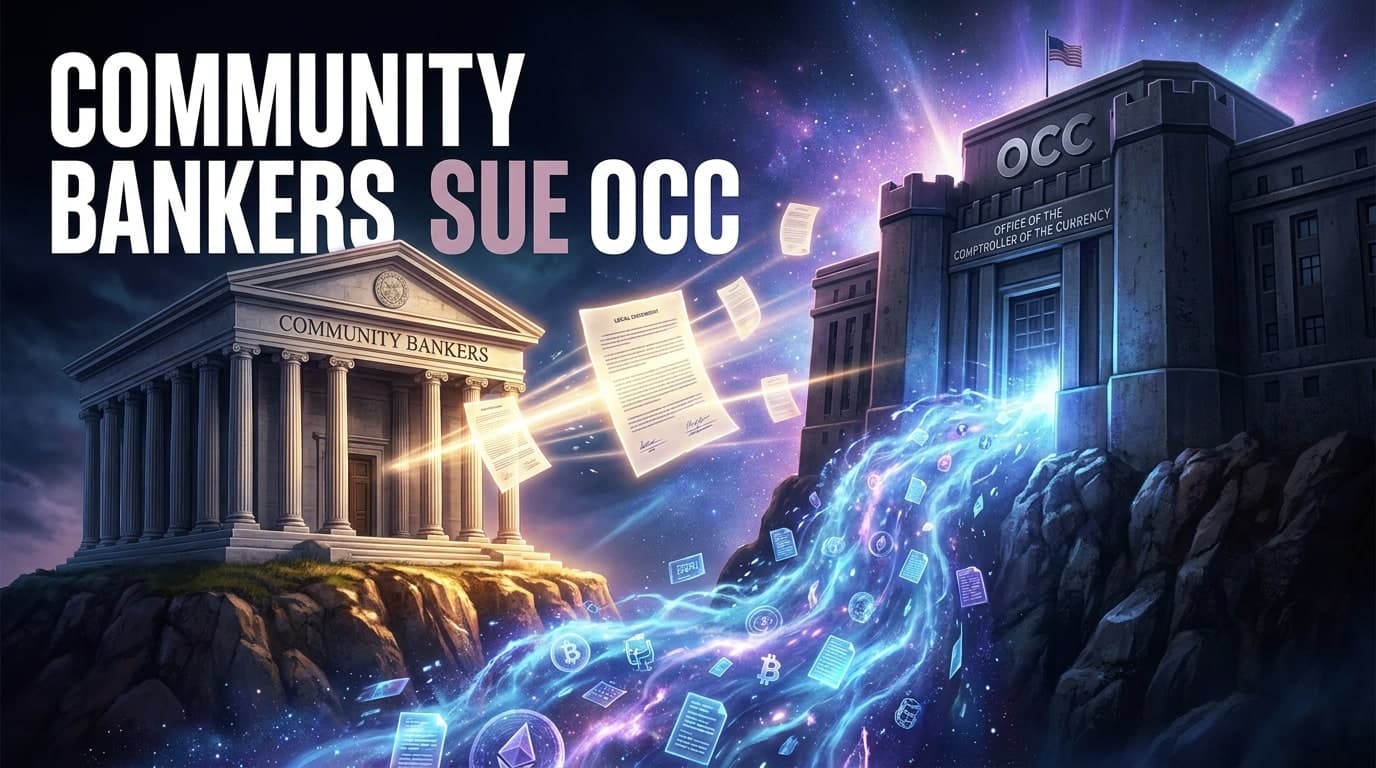
The Independent Community Bankers of America sued the Office of the Comptroller of the Currency over its approval of crypto trust charters. The complaint says the regulator overstepped its legal authority. The case could decide how far crypto firms can act like banks, a question that affects custody, stablecoins, and digital wallets used daily.
What actually happened
According to CoinDesk, the Independent Community Bankers of America, referred to as the ICBA, filed a lawsuit against the Office of the Comptroller of the Currency, the OCC. The ICBA accuses the OCC of exceeding its legal authority. The accusation centers on the OCC's practice of granting trust charters to crypto companies. The report did not specify the date the suit was filed, the court handling the case, the named defendants beyond the OCC, or any direct quotes from either side. No specific crypto firms or charter approvals were identified in the available report.
How we got here
Disputes between traditional banking groups and crypto firms over regulatory charters are not new. National trust charters allow companies to operate across states under a single federal framework, which can appeal to crypto firms seeking faster market access. Banking groups like the ICBA have long argued that such charters blur the line between regulated banks and non-bank crypto companies. This lawsuit turns that broader tension into a formal legal challenge, asking a court to decide whether the OCC's charter authority extends to crypto trust companies at all. The source report does not detail prior OCC charter approvals referenced in the complaint.
Why this matters for you
If the ICBA succeeds, the OCC could be forced to pause or reverse crypto trust charters already granted, which may slow how quickly crypto companies gain bank-like custody powers. If the OCC prevails, it could set a clearer precedent for crypto firms to hold trust charters nationwide. For crypto holders, the outcome may affect who is allowed to custody digital assets and issue stablecoins under federal oversight. For builders, including wallet and app developers, charter clarity could determine which partners are safe to integrate for custody services. For bonuz users exploring crypto wallets inside AR experiences, regulatory clarity around custody providers matters for long-term trust.
The bigger question
How much authority should a single banking regulator have to decide which companies qualify as trust institutions for digital assets? The answer could shape who is trusted to custody crypto for millions of users. It also raises a broader question about whether banking rules written before crypto existed can fairly govern firms built entirely around it. Courts, not just regulators, may now help decide where that line sits.
What to watch
No trial date, hearing schedule, or court name was available in the source report. Future coverage is likely to clarify which court is hearing the case and whether the OCC responds publicly. Readers tracking crypto custody rules, including bonuz users interested in how digital asset storage gets regulated, should watch for updates on the docket and any statements from the OCC or ICBA in the coming weeks.