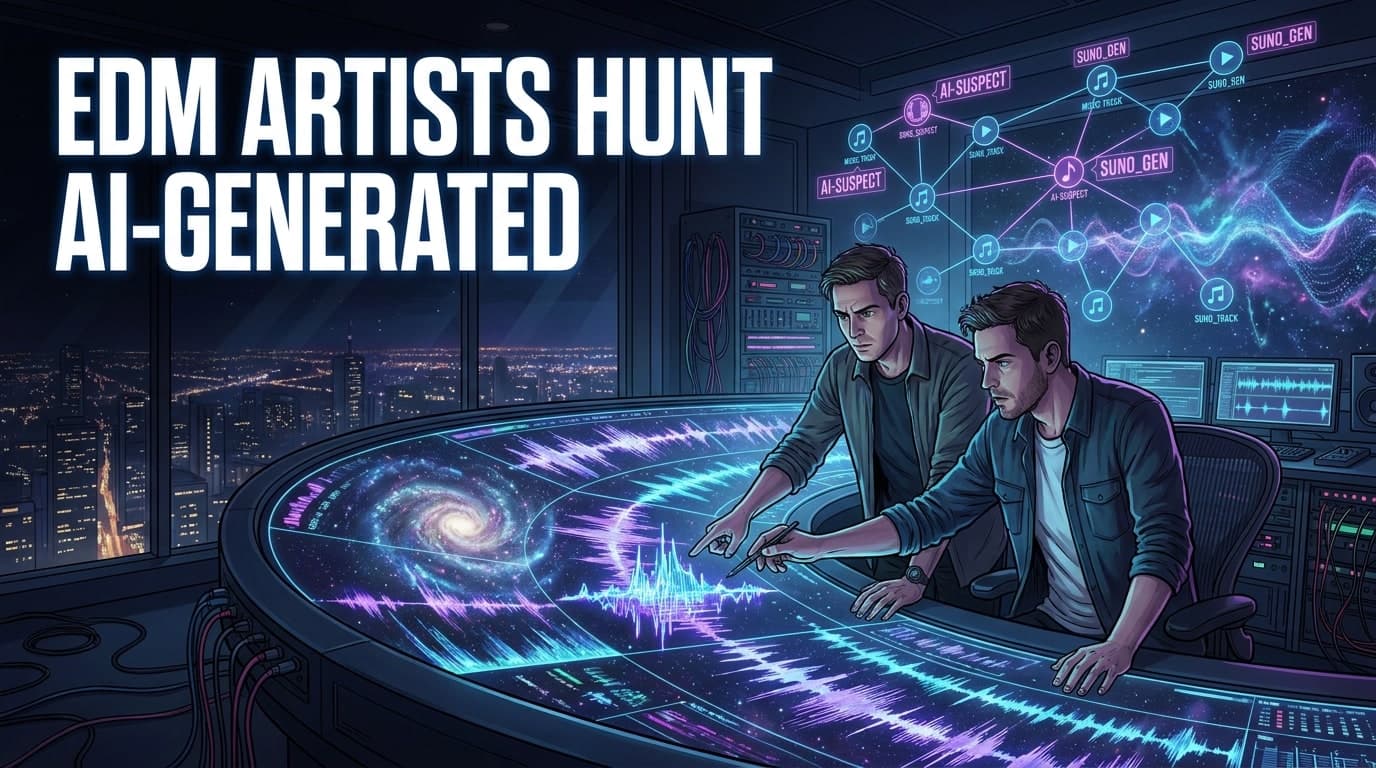
EDM producers Max Harris and Nihil Young are publicly naming artists they suspect of using AI tool Suno to fake human-made tracks. Anyone who streams music, follows creators, or builds tools around content verification should care, because trust in what counts as human art is eroding fast.
What actually happened
Harris, 26, from Maine, told The Verge that AI-generated music is a decoy art form and does not qualify as real art. He said it is a way to steal real art and pass it off as someone's own. Harris pointed to MANSA's 'Midnight on My Mind' and Danny and Ian Asher's 'Take Me (To The Moon)' as suspected AI tracks, though no definitive evidence confirms this. Nihil Young, 39, an Italian producer who has mixed audio for Sony Music, Warner, and Universal, told The Verge that Josh Fawaz's 'Like a Prayer' cover now carries AI credits after online backlash. Young said his production income dropped once AI tools launched, and he faced hacking attempts and harassment after posting about Suno on Threads.
How we got here
Generative audio tools have improved quickly, letting anyone produce full songs from text prompts. Some creators disclose AI use immediately, others deny it until public pressure forces an admission. In electronic dance music, a genre built on technical skill, that blurring of real versus AI-made work has sparked a callout culture. Harris says Suno-generated tracks often show vocals and melodies stuttering at the same moment, because the models treat separate song parts as one instrument. He also flags a hissing sound tied to how models build waveforms from noise. Visual tells matter too, including glitching AI persona videos and overly glossy production typical of AI slop.
Why this matters for you
For working musicians, the stakes are financial. Young said his income dropped once AI tools launched, and he expects singers, graphic artists, and other creative workers face the same pressure. For listeners, the shift raises a harder question of how to verify that a stream is human-made. For platforms and labels, unresolved disputes over tracks like Fawaz's cover show reputational risk when AI credits surface only after backlash. Builders in AI audio face growing pressure to add clear disclosure before public callouts do it for them.
The bigger question
If a song is remixed from someone's copyrighted catalog by AI, who owns the result, the original artist, the AI company, or the person who typed the prompt? Courts, platforms, and audiences may each answer differently as generative tools blur the line between remix and theft.
What to watch
No formal hearings or platform policy changes were named in the reporting. Watch for whether Suno adds mandatory AI disclosure labels, and whether artists named by Harris and Young respond publicly. Bonuz will track how AI-audio detection tools evolve alongside wearable and AR devices built for creators verifying content in real time.