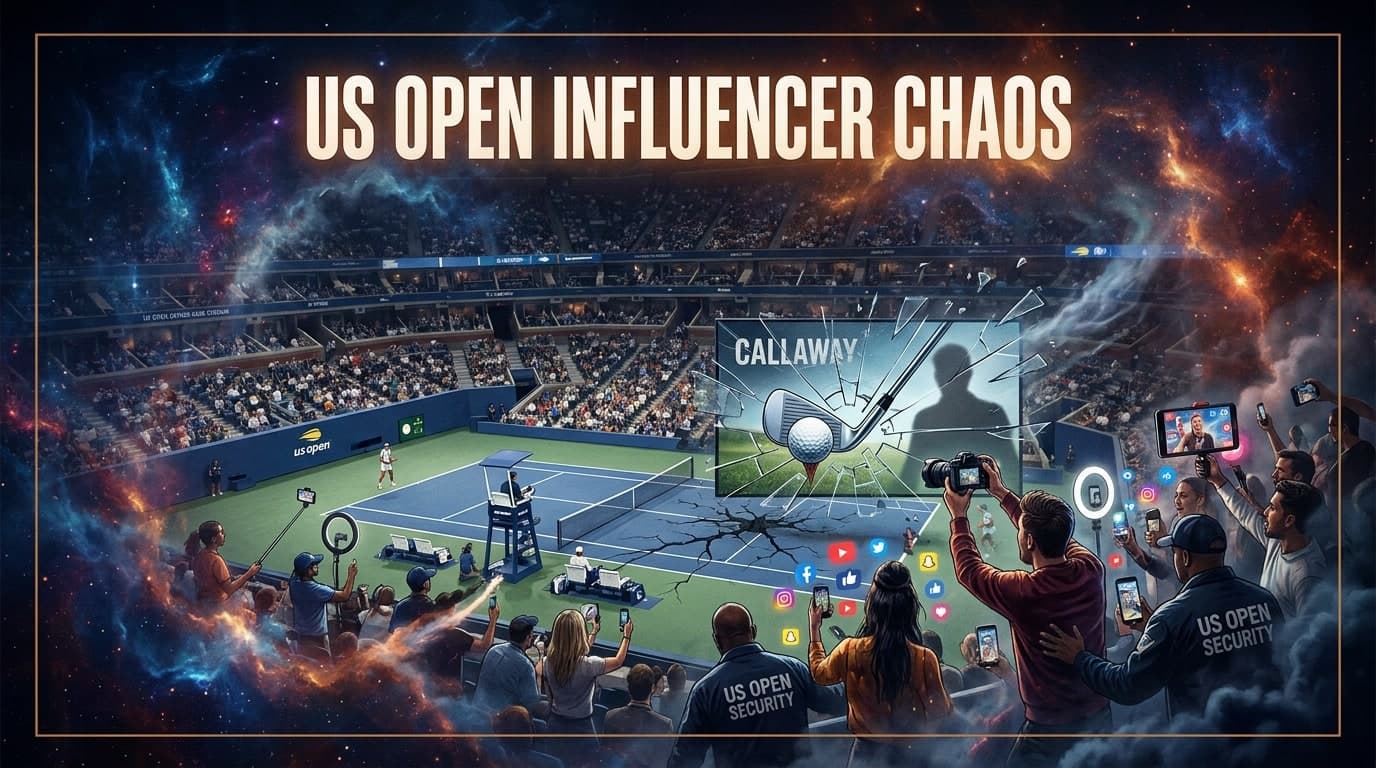
Influencers disrupted a US Open match this week, forcing an umpire to pause play, while a Callaway-linked golf ad sparked separate backlash over violence against a woman. Both incidents show what happens when brands hand content creators access and creative control without clear guardrails.
What actually happened
At this year's US Open, close to 100 influencers received credentials, up from 54 last year, according to USTA media operations director Jeanmarie Daly. USTA spokesperson Brendan McIntyre told ABC News the influencers whose antics disrupted Naomi Osaka's match against Anastasia Zakharova were not credentialed. McIntyre also said two lifestyle influencers, Meg Radice and Audrey Jongens, lost access after posting badge photos to Instagram, having been 'improperly submitted for credentials on a staff list provided by a food vendor.' Separately, Callaway Golf Company apologized after a Good Good ad showed cofounder Garrett Clark shoving professional golfer Alexis Miestowski. Callaway CEO Chip Brewer said 'mistakes were made, and we are taking the matter very seriously,' confirming Callaway approved the video before it posted. US creator ad spend hit $37 billion (USD) in 2025 and is projected to reach $44 billion (USD) by the end of 2026, per The Verge.
How we got here
Before a 2024 rule change, US Open attendees had to stay seated until players switched sides. Now fans can move freely, a shift tournament director Stacey Allaster called 'an important addition to the fan experience.' That openness, paired with near-doubled creator credentials, set the stage for this week's disruptions. After the videos spread, the USTA posted new signage asking spectators to 'please refrain from using flash photography or other lighting,' per The Verge. The Callaway episode fits a wider pattern too. Creator-run companies like Good Good, Barstool Sports, and No Laying Up have built lucrative golf brand partnerships targeting young male audiences, often trading polish for edge.
Why this matters for you
For brands, the lesson is oversight. Handing creators access or creative control without guidelines invites reputational risk, as Callaway learned after approving its own ad. For influencers, credential misuse, like posting badge photos publicly, can end access entirely, as Radice and Jongens found out. For event organizers, near-doubling creator credentials without behavioral rules can degrade the experience for paying attendees. For fans, expect more signage, etiquette reminders, and possibly stricter credentialing at major events. As wearable capture devices, including camera glasses, become common creator tools, similar access and etiquette questions will likely resurface at future tournaments and premieres.
The bigger question
Creator ad spend is projected to reach $44 billion (USD) by the end of 2026. As brands lean harder on influencers to reach audiences, who should bear responsibility when content creation itself becomes the disruption, the brand that invited the creator, the platform that rewards attention, or the creator chasing it? Without shared standards for access and conduct, similar incidents seem likely to repeat at future events.
What to watch
Watch for USTA to review credential vetting after this year's incidents, and for brands to issue clearer creator guidelines ahead of the next major sporting and awards season. Callaway has already severed ties with Good Good following the ad backlash. As wearable smart glasses and hands-free capture tools spread among creators, bonuz will track how event organizers adapt access rules for a new generation of always-recording hardware.