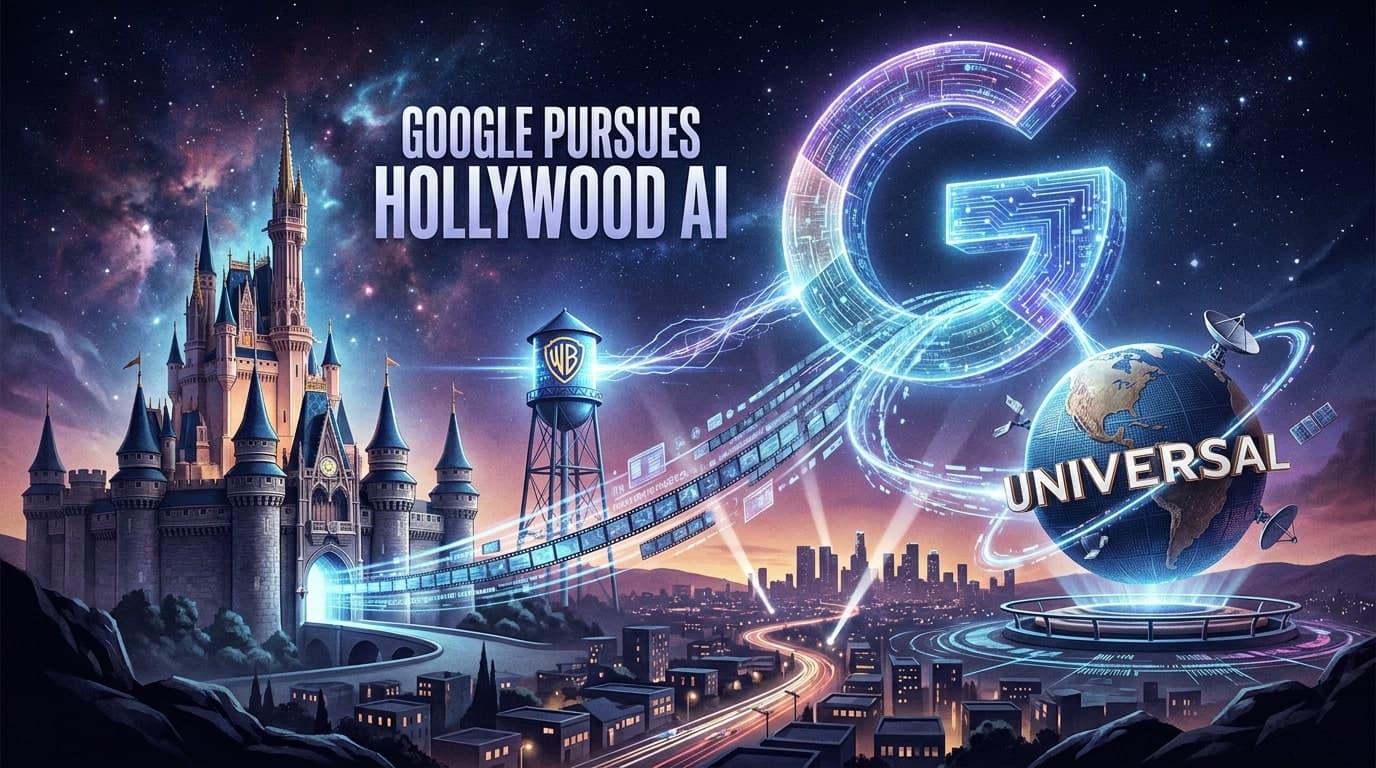
Google has reportedly approached major Hollywood studios, including Disney, Warner Bros. Discovery, and Universal, offering licensing deals to train its AI models on copyrighted content. The outcome could reshape how AI companies gain legitimacy, and how studios balance new revenue against audience and worker backlash.
What actually happened
Google has approached Disney, Warner Bros. Discovery, and Universal with pitches to license their content libraries for AI training, according to unnamed sources cited by The Los Angeles Times and reported by The Verge. No studio has agreed yet. Google could pay a studio like Disney or Pixar around $40 million (USD) just for rights to generate outputs featuring one copyrighted character, a figure that could grow into the billions across larger deals. Studios might also collect a share of advertising revenue from AI content on platforms like YouTube. Google's DeepMind division already struck a $75 million (USD) investment deal with A24 this summer. Separately, Lionsgate signed a licensing deal with Runway in 2024, though nothing concrete has resulted yet.
How we got here
Public sentiment toward AI, especially among young people, has turned increasingly negative after years of disruption warnings and job-loss fears, according to The Verge. OpenAI's plan to let Disney feature user-generated AI content on its platforms collapsed earlier this year. AI-generated images also appeared in the official artbook for Spider-Man: Brand New Day, a film that still grossed $2 billion (USD) at the box office despite fan backlash once the AI use became known. That reaction has made studios cautious about publicly embracing generative AI tools, even as shareholders continue to favor faster, cheaper production methods AI could enable.
Why this matters for you
For Google, a Hollywood deal would offer more than training data. It would let Gemini generate studio-approved characters like Darth Vader or Snow White, work that could soften public wariness toward generative AI. For studios, licensing fees offer new revenue, but the Brand New Day backlash shows audiences react badly to undisclosed AI use. Workers in production and visual effects face the most direct risk, since AI tools promise faster, cheaper output that could reduce demand for their labor. For builders across the wider AI and AR ecosystem, a legitimized, licensed content pipeline could set the template other platforms follow next.
The bigger question
Will a licensed, studio-approved AI partnership actually earn public trust, or will audiences see it as a formal stamp on a practice they already resent? The backlash over undisclosed AI use in Spider-Man: Brand New Day suggests disclosure, not permission, may determine how people react to AI-made entertainment. If Disney or another major studio signs with Google, the industry will find out whether legitimacy from above changes minds on the ground.
What to watch
No studio has confirmed a deal with Google yet. Watch for official announcements from Disney, Warner Bros. Discovery, or Universal. Lionsgate's 2024 deal with Runway has yet to produce a public AI-generated short, a milestone that could set a template for larger studios. Bonuz will track how licensed AI content pipelines might eventually feed into AR and wearable display experiences.