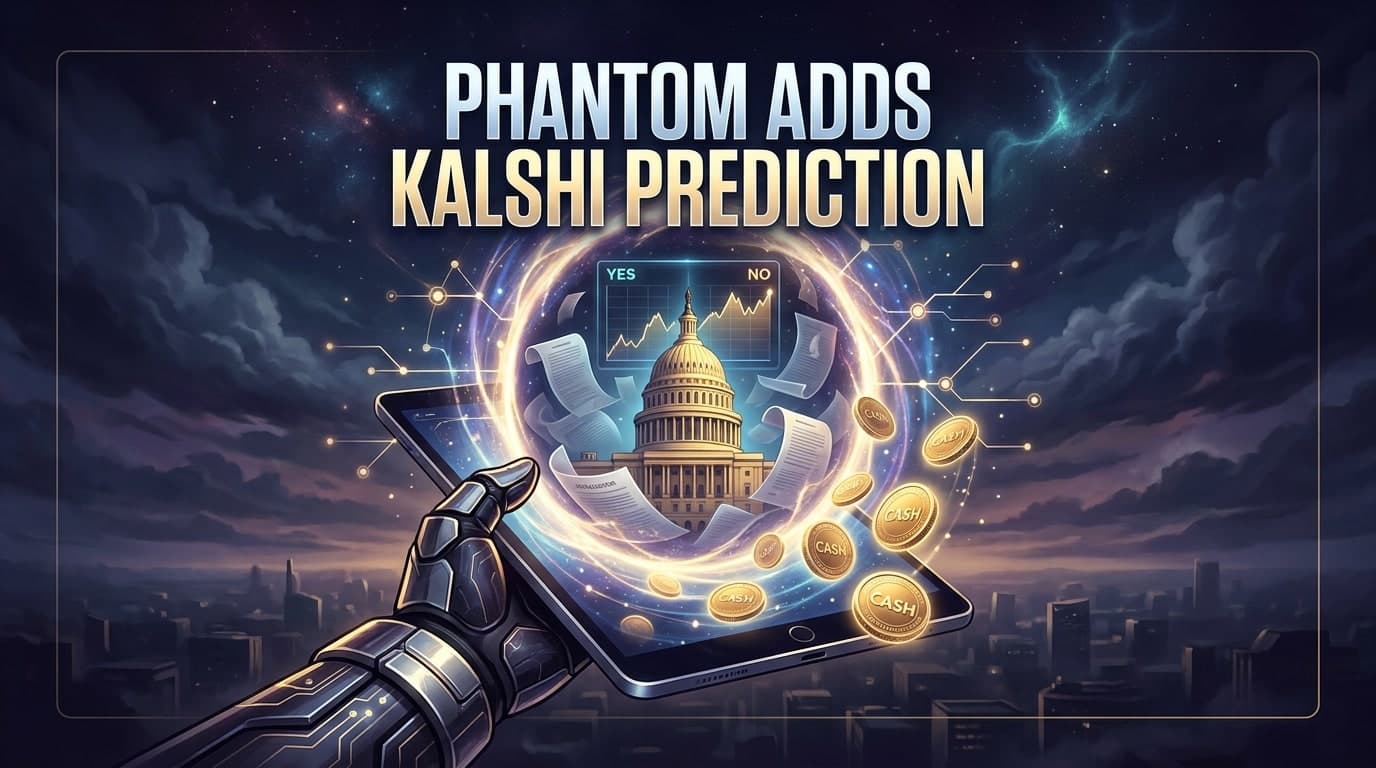
Phantom, the crypto wallet, has rolled out Kalshi prediction markets to its US users. Trades are funded with CASH stablecoins. The move matters because it brings prediction markets directly into a mainstream wallet, even as several US states pursue legal action against Kalshi.
What actually happened
According to The Block, Phantom rolled out Kalshi prediction markets to its US users. Trades are funded using CASH stablecoins. Phantom applies market restrictions in three states: Michigan, Nevada, and Washington. Phantom told The Block it feels 'confident and comfortable' continuing the rollout, despite facing lawsuits filed by multiple US states. The report was published on 23 October 2026. It did not specify which states filed suit, the legal grounds cited, or a timeline for resolution. Details on trading volumes, the range of markets offered, and user eligibility criteria beyond geography were also not included in the available source material.
How we got here
Phantom's statement that it feels 'confident and comfortable' points to ongoing legal pressure. The Block's report notes this comes 'amid state lawsuits,' meaning Kalshi, the prediction market platform, already faces legal challenges from US states before Phantom's rollout. Phantom chose to proceed despite this backdrop, limiting access in Michigan, Nevada, and Washington rather than pausing the feature nationwide. This selective restriction suggests Phantom is responding to specific state-level legal or regulatory concerns rather than a blanket ban. The source material does not explain which states sued, why, or how long the disputes have been active.
Why this matters for you
For Phantom users, this adds a new trading option directly inside the wallet, without needing a separate app for event-based markets. For builders, it shows wallets expanding into regulated-adjacent financial products, not just token storage and swaps. For Kalshi, wallet distribution could widen its user base beyond its own app. The state-by-state restrictions in Michigan, Nevada, and Washington mean access depends on location, so users should check local rules before trading. Holders of CASH stablecoins gain a direct use case, funding prediction market trades. Anyone building wallet-based financial products should watch how Phantom manages legal exposure while expanding access.
The bigger question
If more US states pursue legal action against Kalshi, will Phantom expand its list of restricted states, or will it defend the integration as lawful nationwide? The outcome could shape whether crypto wallets become trusted gateways for prediction markets, or whether legal risk pushes these products back into standalone apps. Users and builders alike are left watching how far state-level regulation can reach into a product distributed through a decentralized wallet.
What to watch
No specific court dates or rollout milestones were included in the available reporting. Watch for formal responses from Phantom or Kalshi regarding the state lawsuits mentioned in the 23 October 2026 report. Also watch whether Michigan, Nevada, or Washington ease or tighten restrictions, and whether other states add similar limits as the rollout continues.