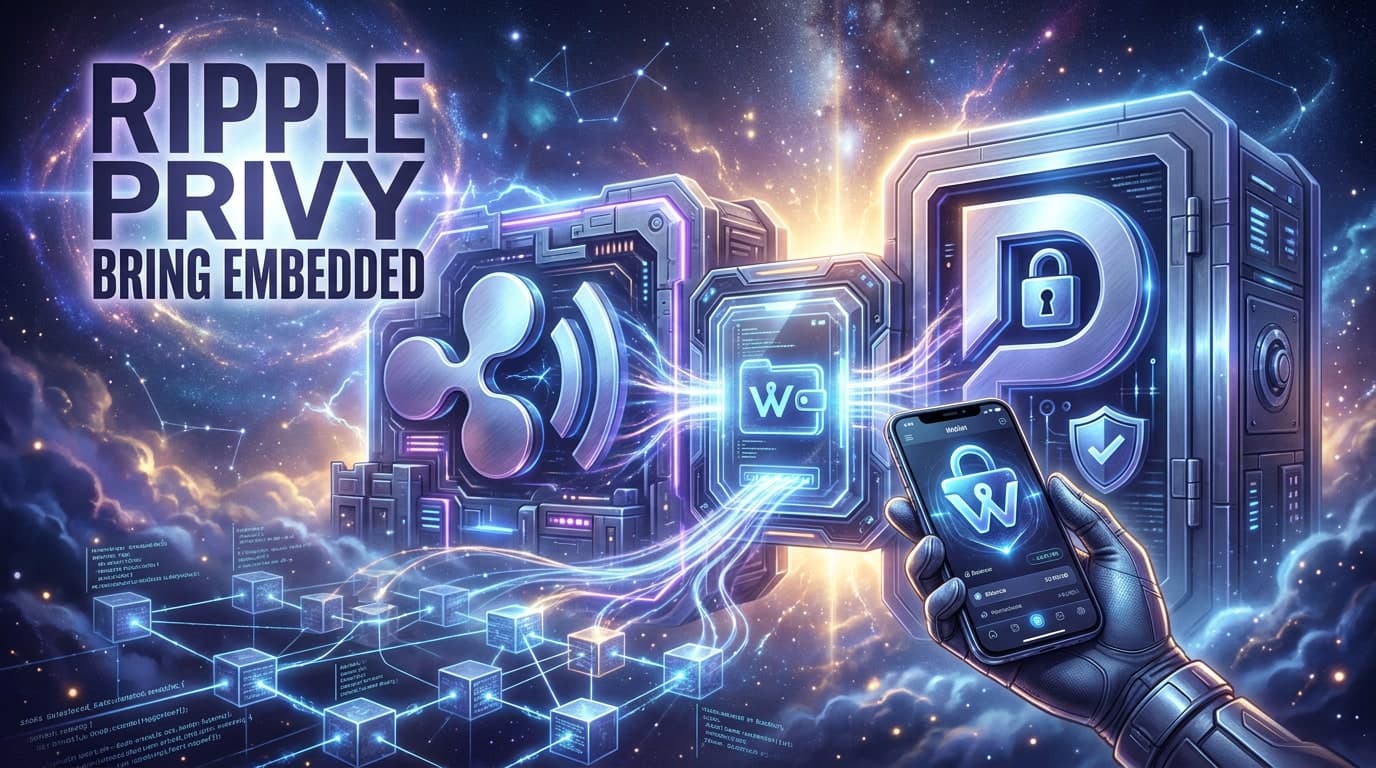
Ripple and Stripe-owned Privy have partnered to bring embedded wallets to the XRP Ledger. Developers can now add wallet functionality directly into apps. This matters because it lowers the technical barrier for building consumer-facing crypto apps, including wallets for everyday payments and AI agents.
What actually happened
According to The Block, Ripple and Privy, the embedded-wallet infrastructure provider owned by payments company Stripe, have partnered to bring wallet tools to the XRP Ledger. The report states developers can now build XRPL wallets directly into their applications. Support covers four areas: XRP, the network's native token, RLUSD, Ripple's stablecoin, AI agent payments, and x402, a protocol built for machine-to-machine payments. The partnership connects two established names, Ripple, the company behind XRP, and Privy, now owned by Stripe. The Block's report did not include pricing, a public launch date, executive quotes, or adoption figures. No specific developer tools or SDK names appear in the available coverage.
How we got here
XRP Ledger has long positioned itself as a payments-focused blockchain, built for fast, low-cost settlement. Ripple has pushed the network toward broader enterprise and developer use beyond its original cross-border payments niche. Stripe's ownership of Privy signals how large payments companies are investing in wallet infrastructure as a core building block for apps, not an afterthought. The mention of x402 alongside AI agent payments reflects a wider industry conversation about machines and software agents making payments without direct human input. This deal links that conversation to a specific, named blockchain network. The report frames this as developer-facing tooling news rather than a product launch with a public date.
Why this matters for you
For XRPL developers, this lowers the cost of adding wallet features. They no longer need to build custodial or key-management systems from scratch. For users, embedded wallets could mean apps that handle XRP and RLUSD without exposing seed phrases or complex setup steps. For builders working on AI agents, x402 support offers a path for agents to transact on XRPL directly. For bonuz and similar crypto lifestyle apps, embedded wallet infrastructure like this is relevant groundwork. It points toward a future where wallets sit invisibly inside everyday apps, including ones running on AR and smart glasses, rather than as separate standalone tools users must manage.
The bigger question
If embedded wallets become standard across apps, will users still think of themselves as holding crypto at all, or will the wallet disappear into the background like a payment processor? The same question applies to AI agents: once software can hold and spend RLUSD or XRP through protocols like x402, who is accountable when an agent makes a payment no human directly approved? These are open questions the industry has not yet answered.
What to watch
The Block's report, published 13 October 2026, did not include a public rollout date or developer documentation link. Watch for Ripple and Privy to publish technical guides, and for early XRPL apps to show live RLUSD or XRP embedded wallets. Watch also for x402 adoption numbers, the clearest sign AI agent payments move from protocol to product. Bonuz will track embedded wallet integrations relevant to AR and smart glasses.