












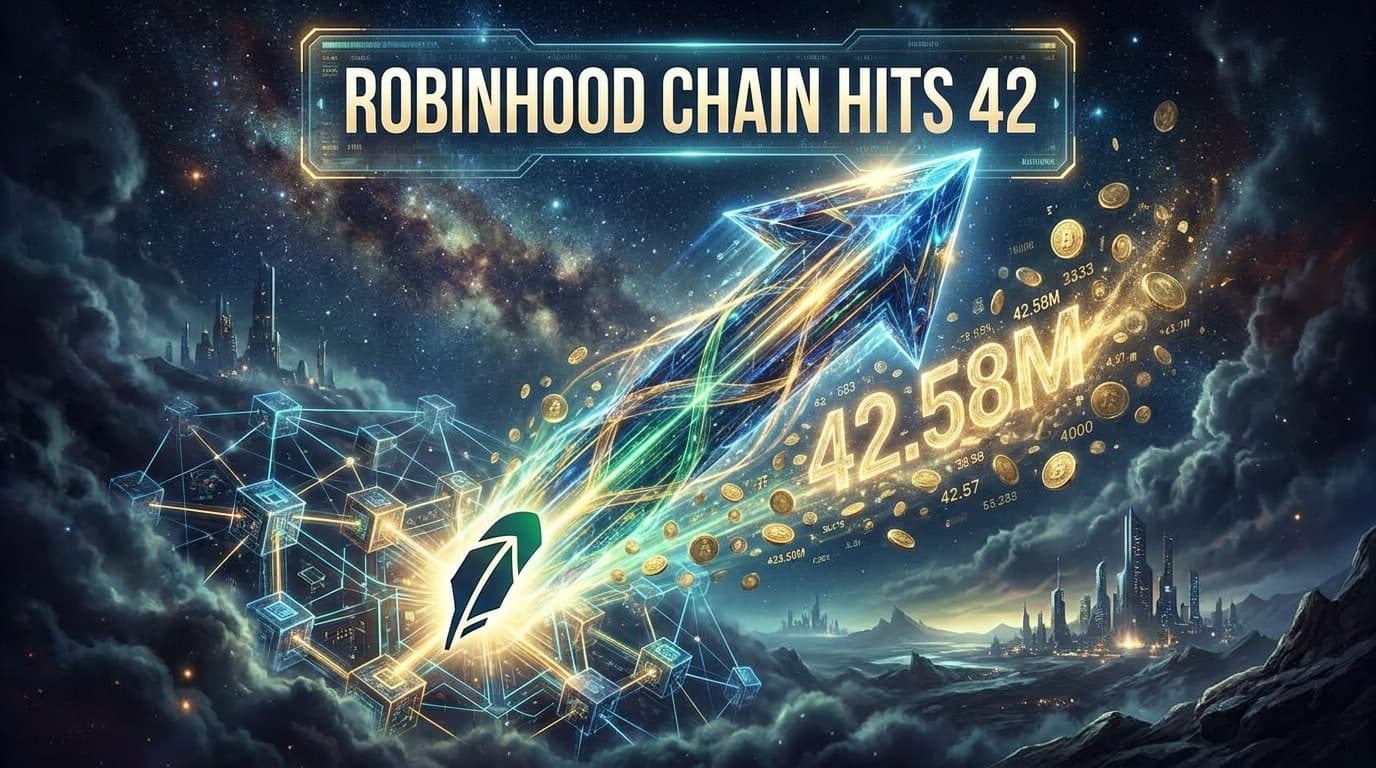
Robinhood Chain, an Ethereum layer-2 network built on Arbitrum's technology, has generated $42.58 million in revenue in its first 70 days. The figures matter because they show how fast an L2's fee income can rise, and how fast it can fall.
What actually happened
Robinhood Chain has produced roughly 17,171 ETH in cumulative revenue since launch, about $42.58 million, averaging near $608,000 a day, according to Wu Blockchain. Around 90%, or 15,454 ETH ($38.32 million), stays with Robinhood Chain. The remaining 10%, 1,716 ETH ($4.26 million), goes to Arbitrum as the technology provider. Daily gas revenue hit $943,728 on 10 September 2026, down 82.6% from a $5.44 million peak on 4 September. DEX volume on the chain still sits near $1.8 billion over 24 hours, a gap the report calls a sign of falling average transaction fees. Separately, ETH traded at $2,488, down -1.83% over 24 hours, with a high of $2,535 and a low of $2,465. 24-hour trading volume stood at $8.71 billion and market capitalisation at $303.70 billion.
How we got here
Robinhood Chain launched as one of several new app-specific L2s renting Arbitrum's stack, a model where the technology provider takes a fixed cut of gas revenue instead of running the chain itself. That structure lets Arbitrum earn from chains it does not operate, while giving Robinhood control over its own fee economics. The same week, Coinbase renamed its Base App back to Coinbase Wallet, expanding multichain support to more than 10 networks including Robinhood Chain, per Wu Blockchain. A separate CoinDesk opinion argues staked ether should be treated as the benchmark yield asset of the decentralized economy, a framing that sits alongside this kind of L2 fee data as evidence of Ethereum's expanding revenue layers.
Why this matters for you
For ETH holders, Arbitrum's 10% cut from Robinhood Chain is a small but real example of how L2 activity can route value back to base infrastructure providers. For builders, the falling per-transaction fee despite steady $1.8 billion DEX volume signals that new chains may need to compete on cost, not just distribution. For users, wallet consolidation, like Coinbase's Base App becoming Coinbase Wallet again, changes where multichain trading actually happens next.
The bigger question
If gas revenue keeps falling while trading volume stays high, what does that mean for how new Ethereum L2s should design their fee-sharing deals with technology providers like Arbitrum?
What to watch
Bitwise's Dogecoin ETF stops trading on 14 October 2026, with cash distributions on 22 October. The Polkadot Community Foundation's dotUSD proposal remains open for a DAO vote. Flop Labs plans a FLOP Network testnet and airdrop in Q4 2026, with mainnet targeted for Q1 2027.
This article is information, not financial advice. Prices are a snapshot and change constantly. Nothing here is a recommendation to buy or sell any asset. Do your own research.