













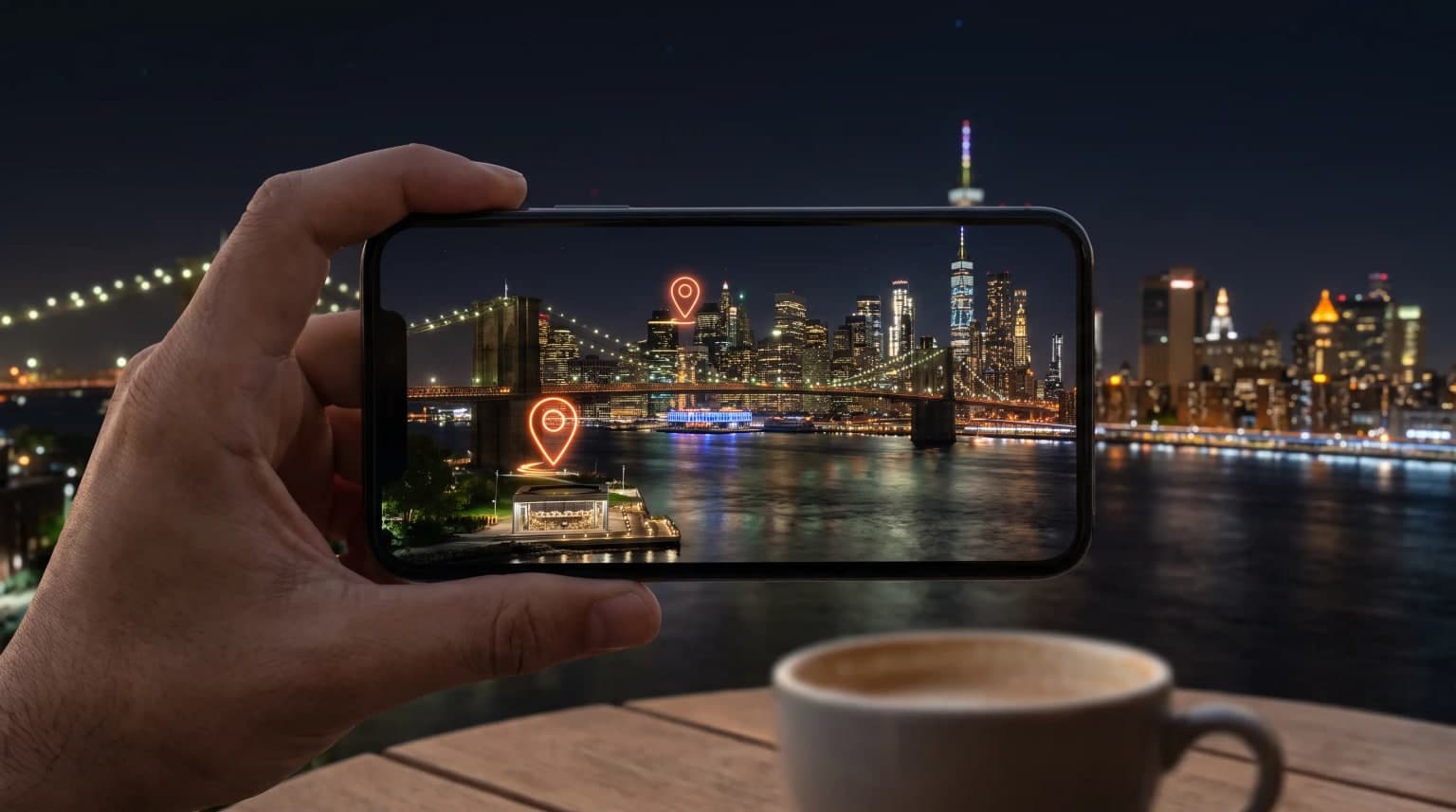
A crowdfunded pair of augmented reality glasses started shipping preorders on 28 August 2026, built on a lens material that lets the display sit inside an ordinary looking frame. The same week, US police memos revealed officers cannot always tell when a stranger's glasses are secretly recording them.
What actually happened
On 28 August 2026, the Nimbo X1 Kickstarter campaign launched using a silicon carbide waveguide made by SEEV, according to Silicon Carbide Waveguides Pros and Cons. Silicon carbide bends light with a refractive index near 2.6, against 1.7 to 2.0 for typical waveguide glass, letting thinner lenses show a wider picture. The material stays harder to polish and costlier to manufacture than glass, even as production scales. Separately, a dozen police memos obtained under freedom of information show departments across the US worried about the same trend from the other side. New York's counterterrorism bureau told officers to inspect all eyewear allowed into inmate cells. Maine's fusion center warned that facial recognition in smart glasses could dox officers. ICE barred staff from wearing the glasses at work, according to Decrypt. Meta said its glasses "are designed to be noticed," pointing to a blinking recording light.
How we got here
Meta showed the same silicon carbide approach at its Connect event in September 2024, in a prototype called Orion, aiming for a 70 degree field of view, per the same waveguide report. Several China based companies were already developing this material before that demo. The industry has also been moving toward smaller two grating waveguides, seen in Even Realities glasses, closer in size to ordinary frames. That size shift matters because Meta's Ray-Ban glasses already look like normal glasses. A July 2025 video showed one worn inside a South Carolina detention center, filming cells and people who did not know they were on camera. That case is what triggered the memos now circulating.
Why this matters for you
For an ordinary day, this is the part that matters. As waveguides shrink toward normal glasses, the choice of who gets recognised, and by whom, moves from apps to eyewear. A cafe you visit every week could greet you before you speak, the way bonuz is building the Human Layer, where turning up somewhere real is something the place can recognise. But the same lens that lets a place know you is the lens that can quietly know a stranger too. Builders will keep chasing thinner, cheaper optics. Users will increasingly need to trust a blinking light that, as one video showed, people do not always notice.
The bigger question
If glasses can look exactly like glasses, how does anyone tell the difference between being seen and being filmed? A blinking light works only if people know to look for it, and most do not. As lenses get thinner and prices eventually fall, that light will end up on more faces, in more rooms, including ones you did not choose to be recorded in. What should a stranger be owed, a warning, a choice, or nothing at all?
What to watch
Karl Guttag will present on waveguide optics at MicroLED and AR/VR Connect in Eindhoven, 15 to 17 September 2026. The Nimbo X1 campaign continues taking preorders on Kickstarter through its funding window. Watch for more police departments issuing their own eyewear memos, and for whether Meta changes how its recording light behaves in response.