ZKsync launched Airbender Prime on 17 October 2026, a zero knowledge prover that proved 99% of Ethereum blocks in under 10 seconds. Ethereum co-founder Vitalik Buterin called the proof speed race decided and said zkEVM teams must now focus on security. The shift changes what builders race to ship next.
What actually happened
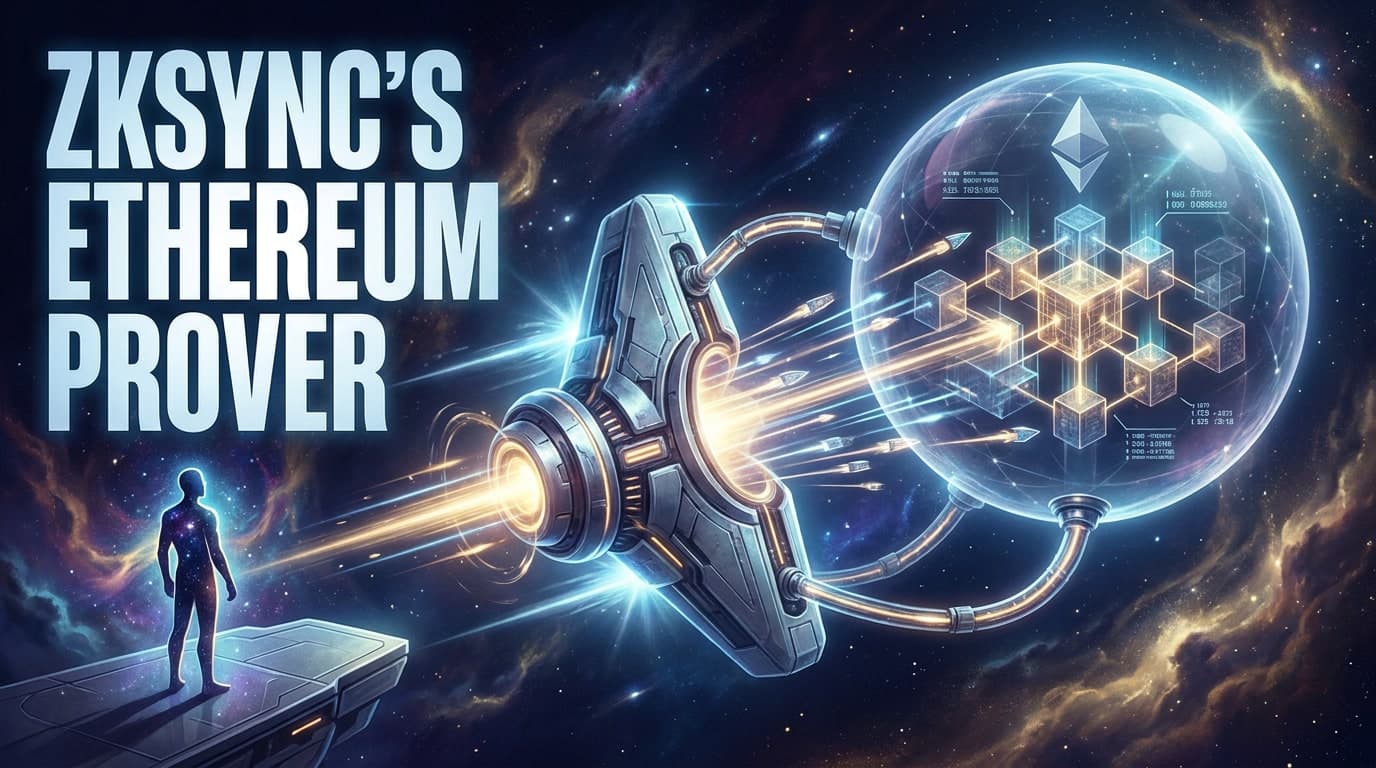
ZKsync's Airbender Prime generated proofs for 7,200 consecutive Ethereum mainnet blocks using a single NVIDIA RTX PRO 6000 Blackwell GPU, according to Wu Blockchain. 99% of block proofs finished in under 10 seconds, and every block, including witness preparation, completed within 12 seconds. The prover runs on the open RISC-V standard and uses hash-based STARK proofs, built for post-quantum security with a standalone verifier. Vitalik Buterin posted that the zkEVM proof speed competition has reached decisive results. He said the next priority is formal verification across three areas: matching the proof system's arithmetic to Ethereum's protocol specification, capping proof costs against block gas use, and verifying the zero-knowledge proof system's own security.
How we got here
Rollup teams have spent years competing on proof generation speed, since slow proving delays finality and raises costs for users. Ethereum's roadmap has long treated zk-rollups as a core scaling path, with projects racing to cut proving time from minutes to seconds. Airbender Prime's sub-10-second results suggest that race is largely won. Separately, Wu Blockchain reports Lido added native staking on Arbitrum, Base, Linea and Optimism, using Chainlink's Cross-Chain Interoperability Protocol so users can swap ETH for wstETH on an L2 without bridging back to mainnet first.
Why this matters for you
For builders, the finish line moves from raw speed to formal verification, meaning future zkEVM updates will likely focus on audits and provable correctness rather than benchmark times. For stakers, Lido's L2 integration removes a manual bridging step, which could pull more ETH into liquid staking directly from rollups. For ETH holders, the asset traded at $2,372, down -1.68% over 24 hours, with a 24-hour range between $2,364 and $2,427 and $7.45 billion in trading volume. None of this week's protocol news moved price on its own.
The bigger question
If proof speed is no longer the bottleneck, what becomes the real constraint on zkEVM adoption, security audits, formal verification tooling, or simply user trust in unproven cryptography? The answer will shape which Ethereum L2s win developer and user attention over the next year, regardless of whose prover is fastest today. Speed solved one problem, but it did not settle the question of what counts as proven safe.
What to watch
Watch for ENS DAO's ENSv2 mainnet proposal moving toward a vote, which would halt new .eth registrations under ENSv1. Blur shuts its frontend on 12 November 2026, with Blend lending halting new loans the same day. PancakeSwap's fee and emissions changes are slated to begin in November 2026, finishing by end of January 2027. Formal verification work on zkEVMs like Airbender Prime has no public deadline yet.
This article is information, not financial advice. Prices are a snapshot and change constantly. Nothing here is a recommendation to buy or sell any asset. Do your own research.