













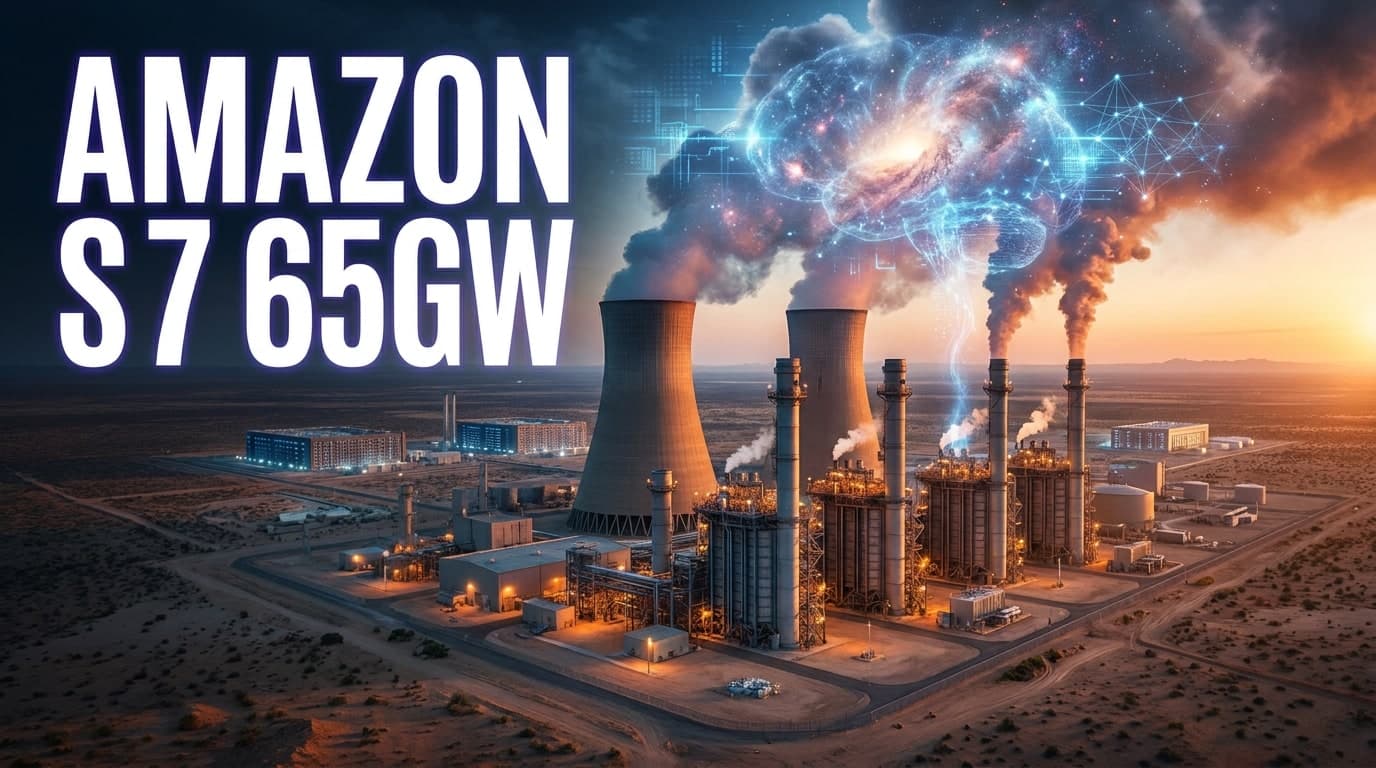
Amazon is building a 7.65GW natural gas power plant in Texas to run a new AI data center, with permits allowing up to 33 million tons of CO2 emissions a year. The plant could become the largest single source of carbon pollution in the United States. Anyone tracking AI's energy footprint should care.
What actually happened
Amazon is reportedly constructing a 7.65 gigawatt natural gas power plant in Texas, according to Tom's Hardware. The custom facility will use 35 gas turbines to supply electricity directly to a new AI data center. Permits authorize the plant to emit up to 33 million tons of CO2 equivalent per year. That volume could make it the largest single source of carbon dioxide pollution in the United States, per the report. The report does not specify a completion date, exact location within Texas, or the data center's planned compute capacity. Amazon has not issued a public statement confirming the emissions figures, based on available reporting.
How we got here
AI data centers now demand more electricity than many utilities can quickly supply. Hyperscalers including Amazon have increasingly turned to building dedicated, on-site power generation rather than waiting for grid expansion or renewable buildout. Texas, with its deregulated ERCOT grid and faster permitting for gas infrastructure, has become a preferred site for this strategy. Natural gas offers immediate, reliable capacity that intermittent renewables cannot yet match at this scale. This follows a broader pattern across the industry, where compute growth for AI training and inference has outpaced clean energy deployment, pushing companies toward fossil-fuel backed solutions to keep data centers online.
Why this matters for you
For AI and crypto infrastructure builders, this signals that raw power access, not just chips, is becoming the real bottleneck for scaling compute. Hardware makers and AR and smart-glasses developers relying on cloud AI inference could see costs shift as power generation gets bundled into deals. Texas residents and businesses near the plant may face new air quality scrutiny and local grid pricing effects. For climate-focused investors, this raises reputational risk for Amazon and any partners tied to the data center. Regulators may also face pressure to revisit permitting rules for gas plants built specifically to power AI infrastructure.
The bigger question
Can the AI industry keep scaling compute at its current pace without a matching leap in clean power generation, or will fossil-fuel backed data centers become the default solution? That tension sits at the center of this project, and its answer will shape how the next decade of AI, and the AR and wearable devices that depend on it, gets built and powered.
What to watch
No construction timeline, completion date, or exact site location has been confirmed in current reporting. Watch for permitting updates from Texas regulators and any public comment from Amazon on the emissions figures. Bonuz will continue tracking how power infrastructure, not just chips, shapes the hardware roadmap for AI and AR devices ahead.