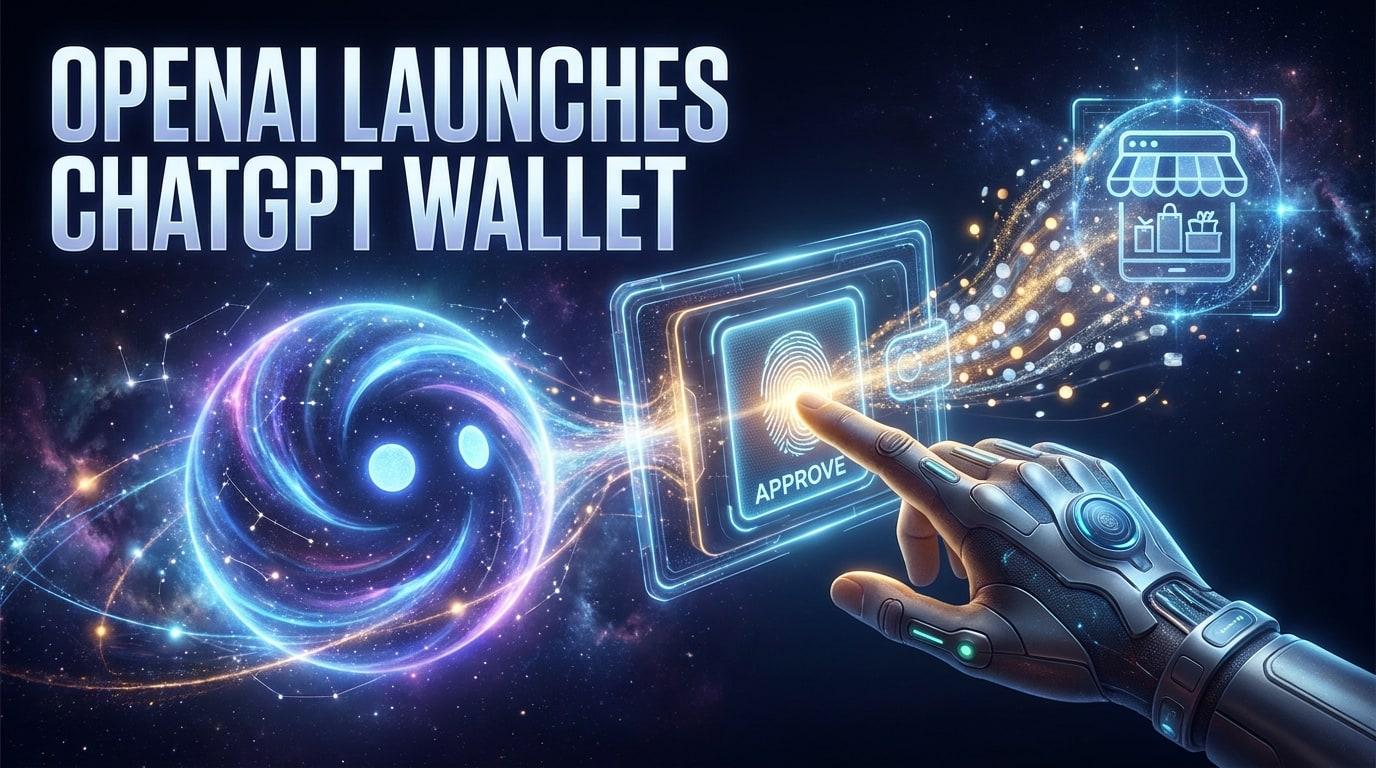
OpenAI launched ChatGPT Wallet on 13 November 2026, letting its Dots AI agents make purchases on your behalf. The feature matters because it is one of the first mainstream tools letting an AI agent spend real money, with human approval required at every step.
What actually happened
ChatGPT Wallet began rolling out on 13 November 2026 for ChatGPT Pro subscribers in the United States, OpenAI said, according to The Verge. Users must be 18 or older, use a US billing address, and hold an eligible US-issued American Express, Chase, Mastercard, or Visa card. Once a card is added, Dots agents can propose purchases in response to prompts, but OpenAI requires a security check with biometric verification, such as Face ID or a fingerprint scan, before every transaction. OpenAI compared the process to tap to pay, Apple Pay, and Google Wallet, saying it substitutes card details with a payment token so neither the agent nor the merchant sees actual card information. OpenAI said it eventually expects users to delegate purchases entirely, by setting spending limits, purchase categories, or time periods for pre-approval.
How we got here
OpenAI launched its Dots AI agents platform earlier in 2026, giving ChatGPT the ability to complete tasks across the web on a user's behalf. Agentic commerce has faced resistance from retailers. Earlier this year, Amazon blocked Meta's Muse agents from operating on its platform, OpenAI noted. For agents to use ChatGPT Wallet, OpenAI said websites need to avoid inadvertently blocking agents, and payment and risk systems need to recognize legitimate agent purchases. This tension between retailers and AI agents shapes how useful ChatGPT Wallet can become, since it only works where merchants allow automated buying.
Why this matters for you
For ChatGPT Pro subscribers with eligible US cards, shopping could shift from manual checkout to prompt and approve. Builders working on AI commerce tools now have a reference model for tokenized payments paired with biometric checks. Retailers must decide whether to accept agent traffic or block it, which affects which stores agents can actually buy from. For the broader AR and wearable hardware thesis, a trusted agent payment layer is a building block. Smart glasses or voice first devices could eventually let an agent complete a purchase without a phone, once merchants and payment networks recognize agent transactions as legitimate.
The bigger question
If AI agents eventually get pre-approved spending limits and no longer need checkout confirmation each time, how much purchasing control will people actually keep? OpenAI frames human approval as a safeguard today, but its own roadmap points toward full delegation. The open question is where the line sits between convenience and control, and who decides it, as agents move from suggesting purchases to completing them.
What to watch
ChatGPT Wallet rolled out on 13 November 2026, starting with US Pro subscribers using American Express, Chase, Mastercard, or Visa cards. Watch for expansion to more card issuers, regions, and subscription tiers, plus whether more retailers follow Amazon in blocking AI agents. As agent commerce grows, bonuz will track how wearable and AR hardware could plug into agent driven payment flows.