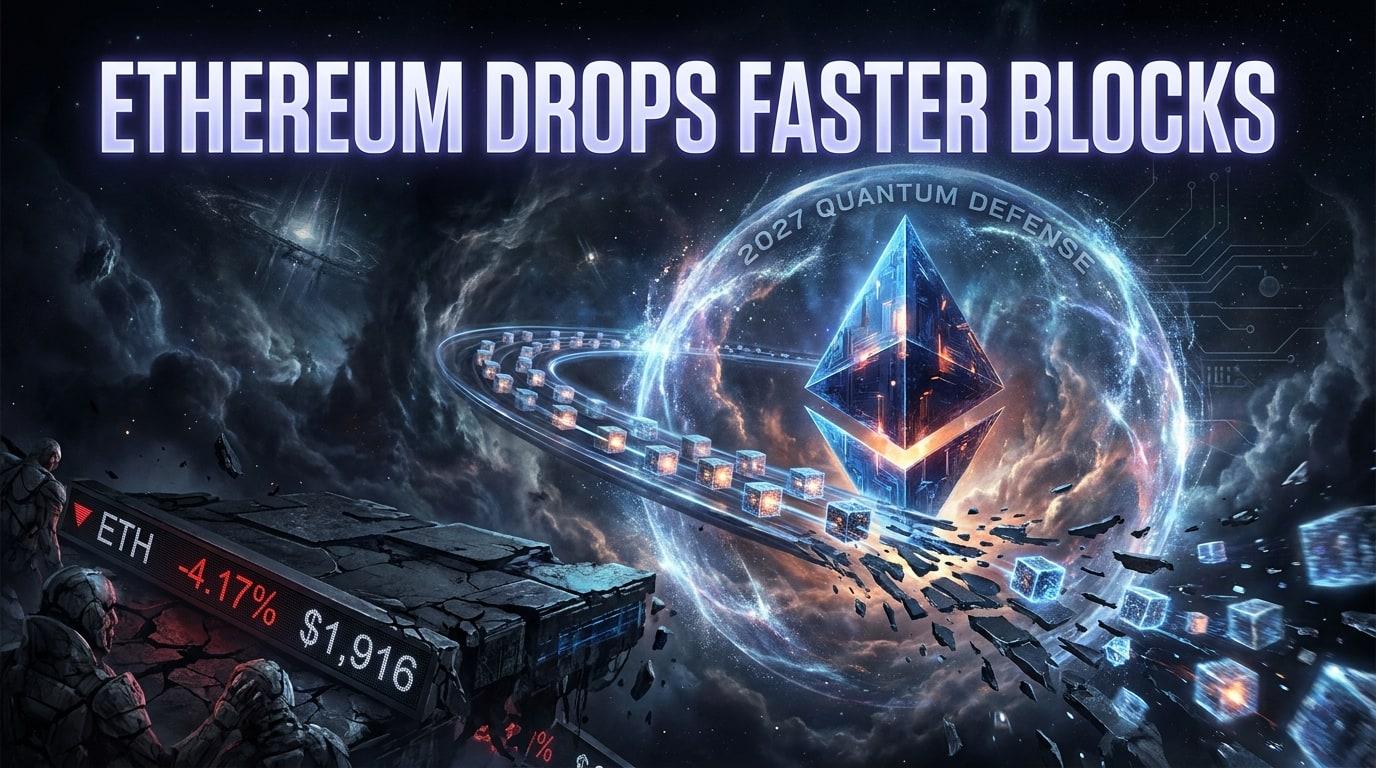
Ethereum's core researchers moved to speed up quantum defenses, not block times. Ethlabs proposed bringing forward a post-quantum security upgrade to 2027 and dropped a plan for faster blocks to do it. The shift landed the same day ETH fell -4.17% to $1,916, testing leveraged holders across the ecosystem.
What actually happened
Ethlabs, an Ethereum research group, published the "pqai27" roadmap on the Ethereum Magicians forum, calling for foundational quantum and AI-threat resistance in 2027, a year earlier than the prior 2028 target, according to WuBlockchain. The team withdrew support for Quick Slots, a proposal to shorten block intervals under the Hegotá upgrade, redirecting resources to post-quantum work and pushing faster blocks to 2028. CoinDesk reports Ethlabs wants quantum-resistant accounts ready next year, even though wallet holders will still need to switch signing methods themselves. Separately, ETH traded at $1,916, down -4.17% over 24 hours, after swinging between a high of $2,023 and a low of $1,905. Trading volume reached $14.61 billion, with market capitalisation at $234.18 billion.
How we got here
The quantum-resistance timeline was first set at 2028, reflecting Ethereum's historic preference for incremental security work over speed upgrades. Ethlabs argues that quantum computing and AI-driven attacks are advancing faster than expected, forcing security ahead of performance gains like shorter block times. The decision follows a year of stablecoin and custody shakeups, from Coinbase's trust bank charter approval to new bank-backed stablecoin projects, all competing for the same security assurances Ethereum is now racing to build into its base layer.
Why this matters for you
For builders, the delay of Quick Slots means Ethereum's roadmap now prioritizes signing-method security over throughput, pushing faster blocks to 2028. Wallet providers will need to prepare users for a signing-method switch tied to quantum-resistant accounts. For holders, the price swing adds pressure on leveraged positions: Ethereum treasury firm BTCS has already sold ETH at a loss to protect a $64 million (USD) Aave loan, which could face liquidation risk near $1,700. Yield-seekers are watching alternatives like Sygnum's new ETH Alpha Fund, which targets 8% to 10% annual returns paid in ETH through staking, options, arbitrage and carry strategies.
The bigger question
If Ethereum delays performance upgrades to harden against quantum computing, does that trade-off protect the network's long-term trust, or does it cede ground to faster-moving competitors in the meantime? The answer depends on how fast quantum computing capabilities actually advance, a timeline nobody can predict with confidence, and on whether wallets adopt new signing methods quickly enough to matter.
What to watch
Ethlabs' pqai27 roadmap still needs community discussion before formal adoption. Quantum-resistant accounts are targeted for 2027, with faster blocks now pushed to 2028. Watch for wallet providers announcing signing-method migration plans. The OKXICE tokenized securities venue launches 23 November 2026, a related test of institutional crypto infrastructure. Bonuz will keep tracking how staking yields and treasury-firm leverage respond as ETH price swings continue.
This article is information, not financial advice. Prices are a snapshot and change constantly. Nothing here is a recommendation to buy or sell any asset. Do your own research.