












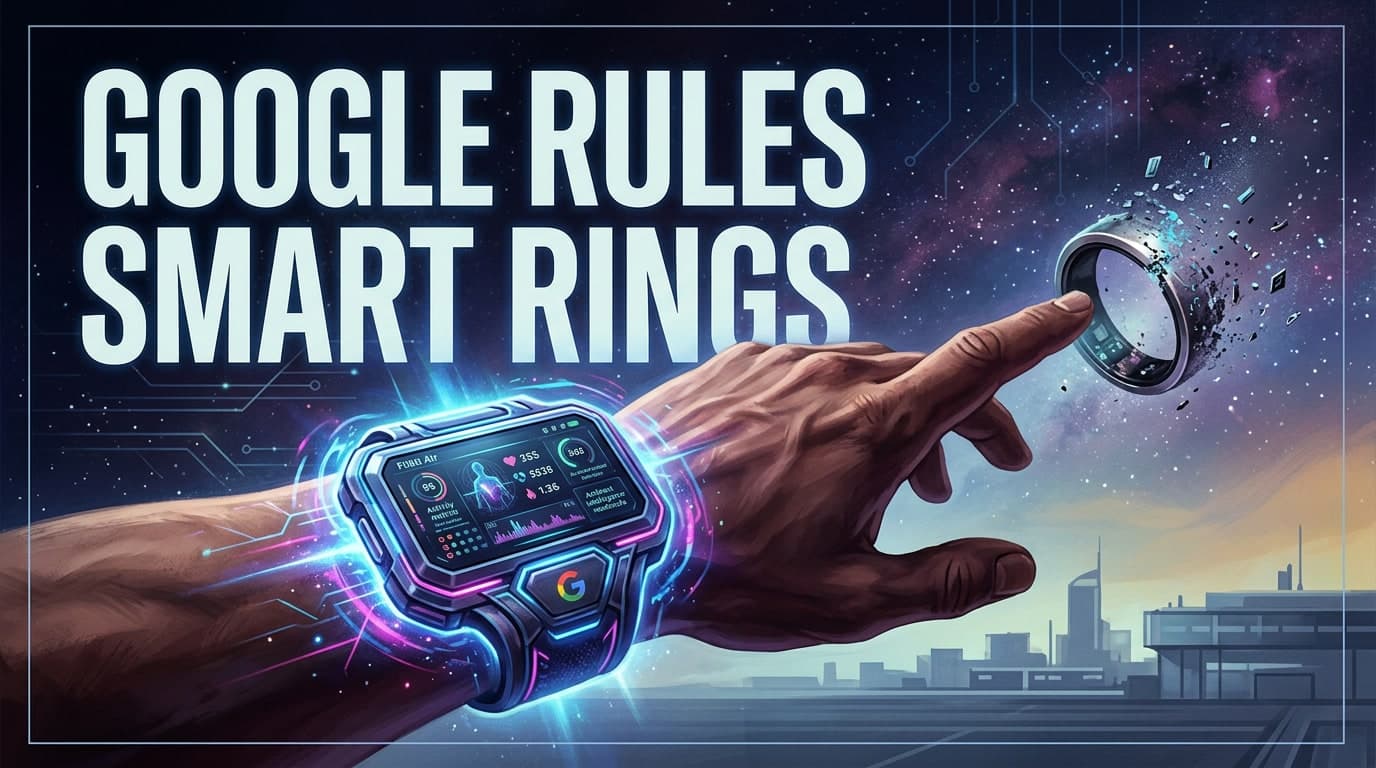
Google says it will not launch a smart ring anytime soon, choosing instead to expand its wrist-worn lineup with the Fitbit Air. The decision, revealed at a roundtable ahead of Made by Google, signals how uncertain the entire wearable industry remains about which devices, sensors, and AI features actually deserve a permanent spot on your body.
What actually happened
At a roundtable with tech reporters in New York, ahead of Made by Google, Rishi Chandra, Google's vice president of health and home, said wearable penetration sits at about 30 percent. "70 percent of the population has no notion of wearables," he told The Verge. Sandeep Waraich, Google's senior director of wearables, said the company treats any wrist-based AI interaction as "glanceable," aiming for roughly seven seconds. Chandra confirmed Google is not building a smart ring in the short term, saying there is "so much headroom on a wrist-worn wearable" and that the new Fitbit Air has "far bigger expansion opportunities." Waraich added there are no plans for an "Ultra" Pixel Watch to rival Samsung or Apple; the current Pixel Watch remains Google's premium tier.
How we got here
Google outlined this multi-device thesis a year earlier, telling The Verge that the AI wearable future would not be one gadget but an entire ecosystem. Since then, rivals have chased AI glasses, which Google calls "intelligent eyewear," while smart rings and screenless fitness trackers gained traction. Startups such as Vocci, Taya, and Sandbar have pushed pendants and rings that record and transcribe thoughts using AI. Meta's camera-equipped glasses have also drawn privacy backlash, illustrating the risks Google is trying to avoid. The Pixel Watch 5, tested this month, already includes a Proactive Assistance feature, an early attempt to make the smartwatch the ambient AI hub Google keeps describing.
Why this matters for you
For users, this means fewer new hardware categories from Google in the near term. If you want an AI wearable today, Google is steering you toward the wrist, not a ring or pendant. For builders, Chandra's comments suggest microphones remain a sticking point; adding one to a device like Fitbit Air is a privacy and trust question, not a technical hurdle. For the broader industry, Google's caution about spreading resources thin could slow new form factors, even as competitors experiment freely with rings, pendants, and glasses that record ambient audio and video.
The bigger question
Google suggests smart glasses cameras could act as sensors that never record, answering questions about your surroundings without saving images. That raises a bigger question for every wearable maker: if a device can sense your world in real time, should it be allowed to remember any of it, and who decides, the company, the wearer, or the stranger standing nearby?
What to watch
Made by Google, the event referenced in this roundtable, follows the Pixel Watch 5 launch and introduction of the Fitbit Air. Google has not set a date for revisiting smart rings or a premium "Ultra" Pixel Watch. Expect continued debate over microphones in wearables and camera-only "sensor mode" concepts for smart glasses, a trend bonuz.xyz will keep tracking as AR and smart glasses hardware evolves.