













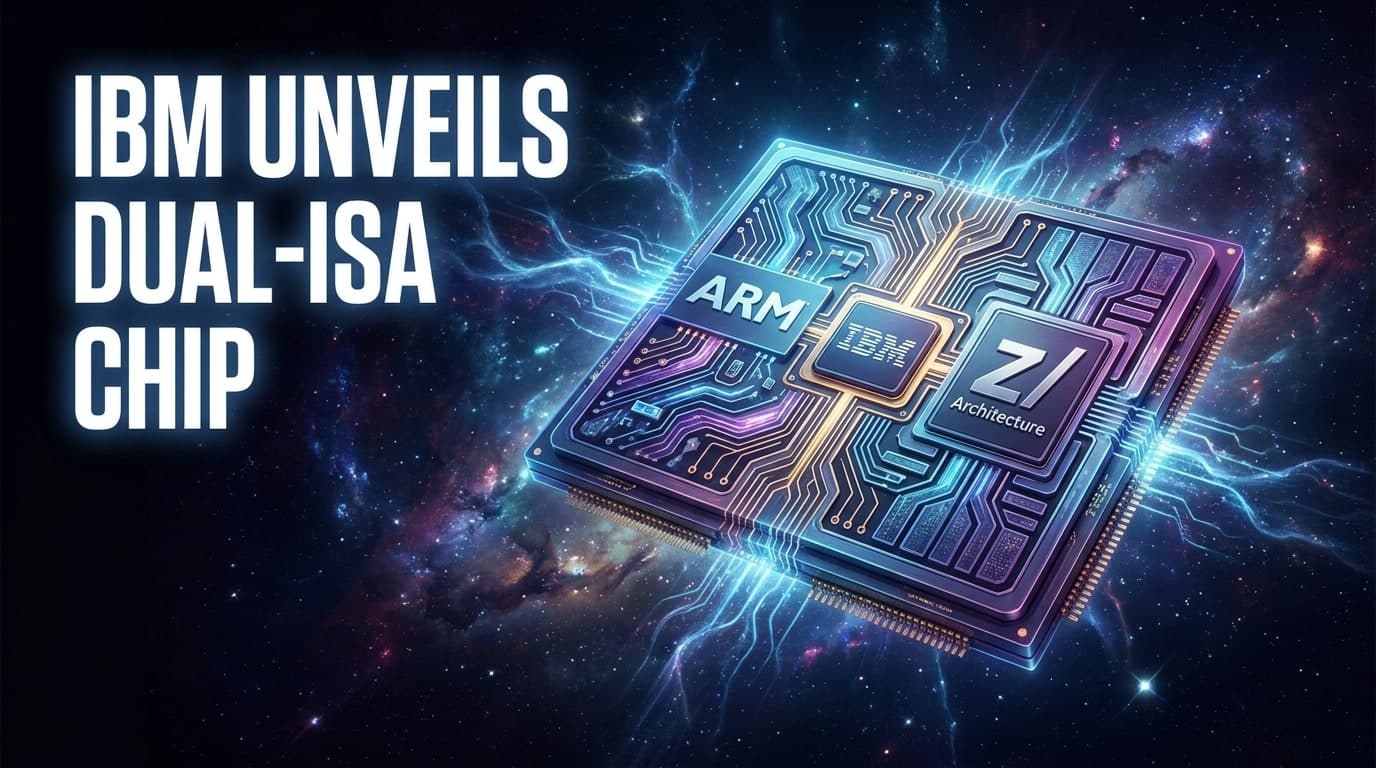
IBM has built its first dual-ISA processor core, one chip that natively runs both ARM and z/Architecture instructions. This matters because it points to how mainframe hardware is evolving to support mixed AI and enterprise workloads without extra translation layers, a shift that touches the infrastructure behind future AI and connected devices.
What actually happened
According to Tom's Hardware, IBM's next-generation mainframe AI processor uses a dual-ISA core that natively executes both ARM and z/Architecture instructions within the same core. The chip is built on a 2nm process node and packs 11 cores. Every core runs at a base frequency of 5.7 GHz, the outlet reported. IBM describes the design as its first core capable of handling two separate instruction set architectures without a translation layer, expanding software support across its mainframe line. The report frames the processor as part of IBM's effort to broaden what workloads a single mainframe chip can run natively, combining enterprise-grade z/Architecture code with ARM-based software.
How we got here
Mainframes have long relied on a single, proprietary instruction set, separating them from the ARM-based chips common in phones, edge devices, and increasingly, cloud servers. Running two architectures on one core, instead of through emulation or separate chips, is a structural change in how IBM designs its hardware. The move follows a broader industry pattern of consolidating chip designs to handle more workload types on fewer, denser components, as process nodes shrink toward 2nm. Specific details on IBM's prior mainframe chip generations and how this design compares were not included in current reporting.
Why this matters for you
For enterprises running IBM mainframes, native ARM support could simplify running modern, ARM-compiled AI and cloud software alongside legacy z/Architecture systems, without extra emulation overhead. For chip builders and infrastructure providers, it signals that dual-ISA design may become a template for merging AI compute with traditional enterprise processing. For everyday users of AI-powered services, including those on wearable and AR devices, faster, more flexible backend chips could eventually mean quicker, more efficient processing of the AI workloads that power these tools, though IBM has not detailed direct plans for consumer or edge deployment.
The bigger question
IBM's dual-ISA core raises a bigger question for chip design. If one core can natively run two very different instruction sets, does the industry still need separate processor lines for enterprise systems and AI workloads? Or does merging architectures on a single chip become the more efficient long-term path, reshaping how future hardware, from mainframes to the devices people wear, gets built?
What to watch
IBM has not announced a public release date, product name, or launch event for this processor, according to available reporting. Watch for official specifications, benchmark data, and deployment timelines from IBM's next hardware disclosure. Further reporting on how this dual-ISA design compares to IBM's previous mainframe chips will help clarify its real-world impact.