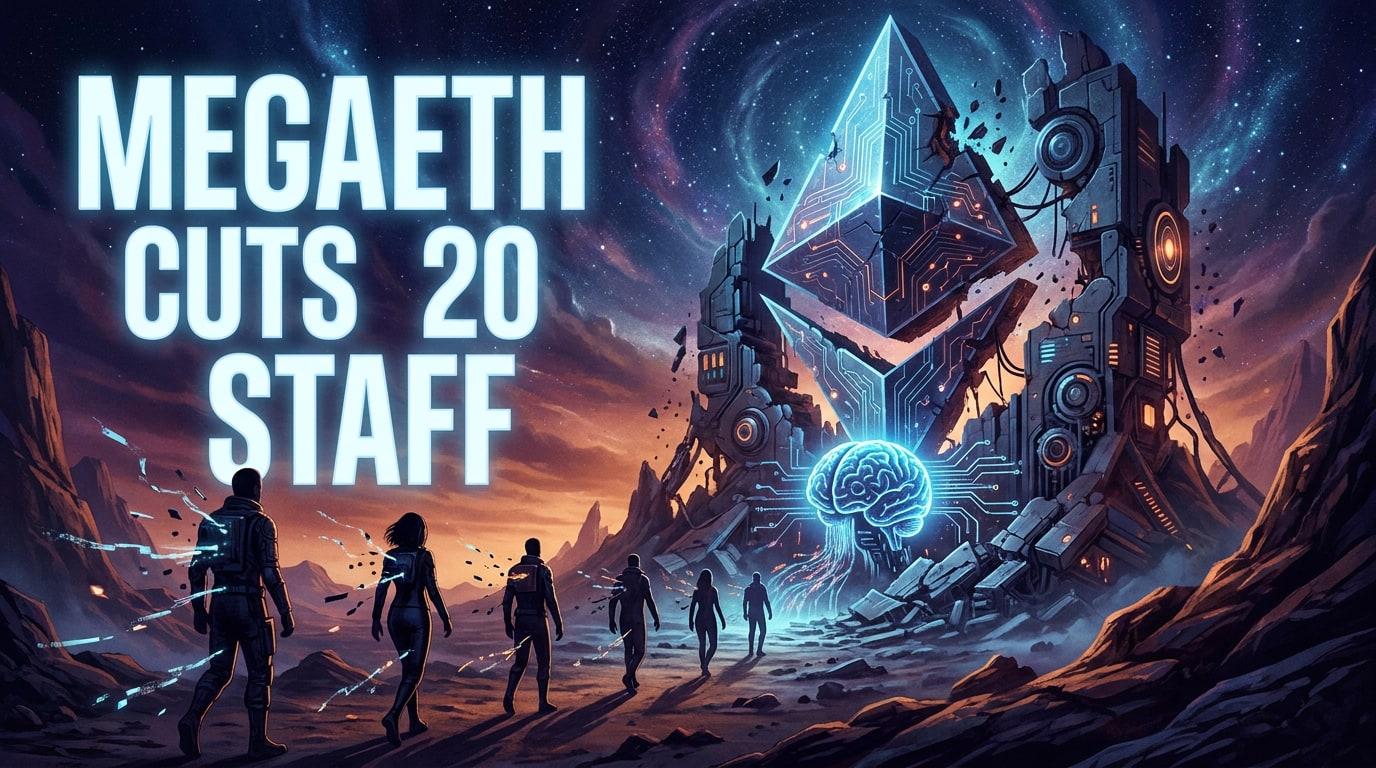
MegaETH, an Ethereum scaling project, cut its workforce by 20% and is now pursuing an AI business, CoinDesk reported on 14 November 2026. The move follows a steep drop in the project's decentralized finance activity, a signal that even funded layer 2 networks are struggling to hold user interest.
What actually happened
MegaETH, a project building a high-performance Ethereum scaling network, reduced its staff by 20%, according to CoinDesk, reported on 14 November 2026. The company is now pursuing an artificial intelligence business, the report said. Total value locked in decentralized finance protocols on MegaETH fell sharply, from more than $245 million (USD) to $8.8 million (USD), per the same report. The report did not specify the exact timeframe of the TVL decline or name the AI products MegaETH plans to build. No executive was quoted in the available report.
How we got here
MegaETH entered a crowded field of Ethereum layer 2 networks competing for developer activity and locked capital. Total value locked, a standard measure of DeFi usage, is one of the metrics used to gauge a network's traction. The drop from $245 million to $8.8 million signals a sharp pullback in user funds. The report did not detail what caused the decline or over what period it happened. It also did not disclose how many employees remain at MegaETH or what AI products the company intends to launch. The pivot toward AI follows a broader pattern of blockchain infrastructure firms diversifying revenue streams beyond crypto-native activity.
Why this matters for you
For MegaETH users, the TVL decline means less liquidity is available on the network's DeFi applications, which could affect trading and lending activity. For builders on MegaETH, a 20% staff reduction may slow development timelines or support response. For the broader Ethereum layer 2 sector, the move raises questions about whether scaling projects can sustain standalone DeFi ecosystems without pivoting to other revenue models. If MegaETH's AI business succeeds, it could set a precedent for other layer 2 teams facing similar funding or usage pressure. Holders of MegaETH-linked tokens, if any exist, face uncertainty about priorities shifting away from core blockchain infrastructure.
The bigger question
Can blockchain scaling projects survive long term by building products outside their original purpose? MegaETH's shift toward an AI business raises a broader question for the industry. If a layer 2 network built for Ethereum transactions diversifies into artificial intelligence, does that strengthen its long-term position, or does it signal that the original business model did not generate enough demand on its own? The answer could shape how investors evaluate infrastructure projects going forward.
What to watch
Watch for further disclosures from MegaETH on its AI product plans and any update on remaining headcount. Also watch whether MegaETH's TVL stabilizes or continues to fall in the coming months. No specific launch date for the AI business has been announced. bonuz.xyz will track how this shift affects MegaETH's position in the Ethereum scaling landscape.