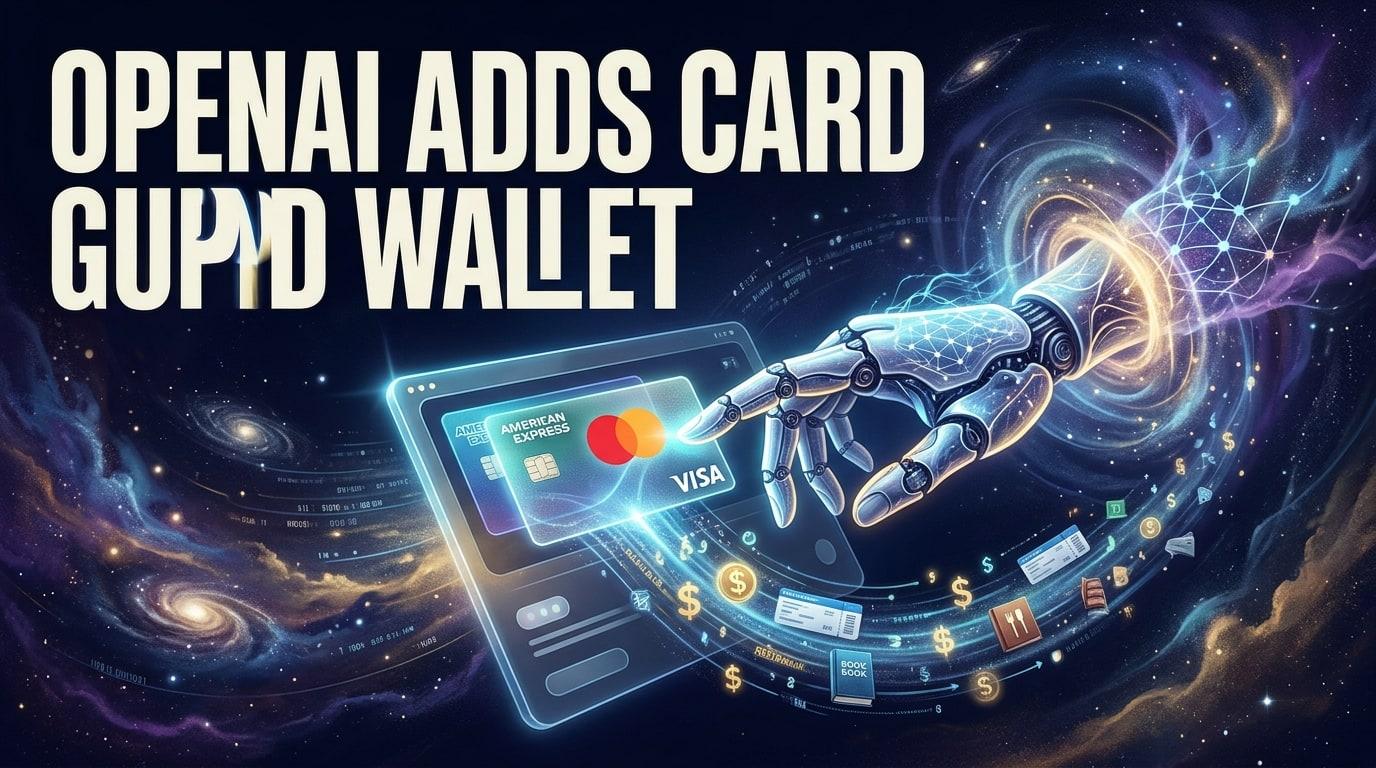
OpenAI added a card wallet to ChatGPT, letting agents make purchases for you. US Pro users can now link American Express, Mastercard or Visa cards. This matters because AI agents are moving from giving answers to spending real money on your behalf.
What actually happened
OpenAI now lets ChatGPT agents authorize purchases through a linked card wallet. US Pro subscribers can connect eligible American Express, Mastercard and Visa cards to their accounts, according to The Defiant. Merchants do not need to change their checkout systems to accept agent-driven purchases. The agent uses the linked card to complete a transaction, while the payment itself flows through existing merchant infrastructure. No pricing details, transaction limits, or rollout timeline were included in the available reporting. OpenAI has not published an official statement confirming the feature's full scope or availability outside the US Pro tier. The report does not specify which ChatGPT plan tiers beyond Pro might gain access, or when the feature might expand internationally.
How we got here
AI companies have spent 2025 racing to turn chatbots into agents that complete tasks, not just answer questions. Shopping and payments are a natural next step, since users already ask chatbots for product recommendations and price comparisons. Linking a card wallet directly to an agent removes a manual step, letting the agent finish a purchase without handing control back to the user. Payment networks like American Express, Mastercard and Visa give OpenAI an established rail to build on, rather than requiring new infrastructure. This follows a broader pattern of AI platforms adding commerce features, though the scale and safeguards of OpenAI's rollout remain unclear from current reporting.
Why this matters for you
For users, this means ChatGPT could soon buy things directly, if you trust it with a linked card. That raises questions about spending limits and accidental purchases. For builders, the news signals that agent-to-merchant payments may not require custom integrations, since existing checkout systems stay in place. For the wearables and smart glasses space that bonuz tracks, this points toward a future where an AI agent tied to a device, not just an app, could handle payments on your behalf. Card networks also gain a new transaction channel, as agents become a buying interface alongside humans.
The bigger question
If an AI agent can spend your money, who is responsible when it makes a mistake? A wrong purchase, a duplicate order, or a scam merchant could all test this system. Card issuers, OpenAI, and users may all point to each other when something goes wrong. As agents gain more autonomy over spending, the line between a tool following instructions and a decision-maker acting on its own becomes harder to define. That line will matter far beyond chatbots.
What to watch
No official rollout date, pricing, or spending limit details have been published yet. Expect OpenAI to clarify safeguards as more users gain access beyond the initial US Pro tier. Card networks and merchants will likely watch transaction volume closely before expanding support. Bonuz will track whether agentic payments extend to wearable and glasses-based interfaces, a natural next step for always-on AI agents.