
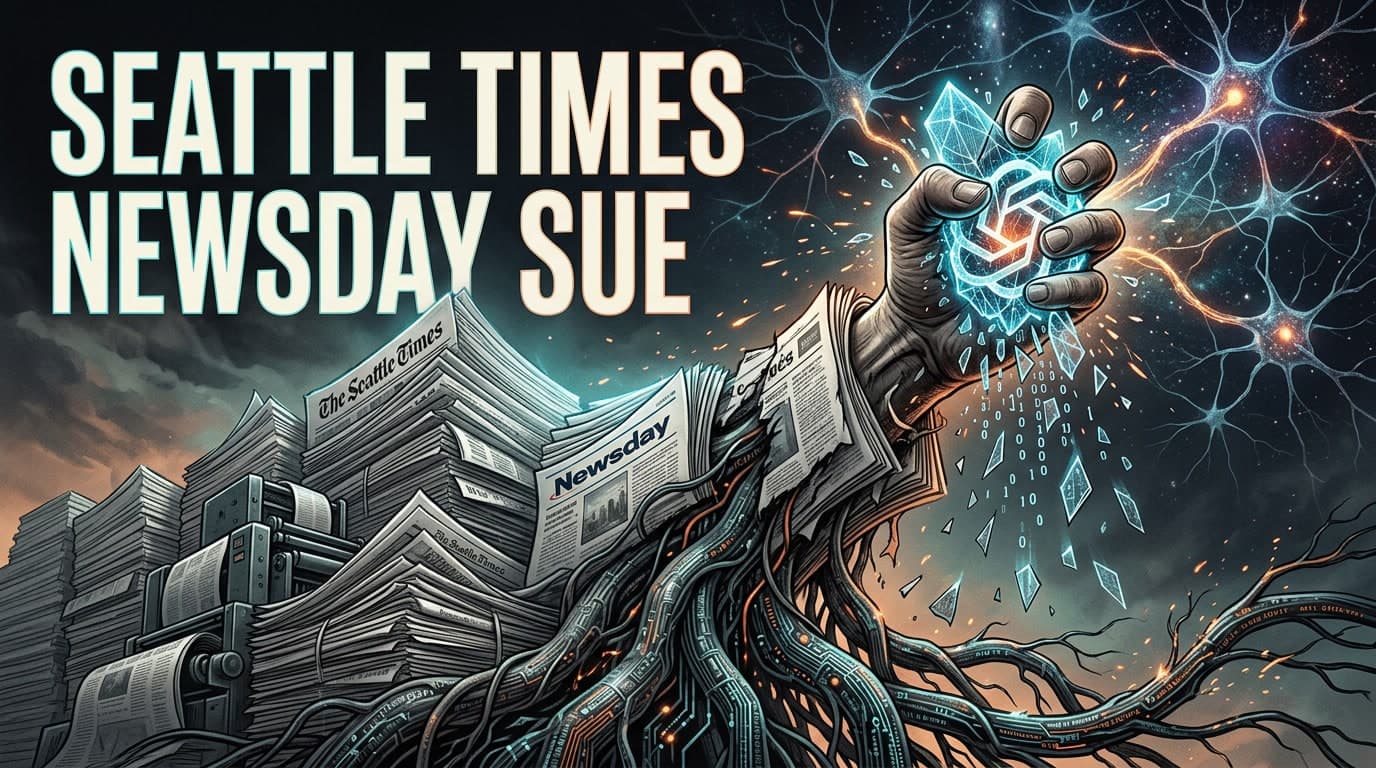
The Seattle Times and Newsday filed a copyright lawsuit against OpenAI and Microsoft on 6 September 2026. The papers say their journalism trained AI models without permission and want those models destroyed, a case that could reshape how AI companies use news content.
What actually happened
The Seattle Times and Newsday allege OpenAI used their reporting as training data without permission, according to The Verge. The outlets say OpenAI's models also reproduce passages from their articles in response to user queries. Microsoft is named as a co-defendant because its Copilot chatbot is built on OpenAI's technology. The two publishers join nearly 400 local newspapers that have already sued OpenAI and Microsoft, according to the report. Those newspapers argue that AI chatbots reduce traffic to their sites, cutting into subscription revenue. The Seattle Times and Newsday are seeking the destruction of any copies of their works held by the companies. They also want the training datasets and AI models built on that content destroyed. OpenAI and Microsoft did not immediately respond to a request for comment, per The Verge.
How we got here
This lawsuit follows a pattern. The New York Times, Ziff Davis, Merriam-Webster, and Encyclopedia Britannica have all sued OpenAI over similar claims, according to The Verge. Nearly 400 local newspapers filed a related suit earlier, arguing chatbots displace the need to visit original sources. The complaint arrives days after OpenAI began rolling out GPT-6 Astra, its most advanced model, on 4 September 2026. That timing puts fresh scrutiny on how new, more capable models are trained and what content feeds them. Publishers say the stakes are rising as AI answers replace clicks to their sites.
Why this matters for you
For publishers, this case adds pressure on OpenAI and Microsoft to reach licensing deals or face demands to tear down trained models. For AI builders, it signals that training data provenance carries growing legal risk, especially as new models like GPT-6 Astra scale up. For users, it could mean chatbots pull back from quoting news directly and point to original sources instead. For hardware makers building AI assistants into future devices, the outcome could set a precedent for what content can train models without payment.
The bigger question
Courts have never ordered a major AI model destroyed for copyright reasons. If a judge grants that remedy here, enforcement across cloud servers, enterprise deployments, and consumer apps built on the model would be unprecedented. That raises a genuinely open question: can an AI model already embedded in daily products realistically be undone, or does scale make destruction remedies mostly symbolic?
What to watch
Watch for OpenAI and Microsoft's formal response to the complaint, not yet filed as of 6 September 2026. Track whether more local newspapers join the nearly 400 already suing, and whether courts consolidate these cases with The New York Times suit. Any ruling on model destruction would set a major precedent for AI training practices industry-wide.