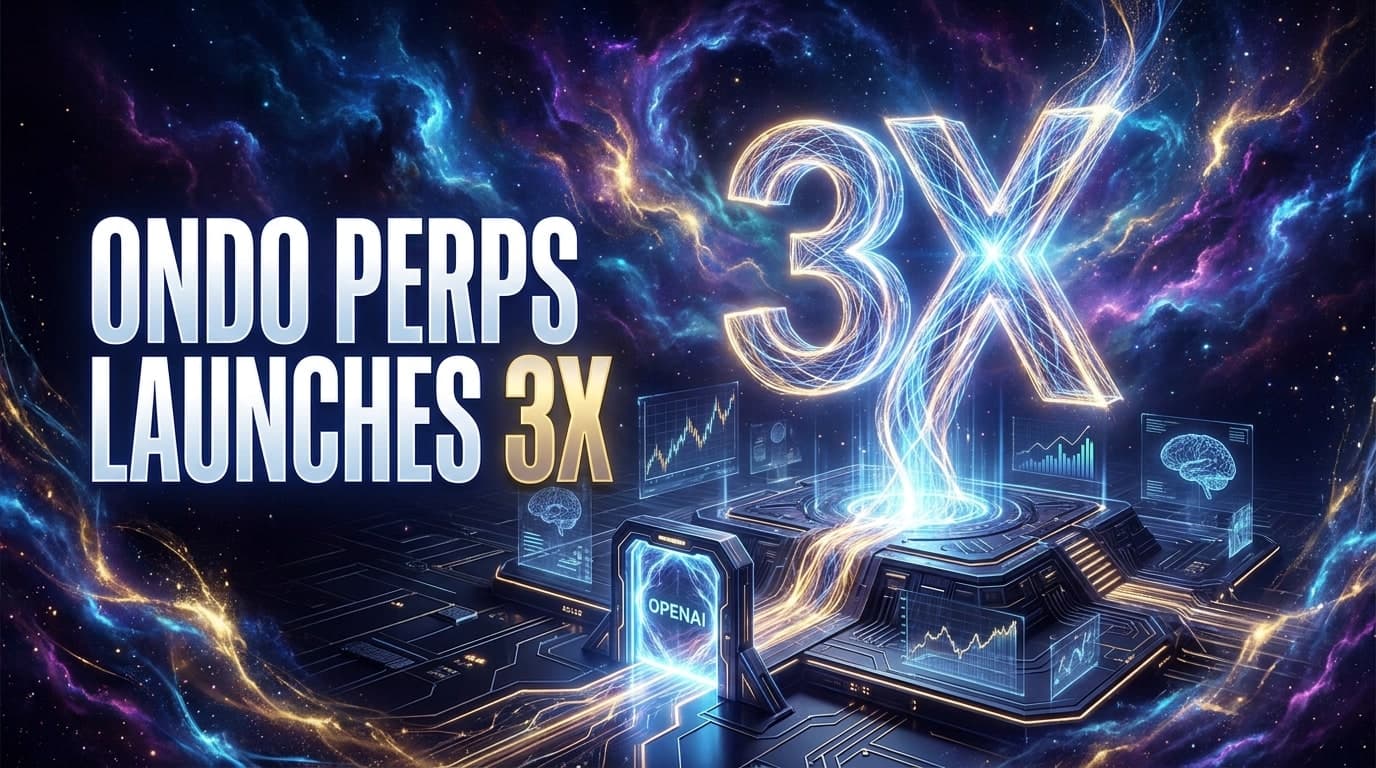
Ondo Perps listed a new 3x leveraged perpetual contract tied to OpenAI's pre-IPO valuation. The product lets traders bet on a private company's valuation through derivatives, without owning real equity or waiting for a public listing.
What actually happened
According to The Defiant, Ondo Perps added a 3x leveraged perpetual contract linked to OpenAI's pre-IPO valuation. The new perpetual carries its own pricing and hourly funding payments, the report said. This differs from Ondo's existing OPAIPon spot note, which is fully funded and does not charge ongoing funding, The Defiant reported. US persons are excluded from trading the contract, according to the report. The report did not specify a launch date, trading volume, or the exact valuation benchmark used to price the contract. No separate statement from Ondo was included beyond what the report describes.
How we got here
Ondo Finance's earlier OpenAI product, OPAIPon, is a fully funded spot note, according to The Defiant. Spot notes require the full value upfront and carry no ongoing financing cost. The new perpetual contract works differently. It uses leverage, so traders can take a position worth more than their deposited capital. Perpetual contracts also require funding payments between long and short holders, charged hourly, to keep the contract price tracking its benchmark. This structure is common in crypto derivatives markets, but here it is applied to a private company valuation rather than a public, exchange listed asset.
Why this matters for you
For traders, the 3x perpetual means larger potential gains and larger potential losses than the spot note, amplified by leverage. Hourly funding payments add an ongoing cost or credit depending on position direction, unlike the spot note's one time structure. US persons cannot access the contract, according to the report, so exposure stays limited to eligible non-US users. For builders, the product shows how derivatives platforms are extending synthetic exposure to private company valuations. Anyone holding the contract for a long period should factor in how funding payments can erode returns over time.
The bigger question
If synthetic derivatives can track a private company's valuation before any public listing, what happens when that company eventually goes public, or never does at all? Could pricing on contracts like this diverge from the real valuation over time? Who verifies the benchmark being tracked, and what happens to open positions if that benchmark source changes?
What to watch
The report did not include a launch date, trading volume figures, or contract expiry details. Watch for confirmation from Ondo Finance on these specifics, and for any regulatory commentary tied to the US person restriction. As tokenized access to pre-IPO style exposure expands, bonuz continues tracking how such products intersect with everyday crypto apps and future hardware like smart glasses.