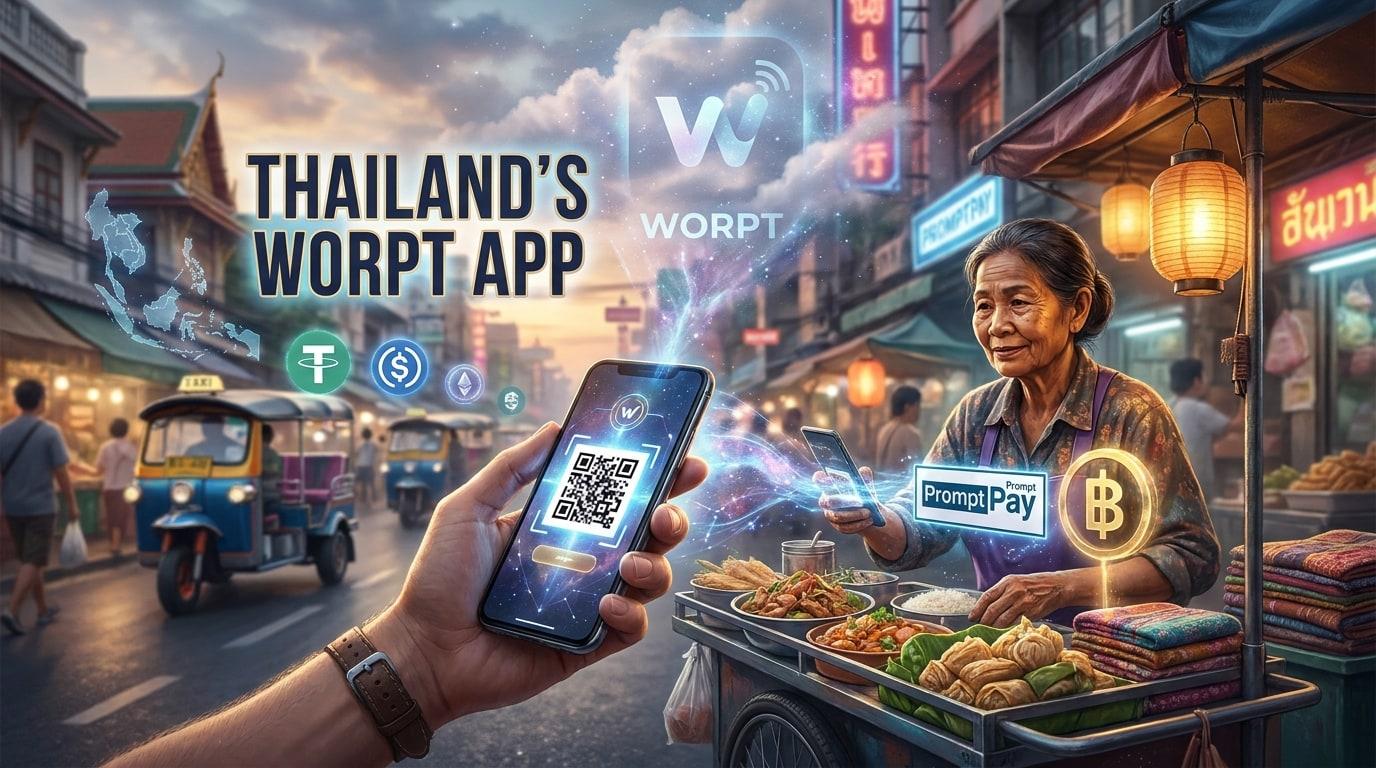
Thailand's WORPT app now lets foreign tourists spend crypto like USDT and USDC as Thai baht through local PromptPay QR codes, no bank account needed. The move shows stablecoins quietly becoming everyday travel money across Asia.
What actually happened
Thai payment app WORPT has launched crypto exchange and payment services for foreign tourists, according to Wu Blockchain. Visitors can convert USDT and USDC into Thai baht and pay at shops and restaurants using local PromptPay QR codes, without opening a Thai bank account. The service was co-developed by e-payment provider Wipay and licensed exchange Waan Exchange. It runs under the TouristDigiPay regulatory sandbox operated by Thailand's Securities and Exchange Commission (SEC). Wipay projects 200,000 users in the first year and expects approximately $440 million (USD) in spending during an 18-month pilot period.
How we got here
Thailand's sandbox reflects a broader Asian push to turn crypto into everyday money, not just an investment asset. The same week, Kazakhstan's central bank said it plans tokenized government bonds as early as the first quarter of 2027, after a 100 billion tenge tokenized bill tranche worth about $22.3 million (USD) sold on the Kazakhstan Stock Exchange, according to Wu Blockchain. Hong Kong's SFC and HKMA also held a forum this week on moving tokenized assets from pilots toward commercial adoption. Regulators across the region are testing controlled sandboxes before opening markets fully.
Why this matters for you
For travelers, this could mean skipping currency exchange counters and converting stablecoins directly into local spending power. For crypto holders, it adds a real-world use case beyond trading. For builders, Thailand's sandbox model offers a template: regulated piloting with licensed partners rather than open deployment. If WORPT hits its 200,000-user target, other Southeast Asian markets may copy the approach. Lifestyle apps that bridge crypto wallets and daily payments, including projects like bonuz, may see growing demand for this kind of stablecoin-to-fiat rail.
The bigger question
Will regulated sandbox apps like WORPT prove that stablecoins can replace cash and cards for travelers, or will strict licensing and geographic limits keep these services niche? The answer could shape how fast stablecoin payments scale into mainstream tourism and everyday commerce worldwide.
What to watch
WORPT's pilot runs for 18 months from launch, with Wipay tracking progress toward its 200,000-user, first-year goal. Kazakhstan's tokenized government bond issuance is expected as early as Q1 2027. Hong Kong regulators continue pushing tokenized funds and interbank settlement toward commercial scale through further forums.