












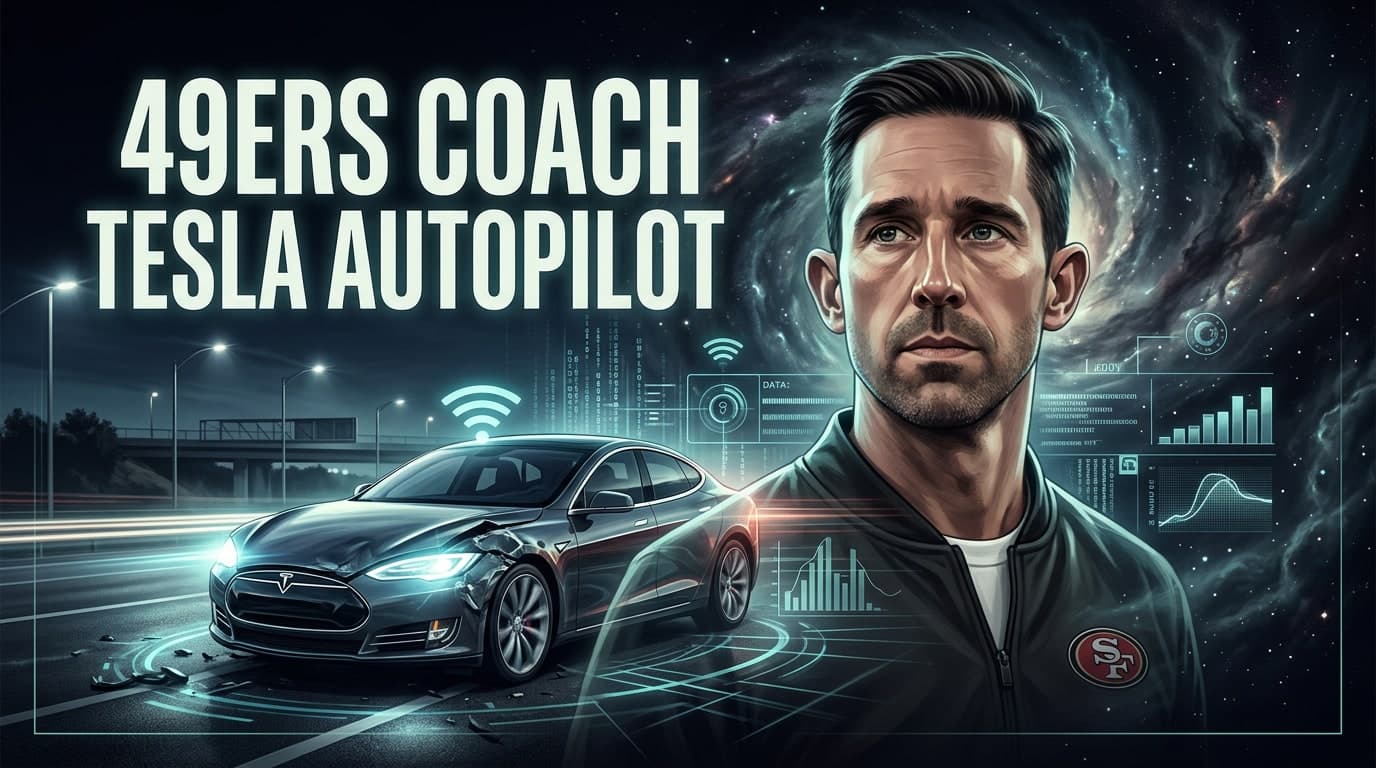
San Francisco 49ers coach Kyle Shanahan said his Tesla was on Autopilot when he crashed near Palo Alto four weeks ago, but he still blames himself. The admission puts fresh attention on driver assist systems as automakers push them into daily use, and on who carries responsibility when they fail.
What actually happened
Shanahan crashed his Tesla near downtown Palo Alto about four weeks before a press conference on 9 August 2026, according to The Verge. He initially said only that the crash was his fault. At the recent press conference, he revealed Autopilot was engaged. "I've had Autopilot for nine years, so I'm pretty comfortable with it and, you know, who knows what happened when I turned around? Whether it malfunctioned or whether I knocked it off? That's something I don't know yet," Shanahan said, per The Verge. He added: "regardless, that's... it is always your fault, whether you're on Autopilot or not. You can't take your eyes off the road. It's a partnership driving, you don't just turn it over to a computer." The Verge reports Autopilot has been linked to hundreds of crashes and dozens of deaths over the years, with some cases leading to legal settlements worth hundreds of millions of dollars (USD).
How we got here
Tesla launched Autopilot in 2015 as one of the first mass-market driver assist systems, meant to handle steering, braking and lane changes under driver supervision. Nine years on, Shanahan says he still trusts it enough to use it daily. Tesla has faced years of scrutiny over crashes tied to Autopilot and its more advanced Full Self-Driving option, with regulators and courts examining how much responsibility falls on the software versus the driver. Shanahan's account adds a high-profile voice to that debate, not a lawsuit or new data, but a public figure describing a real-world lapse without blaming the technology itself.
Why this matters for you
For Tesla owners, Shanahan's account is a reminder that Autopilot still requires full attention, no matter how many years someone has used it. For builders working on driver assist and AR interfaces, it highlights demand for clearer handoff signals between human and machine. For Tesla, each high-profile incident adds pressure on how it markets Autopilot's capabilities versus its limits. Investors watching Tesla's autonomy roadmap should note that public trust, not only technical performance, shapes adoption and regulatory scrutiny going forward.
The bigger question
If a driver with nine years of experience using Autopilot cannot say whether the system malfunctioned or he switched it off, how should responsibility be split between drivers and automakers in assisted-driving crashes? Does "partnership driving" mean the human is always accountable, or should liability ever shift toward the software when systems fail silently?
What to watch
No official investigation timeline has been announced for Shanahan's crash, and Tesla has not issued a public statement on the incident. Bonuz will track any regulatory or legal developments tied to Autopilot, and how driver assist systems intersect with emerging AR interfaces designed to give drivers clearer, real-time handoff cues.