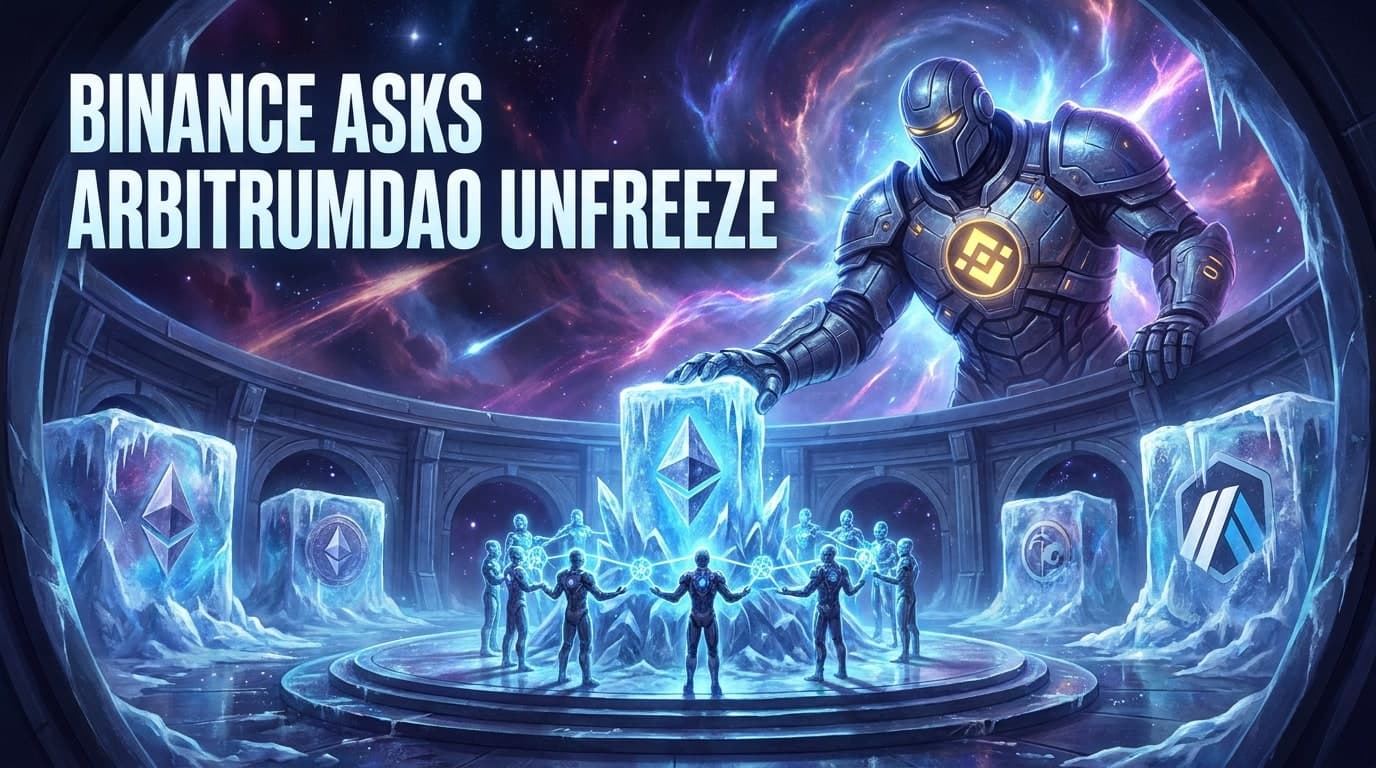
Binance has asked ArbitrumDAO to unfreeze ETH and ARB tokens tied to past security incidents, proposing to use recovered funds to replenish reserves for affected customers. The request tests whether a major Ethereum Layer 2's governance can approve asset recovery for a centralized exchange, a decision that could shape how other L2s handle frozen funds.
What actually happened
According to The Defiant, Binance's draft proposal would let ArbitrumDAO release frozen ETH and ARB to cover customer losses. Binance said the governance process could take seven weeks or longer. Separately, Lido added Firelight loss protection to its Earn vaults, setting first-period limits near $12.1 million for EarnETH and $4 million for EarnUSD, ahead of the DAO's existing share-burn buffer, according to The Defiant. Blast shut down its Layer 2 and directed users to a recovery site after bridge assets fell to $6.51 million, about 84% below the reading from 26 October. Mercado Bitcoin's attacker swapped stolen tokens for $10.55 million in ETH, Arkham said, tracing $13.26 million from labeled wallets. ETH traded at $2,272, down -6.24% over 24 hours, swinging between $2,329 and $2,443, with 24-hour volume at $14.40 billion and market capitalization at $277.64 billion.
How we got here
Arbitrum's frozen funds trace to earlier security incidents on the network, though the available reporting does not specify which exploits created the reserve. Binance's request follows a broader pattern of exchanges turning to Layer 2 governance after on-chain freezes, testing whether DAOs will act as recovery agents for centralized platforms. Lido's Firelight layer adds a dedicated loss buffer on top of the protocol's existing share-burn mechanism, responding to growing scrutiny of staking vault risk. Blast's shutdown follows a steady decline in bridged assets, falling from a much higher reading on 26 October to $6.51 million now, according to DefiLlama data cited in the report.
Why this matters for you
For ArbitrumDAO token holders, this vote decides whether governance can be used to backstop a centralized exchange's losses, a precedent that could invite similar requests from other platforms. Stakers using Lido gain an added protection layer, but first-period limits are capped, so large losses could still exceed coverage. Users still holding funds on Blast need to act quickly, since bridge assets have nearly disappeared. Holders tracking ETH flows should note that the Mercado Bitcoin attacker converted stolen funds into ETH, a reminder that stolen assets often move through Ethereum's liquidity before exiting.
The bigger question
Should a Layer 2's token holders be asked to vote on releasing frozen assets to cover a centralized exchange's losses, and what happens if the vote fails or drags past the expected seven weeks? The outcome could define how far DAO governance extends into exchange recovery, a question every Ethereum Layer 2 may eventually face as centralized platforms seek on-chain remedies for their own losses.
What to watch
Binance expects ArbitrumDAO's governance process to take seven weeks or longer, meaning a resolution could still be weeks away. Lido's Firelight limits apply to the current period, with adjustments likely as vault deposits grow. Blast's recovery site remains the only route for stranded users. Bitcoin and Ether ETFs drew $128 million as flows rebounded after the midterms, per Cointelegraph, a trend worth watching alongside ETH's own price moves.
This article is information, not financial advice. Prices are a snapshot and change constantly. Nothing here is a recommendation to buy or sell any asset. Do your own research.