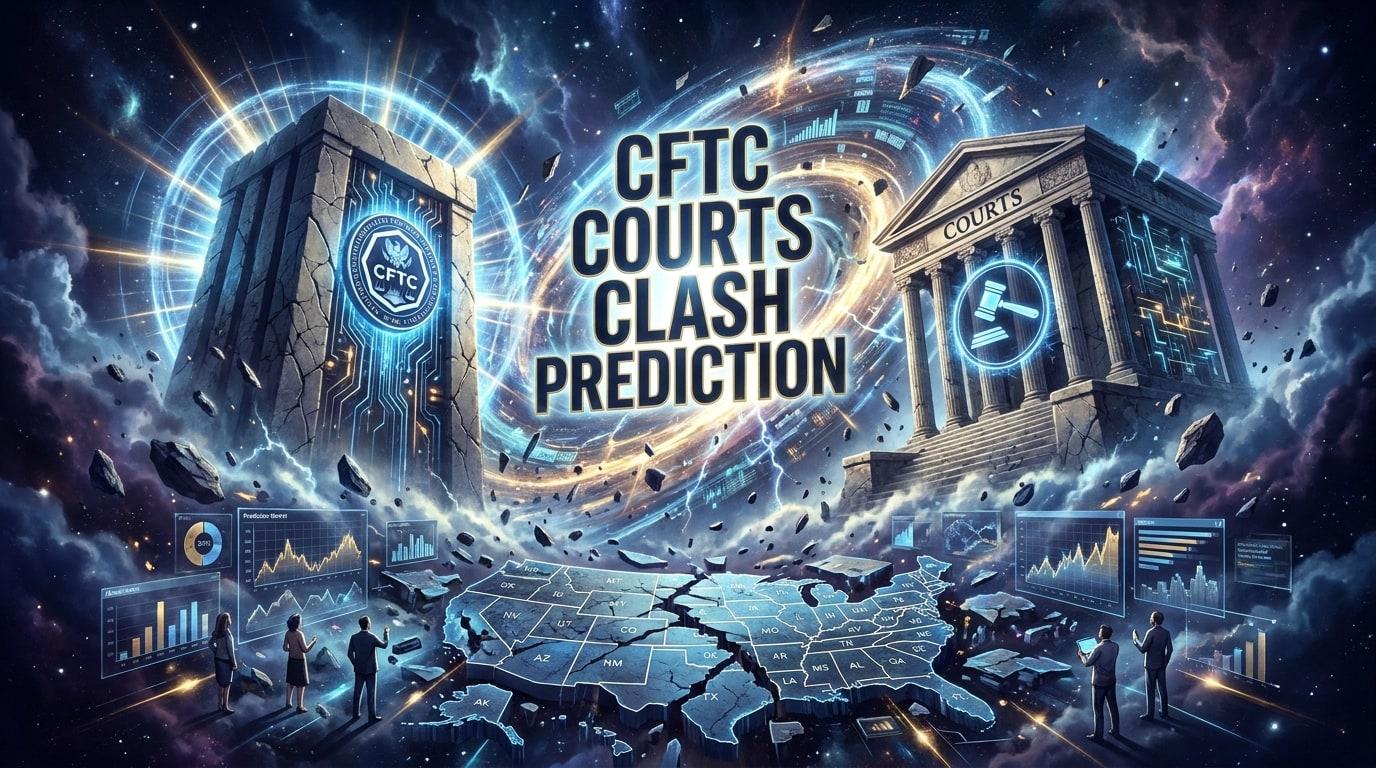
The U.S. Commodity Futures Trading Commission says regulated prediction market exchanges cannot block customers by state. Firms like Kalshi are under court orders that require exactly that. The two directives contradict each other. Anyone using or building on prediction markets now faces unclear rules about who can trade and where.
What actually happened
According to CoinDesk, the Commodity Futures Trading Commission issued a demand stating that regulated exchanges cannot cut off customers on a state-by-state basis. The report names Kalshi as one firm currently operating under court orders that require state-level restrictions. The CFTC's position directly contradicts those court mandates. CoinDesk's report does not specify which states are involved, the court cases behind the orders, or a timeline for resolution. No dollar figures, user counts, or direct quotes from the CFTC or Kalshi appear in the available reporting. The clash places a federal regulator and the judiciary on opposing sides of the same question, whether state laws can limit access to federally regulated prediction markets.
How we got here
Prediction markets such as Kalshi have grown rapidly in the United States, offering contracts on elections, economic data, and other events. Some states have challenged this growth, arguing these contracts amount to unauthorized gambling under state law. Courts in those states have sided with that view, ordering platforms to block in-state users. The CFTC, which oversees federally regulated derivatives markets, has taken the opposite stance, arguing that federal registration should prevent state-by-state blocking. This tension is not new. Prediction markets have faced state-level gambling challenges for years, but a direct standoff between a federal regulator and courts over compliance obligations marks an escalation of that fight.
Why this matters for you
For users, this means the rules on where prediction market contracts can be traded remain unsettled. Access could change depending on which authority a platform chooses to follow. For builders, the conflict raises compliance risk, since following CFTC guidance could still trigger contempt findings in state courts. For investors tied to prediction market platforms, regulatory uncertainty is a direct business risk affecting user growth and legal costs. Until the conflict resolves, expect continued caution from exchanges and possible further state-by-state restrictions despite the CFTC's stated position.
The bigger question
When a federal regulator and a court order directly disagree, which one must a company legally obey? Prediction markets now sit at the center of that unresolved question. The answer could shape how far federal preemption extends over state law, not only for prediction markets but for other federally regulated financial products operating across U.S. state lines, including crypto exchanges.
What to watch
The available reporting does not include a hearing date, appeal deadline, or a CFTC enforcement timeline. Watch for further court filings involving Kalshi and for any formal CFTC guidance addressing state preemption. Bonuz will continue tracking this story as new filings or regulatory statements emerge, since clearer rules matter for any app built around real-time prediction markets.