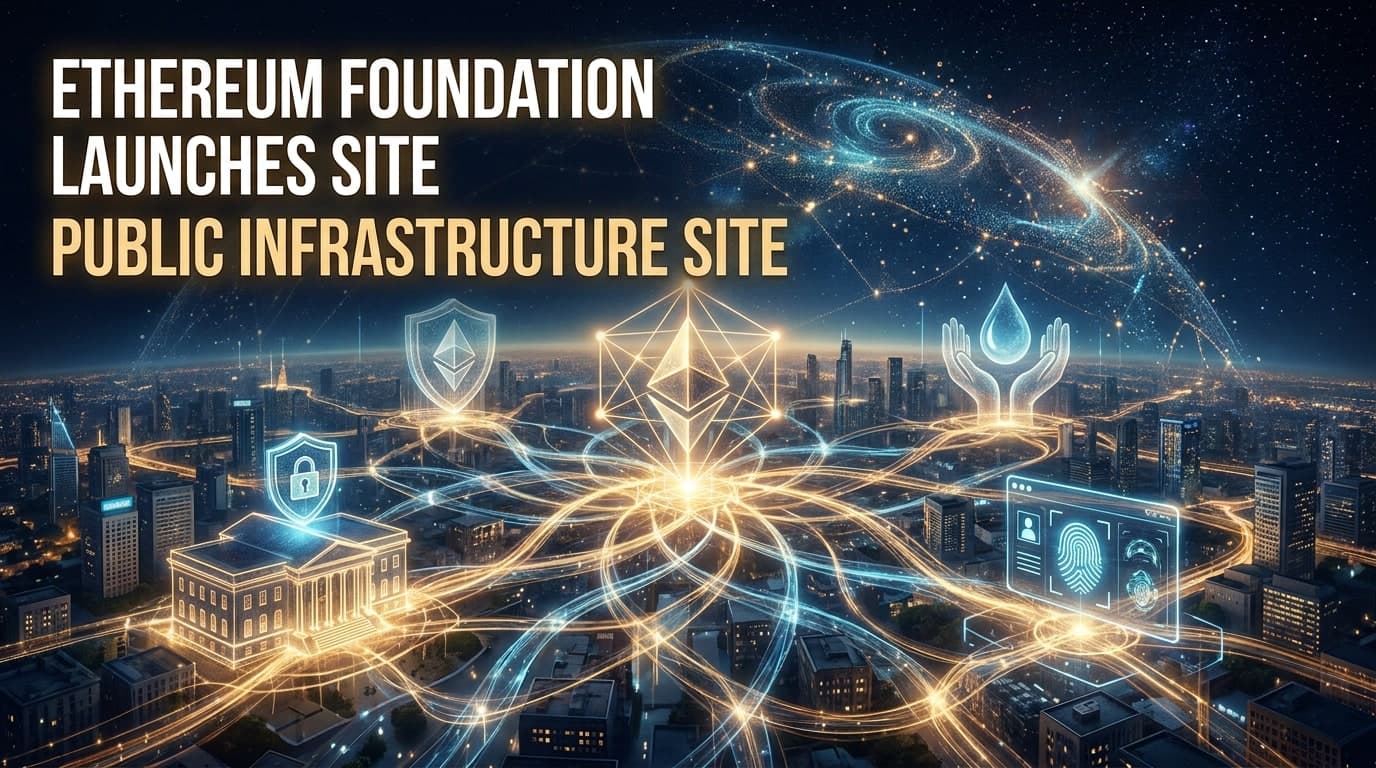
The Ethereum Foundation launched a new website explaining how its blockchain can power government services, humanitarian aid, and digital identity systems without a single controlling operator. This matters because it signals blockchain's shift from speculation to real-world public infrastructure, offering a working alternative to centralized government databases.
What actually happened
On 3 November 2026, the Ethereum Foundation published a new website, publicsector.ethereum.foundation, aimed at governments, multilateral organizations, and NGOs, according to the Ethereum Foundation Blog. The site collects explanations of Ethereum, case studies, and practical resources for public-interest institutions. One case study covers Bhutan's National Digital Identity (NDI) system, which lets people store digital credentials in personal wallets instead of a centralized government database. A shared registry on Ethereum lets participating services verify credential authenticity without publishing personal data on the network. The Foundation's Technical Foundations team also built a proof of concept for humanitarian aid coordination, combining decentralized identity and private payment mechanisms so organizations can coordinate aid without exchanging sensitive personal records or relying on one agency to run the network.
How we got here
Governments have experimented with blockchain pilots for years, but most relied on private, permissioned networks controlled by single vendors or agencies, raising questions about long-term access and vendor lock-in. Ethereum's public network offers an alternative, no single entity operates it, and anyone can verify records independently. The Bhutan NDI system addresses a practical problem, people living in remote mountainous areas facing long, costly journeys to access services in person. Instead of a centralized database, Bhutan built a system where individuals hold credentials themselves. The humanitarian proof of concept grew from discussions with aid organizations seeking to coordinate overlapping assistance programs without merging sensitive personal records into one shared system.
Why this matters for you
For governments, this offers a way to adopt shared digital infrastructure without ceding permanent control to one vendor or losing the ability to switch providers later. For individuals, it means potentially holding personal credentials, like identity documents, directly in their own digital wallets rather than trusting one central database. For developers and builders, the published case studies and technical write-ups offer concrete blueprints for building identity and coordination tools on Ethereum, beyond typical finance or trading applications. For humanitarian groups, the proof of concept suggests a path to coordinate aid delivery while keeping sensitive beneficiary data under each organization's own control, reducing risks from single points of failure or data breaches.
The bigger question
If public infrastructure runs on a network no single institution controls, who becomes accountable when something goes wrong, a service outage, a disputed credential, a security flaw in the underlying protocol? Decentralization removes single points of failure but also complicates traditional lines of responsibility that courts, regulators, and citizens rely on. Can institutions gain the resilience of shared, neutral infrastructure without losing clear accountability, and will governments and citizens worldwide accept that trade-off for identity systems, aid programs, and other services that affect daily life?
What to watch
The Ethereum Foundation's publicsector.ethereum.foundation site is live now, with additional case studies and technical articles from the Technical Foundations team expected to follow. Watch for further details on the humanitarian aid proof of concept, including technical design documents and plans for future development. More governments may publish their own case studies as adoption discussions continue. Bonuz will track whether similar identity and credential models extend into consumer-facing wearable and smart glasses applications.