













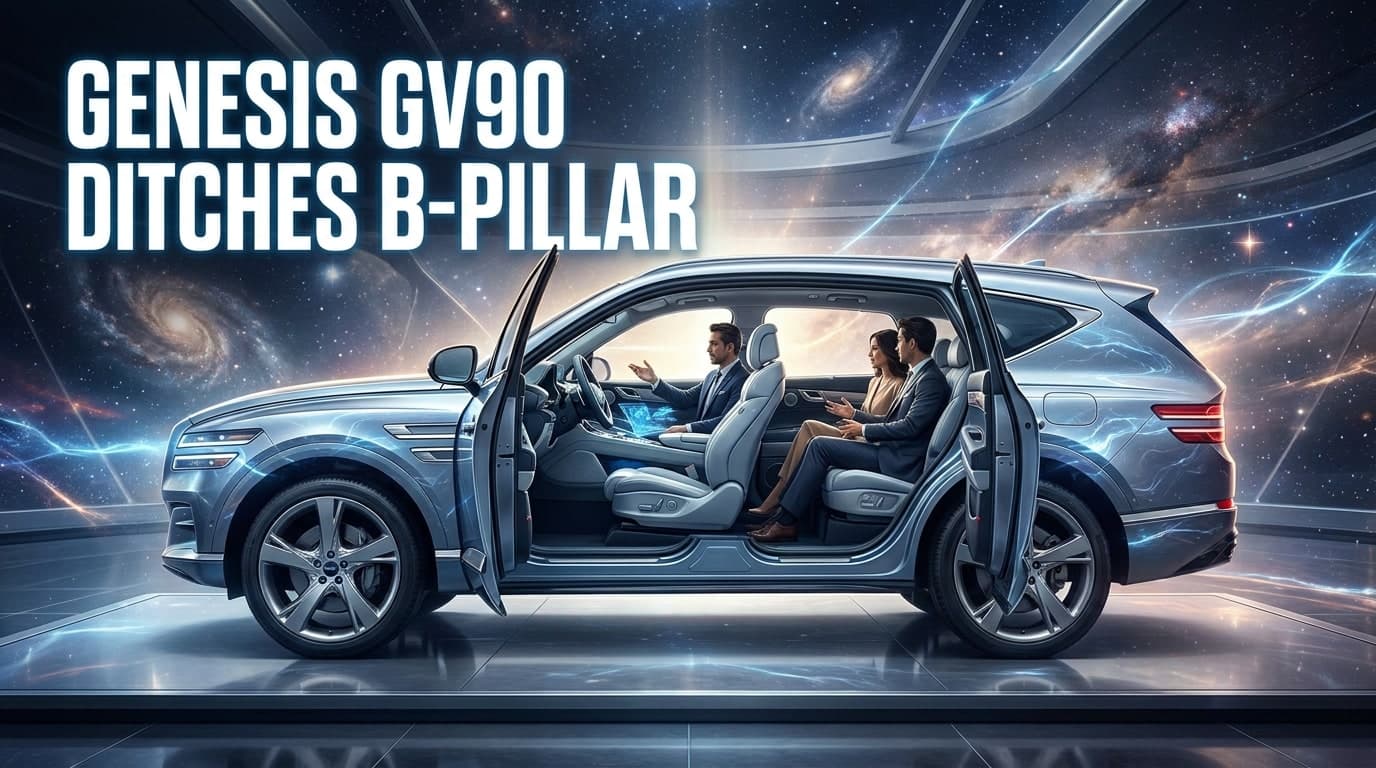
Genesis unveiled the GV90, a three-row electric SUV with coach-style doors that remove the B-pillar entirely and front seats that rotate 180 degrees to face rear passengers. The design pushes further than most automakers dare, testing how much structural risk luxury EV buyers will accept for a more dramatic cabin experience.
What actually happened
Genesis, Hyundai's luxury brand, revealed the GV90 on 20 August 2026, according to The Verge. The company calls its door system the Neolun Arch Gate, described as the world's first independently opening and closing hidden B-pillar coach door, per Genesis, as reported by The Verge. The doors open outward on both rows, removing the B-pillar, the support beam that normally braces the roof against rollover and absorbs crash energy. Genesis says it replaced the beam with dual high-strength steel tubes and a cabin frame 1.5 times thicker than standard, reinforced with structural foam. The GV90 runs a 123.5kWh battery at 800 nominal volts with a wireless battery management system, powering two drive units for a combined 657 horsepower and 590 lb-ft of torque. It supports 350kW DC fast charging with an estimated 310 mile range. Front seats rotate 180 degrees when parked. The cabin includes a 23.6-inch OLED display that expands to 24.6 inches, a 25-inch heads-up display, heated floors and armrests, 15-bladder massaging seats, and a roof airbag.
How we got here
The B-pillar has long been treated as non-negotiable in vehicle safety, providing rollover protection and absorbing side-impact energy, as The Verge notes. Seat-rotation designs like the GV90's have appeared before, mostly in early autonomous vehicle concepts and in Zoox's purpose-built robotaxis, but rarely in a production three-row SUV. The reveal also lands as many US automakers pull back from ambitious EV bets, refocusing on affordability and profitability amid slowing demand. Genesis is moving the opposite direction, adding complexity and cost rather than trimming it, a bet that stands out against a cautious EV market.
Why this matters for you
For buyers, the GV90 signals that ultra-premium EV design is entering an era of visible risk-taking, favoring experience over convention. For regulators and safety testers, it raises a concrete question: whether removing a structural pillar can truly match traditional crash performance, something only independent testing can confirm. For rival automakers, a successful GV90 could normalize B-pillar-free coach doors and rotating seats as achievable, not experimental. For skeptics, a failed crash test could set the design back years and reinforce caution across the industry. Nothing changes overnight, but expectations for luxury EV interiors may shift.
The bigger question
Genesis says its reinforced frame matches conventional B-pillar safety, but no independent crash test data has been published yet. Can dramatic changes to safety-critical vehicle structures earn public trust before real-world crash data confirms them, or does every leap like this need proof first?
What to watch
Genesis has not announced pricing, a release date, or independent crash test results for the GV90. The Verge notes that safety regulators and third-party testing groups will ultimately determine whether the hidden B-pillar structure meets real-world standards. Bonuz will follow official test results and launch details as more three-row luxury EVs reach the US market.