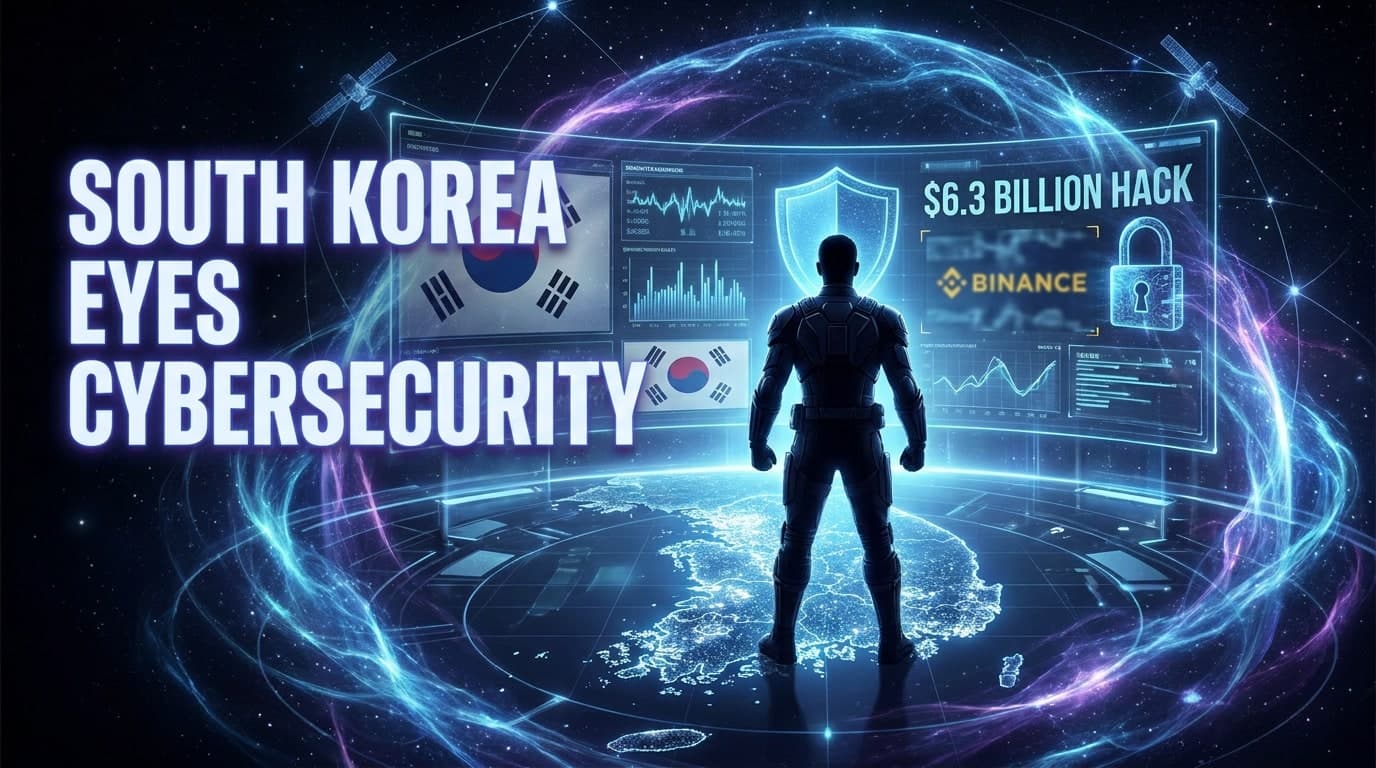
South Korea's president Lee Jae Myung called for a national cybersecurity czar after a $6.3 billion (USD) hack hit crypto exchange Binance. The proposal shows how governments now treat major exchange breaches as national security threats, not only industry losses for traders.
What actually happened
South Korea's president, Lee Jae Myung, said the country needs a government-wide cybersecurity agency, according to CoinDesk. He raised the idea after a $6.3 billion (USD) hack tied to Binance, the report said. Lee named artificial intelligence as a growing driver of risk for financial institutions and critical infrastructure. The report, published 3 November 2026, did not give a date for the Binance hack, describe how it happened, or state how much of the $6.3 billion (USD) has been recovered. It did not include a direct quote from Lee or details on the proposed agency's budget, staffing, or timeline. No other South Korean officials or Binance representatives were named in the report.
How we got here
Crypto exchanges have faced a string of large breaches in recent years, pushing security back onto national agendas. South Korea runs one of the world's most active retail crypto markets, with regulators already monitoring exchanges closely. A hack of this size at Binance, one of the largest global exchanges, raises the stakes for any country where its users trade. Lee's call follows a broader pattern of governments treating crypto infrastructure as part of national critical infrastructure, alongside banks and power grids. The source material does not detail prior cybersecurity policy in South Korea or earlier statements from Lee on this topic.
Why this matters for you
For crypto holders, a dedicated agency could mean faster incident response and clearer rules if exchanges are breached. For builders and exchanges operating in South Korea, new oversight could bring stricter security audits or compliance requirements. For hardware makers linked to crypto wallets and identity, including companies building smart glasses with embedded wallet features, government-grade cybersecurity standards could set a new bar for device-level security. Users should expect more scrutiny of how exchanges store funds and verify transactions. None of this is confirmed policy yet. Lee's statement is a proposal, not legislation, and no agency has been created.
The bigger question
If governments start treating crypto exchanges like banks or power grids, who should set the security standard, a national regulator, the exchanges themselves, or an international body? A $6.3 billion (USD) loss shows how fast failures can scale across borders. Does securing global crypto infrastructure need one government's rules, or a shared standard that works everywhere users trade?
What to watch
No date has been set for South Korea to create the proposed agency. Watch for follow-up statements from Lee's office, any draft legislation, or a response from Binance on the $6.3 billion (USD) hack. Bonuz will track how this shapes exchange security standards relevant to hardware wallets and identity tools built into future smart glasses.