











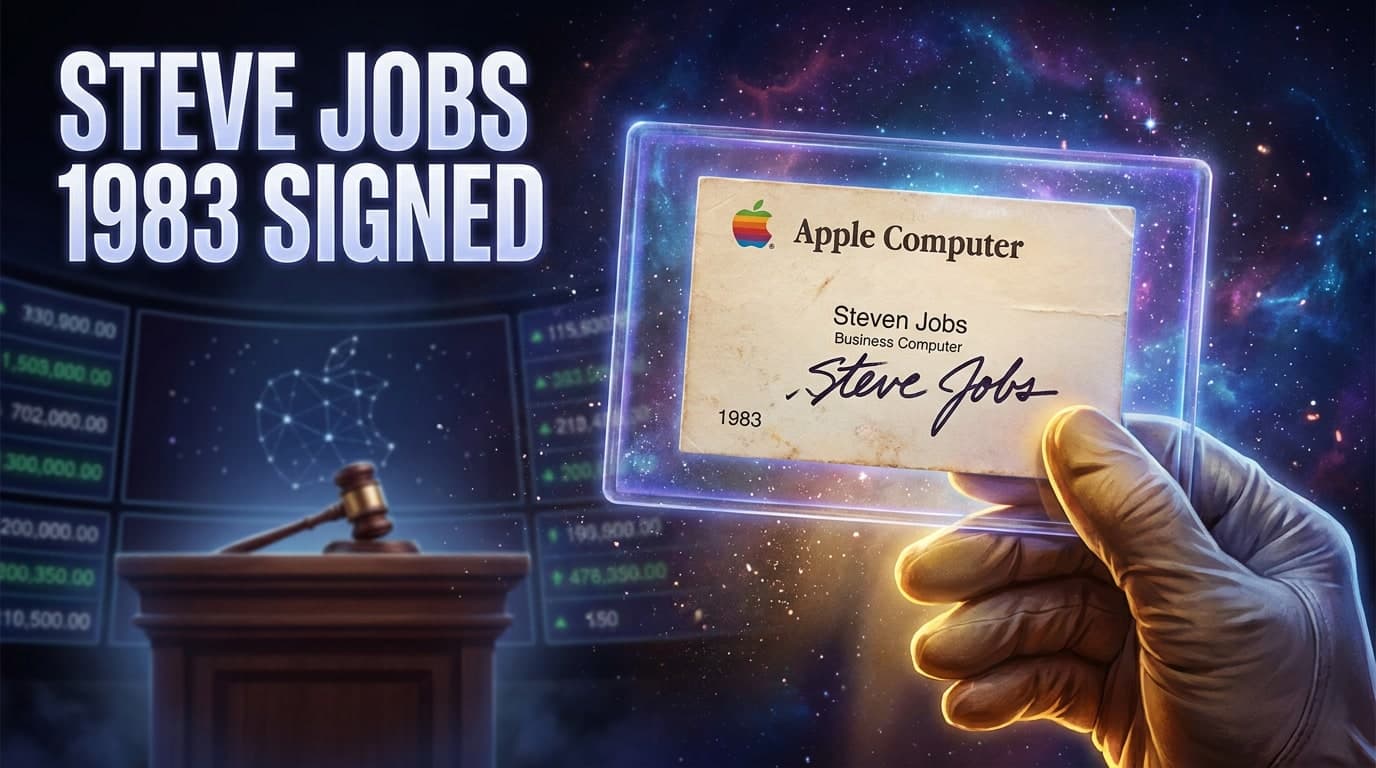
A rare 1983 business card signed by Steve Jobs has opened for auction at $70,000 (USD). It is only the second known signed card from that era, following a previous sale that reached $180,000 (USD). Anyone tracking how tech history gets priced and traded should take note.
What actually happened
According to Tom's Hardware, the card is listed on RR Auction with an opening bid of $70,000 (USD). The item carries a Gem Mint 10 grade, the top rating on a 10-point authenticity and condition scale used by memorabilia grading services. A previous 1983 Steve Jobs signed business card sold for $180,000 (USD) at auction just a couple of years earlier, per the report. This new listing marks only the second known signed card from that period to reach public auction. The report does not include a statement from RR Auction or details on when bidding closes.
How we got here
The $180,000 (USD) sale of an earlier signed card set a reference price for this category. That record likely shapes expectations for how bidders value scarce items tied to Steve Jobs's early career at Apple. A Gem Mint 10 grade gives buyers a standardized measure of authenticity, distinct from private appraisals. The current $70,000 (USD) opening bid sits below that prior record, leaving room for the price to climb before the auction closes. Details on the auction's closing date were not included in the report, and RR Auction has not been quoted directly.
Why this matters for you
For collectors, this sale is a data point on how tech founder memorabilia holds or grows in value over time. For buyers newer to the space, Gem Mint 10 grading offers a clearer way to judge authenticity before bidding. For crypto and Web3 audiences, the case highlights a familiar pattern, verified scarcity driving price discovery, similar to how provenance and grading work for digital collectibles and NFTs. Builders working on tokenized real-world assets may see this auction as a small but relevant signal. Physical collectibles with strong verification systems are exactly the kind of assets that tokenization platforms aim to bring on-chain, provided legal and custody questions get solved.
The bigger question
If grading and provenance can already be standardized for physical memorabilia, what happens when that same verification moves fully on-chain? Would tokenizing rare items like this business card make the market more transparent, or would it simply digitize the same scarcity games collectors already play? The answer could shape how future generations trade tangible pieces of technology history.
What to watch
The report does not list a closing date for this auction. Watch RR Auction's listings for updates on the final sale price. If bidding surpasses the $180,000 (USD) benchmark, expect renewed attention to early Apple memorabilia. Bonuz will track how this and similar auctions intersect with the growing conversation around tokenized collectibles and provenance verification.