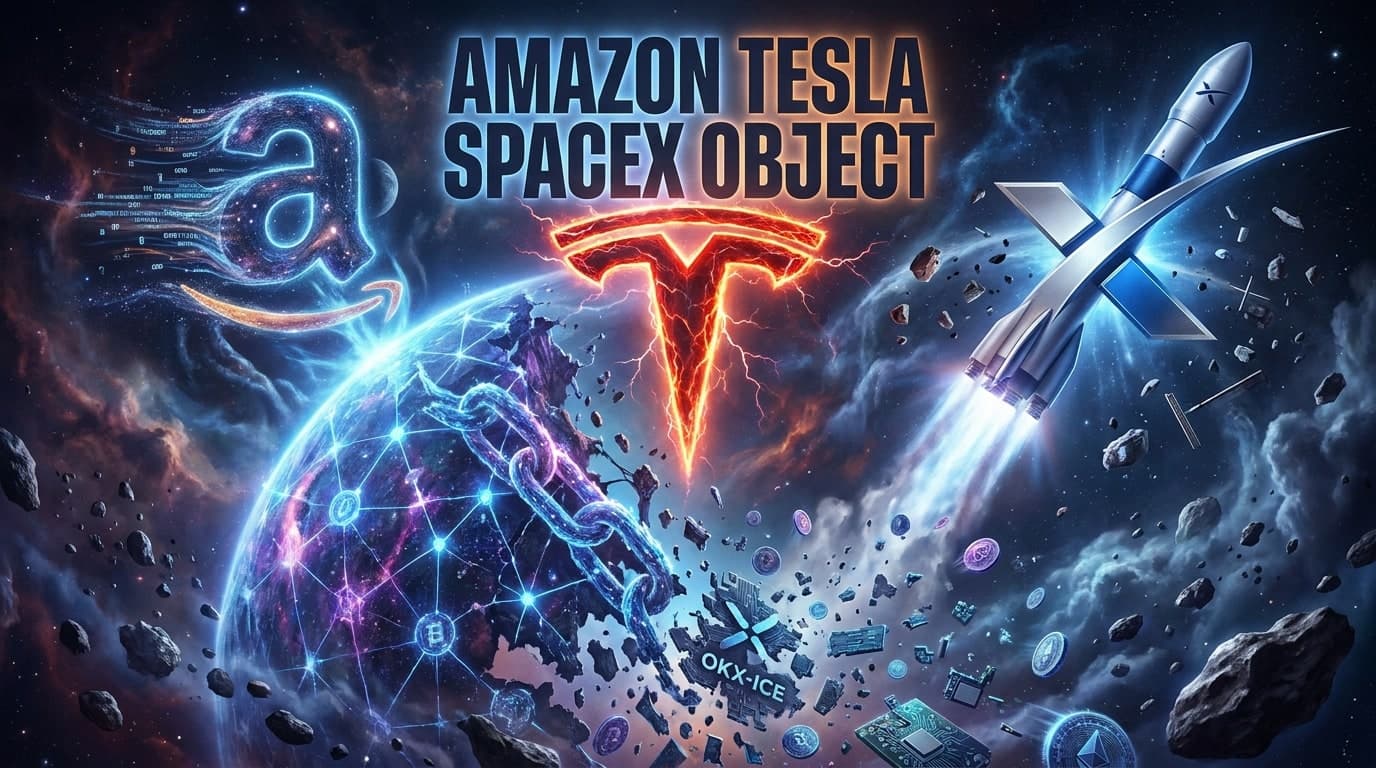
Amazon, Tesla and SpaceX have objected to a tokenized stock venture between OKX and ICE, joining 56 companies in total. Nearly 80% of the stocks initially selected for the project have opted out. The pushback raises questions about how tokenized equities can work without issuer consent.
What actually happened
According to CoinDesk, objections to the OKX-ICE tokenized stock venture have reached 56 companies, with Amazon, Tesla and SpaceX among the latest to join. The report states that nearly 80% of the stocks in the venture's initial selection have opted out, as a deadline for objections approaches. CoinDesk did not specify the exact deadline date or the total number of stocks originally selected. The outlet also did not detail the stated reasons given by the companies, or how the opt-out process works. The scale of the opt-out, close to four in five names, suggests broad resistance from selected companies to having their shares tokenized without a formal agreement in place.
How we got here
Tokenized stocks aim to let crypto exchange users trade exposure to real company shares on blockchain rails. OKX and ICE reportedly selected a batch of companies for this venture, though the terms behind that selection were not made public. CoinDesk reports that objections grew to 56 firms as a deadline neared, with Amazon, Tesla and SpaceX the latest to oppose. The source material does not explain how companies were first selected, whether they were consulted beforehand, or what legal basis the venture relies on. That gap matters because it leaves open whether tokenizing a company's shares requires its permission at all.
Why this matters for you
For crypto users, the opt-outs could shrink the pool of tokenized stocks available to trade through OKX, at least for now. For builders working on tokenized equities elsewhere, the dispute signals that issuer consent may become a legal flashpoint, not an afterthought. For holders of any tokenized stock product, it raises the question of what happens if the underlying company formally objects after launch. For ICE, a partner with deep ties to traditional markets, the backlash could complicate its push into crypto-linked products. The source material did not detail effects on any existing token holders.
The bigger question
Nearly 80% of selected companies opted out of this tokenized stock venture. That raises a bigger question. Who actually controls the right to tokenize a company's shares? Is it the exchange, the issuing company, or a regulator with no clear rule yet? The answer could shape every tokenized equity product that follows, far beyond OKX and ICE.
What to watch
The exact objection deadline for the OKX-ICE tokenized stock venture was not specified in available reporting. Markets will watch whether more companies join the 56 already objecting, or whether OKX and ICE adjust the venture's scope in response. Further details on the deadline and next steps were not available at the time of writing. Bonuz will track updates on tokenized equity products as they reach broader crypto trading platforms.