












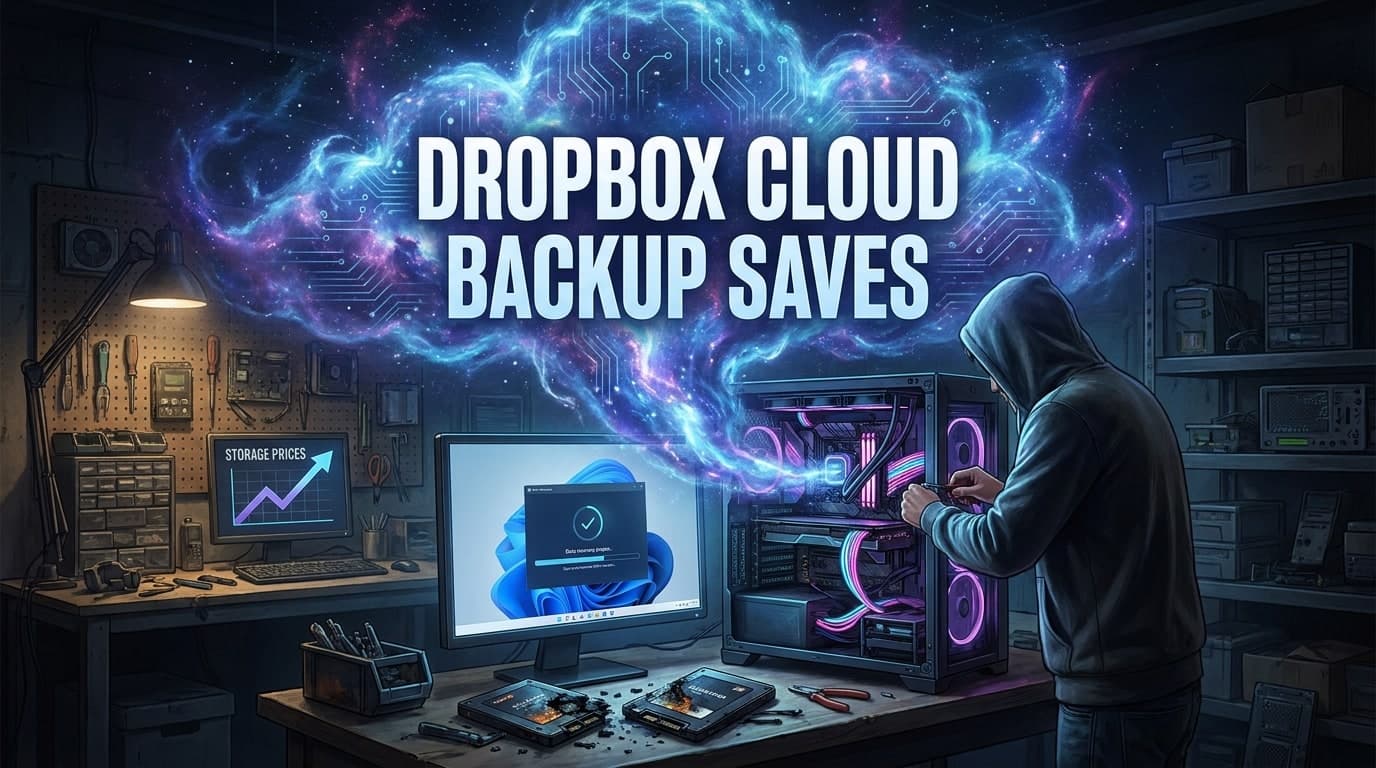
A Verge editor recovered his home-built PC twice after two solid state drives failed without warning, using only a Dropbox backup. The story matters because storage prices are climbing fast, making cloud backup cheaper insurance than ever against sudden hardware failure.
What actually happened
TC Sottek, a senior editor at The Verge, wrote that two separate 2TB Samsung 970 Evo SSDs in his PC failed without detection on boot, on two different occasions. He has used Dropbox since 2018, eight years. His family plan costs about $204 a year (USD), or $17 a month, covering up to six members. A solo plan runs $9.99 a month billed yearly, about $120 a year, for 2TB of storage. A 3TB upgrade costs around $143 a year. Dropbox allows file transfers up to 50GB. Sottek said he averages 20Mbps upload speed and can download his 1TB synced library in about two hours on a gigabit connection. He now uses a 2TB Samsung 990 Evo Plus, which he said costs almost twice what his original drive cost.
How we got here
Sottek began using Dropbox in 2018 while managing a large crowdfunded game design project, worried about losing locally stored files despite having home backups. He mirrored his entire work partition to the cloud as insurance. Component prices have since risen sharply, making local redundancy, including RAID setups and airgapped drives, more expensive to maintain. That shift has pushed more PC builders toward subscription cloud backup as a cheaper alternative to buying extra physical drives.
Why this matters for you
For PC builders and creators managing large local files, this account is a reminder that backup cost is now a hardware decision, not an afterthought. Dropbox's $120 to $204 a year range competes against alternatives like Backblaze's $99 a year unlimited plan, Apple iCloud Plus, and Adobe Creative Cloud backups. Anyone storing wallets, keys, or project files locally faces the same tradeoff Sottek described: cloud convenience versus the control of offline storage. As SSD and component prices rise, the relative cost of cloud insurance keeps falling.
The bigger question
As local storage hardware gets more expensive, how much of anyone's most important data should live only on machines they physically control, versus in someone else's cloud?
What to watch
The Verge published this account on 9 August 2026, reflecting current storage and subscription pricing at that time. Watch for further shifts in SSD prices, which Sottek noted have already roughly doubled for his current drive, and for any pricing changes from Dropbox, Backblaze, or Apple as demand for personal backup grows.