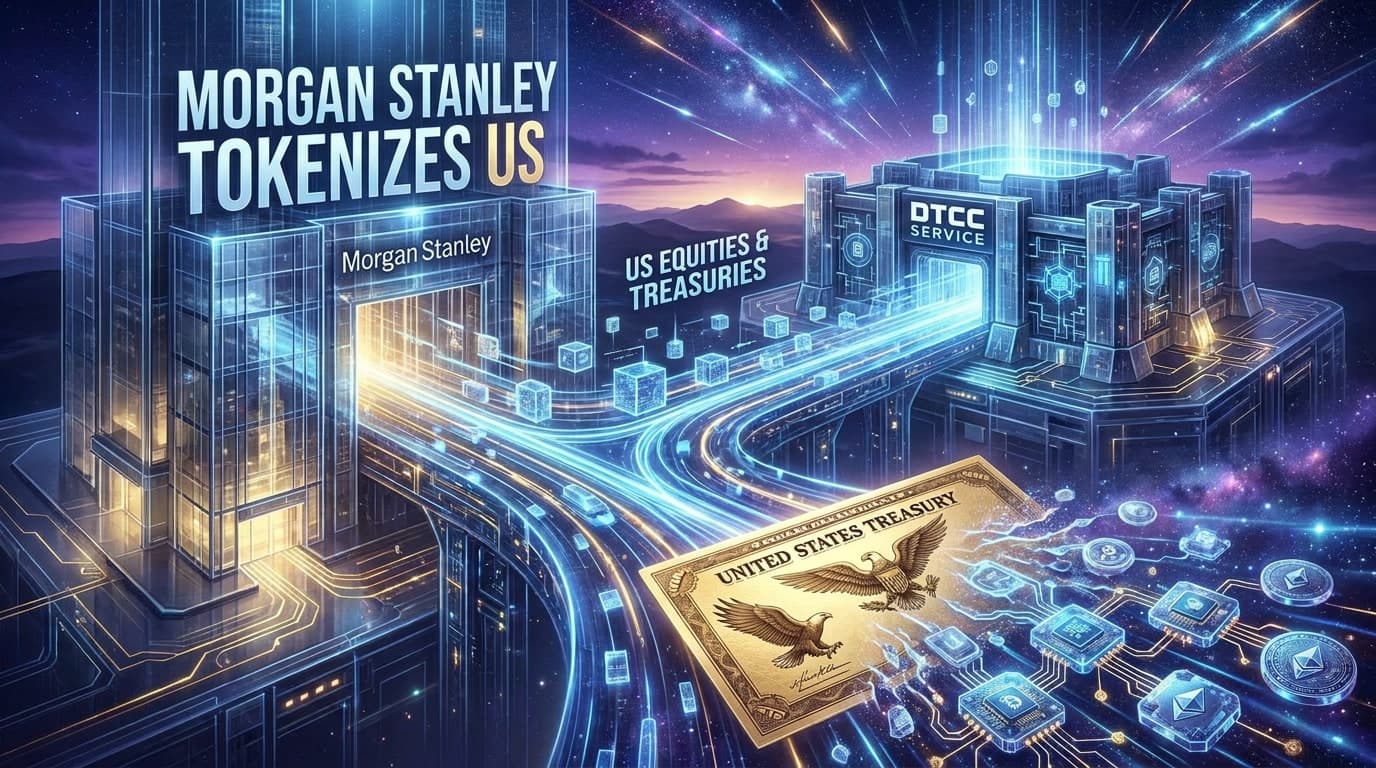
Morgan Stanley converted US equities and Treasurys into tokenized form, becoming one of the first banks to use DTCC's new tokenization service. The move signals that mainstream securities infrastructure is starting to run on blockchain-style rails, a shift that could reshape how trillions of dollars in assets settle and trade.
What actually happened
Morgan Stanley said it converted US equities and Treasurys into tokenized form through a new service from the Depository Trust and Clearing Corporation, according to The Block. The bank is among the first institutions to use DTCC's tokenization offering. DTCC is the primary clearing and settlement utility for US securities markets. The report, published 4 November 2026, did not specify transaction volumes, asset values, or a public statement from Morgan Stanley or DTCC executives. No regulatory filing or press release accompanied the disclosure in the source material. The exact scope of the tokenization was not detailed.
How we got here
DTCC sits at the center of US securities settlement, clearing most equity and Treasury trades nationwide. Tokenization, converting ownership records into blockchain-based tokens, has been discussed across traditional finance for years as a way to speed settlement and cut costs. Banks and asset managers have run isolated pilot programs with tokenized funds and bonds before. Morgan Stanley's move through DTCC's own service marks a step beyond those pilots, placing tokenization inside the clearing infrastructure most of Wall Street already relies on. The source material does not detail DTCC's broader rollout plans or name other participating banks.
Why this matters for you
For holders of traditional brokerage accounts, tokenized settlement could eventually mean faster trade finality and fewer reconciliation delays. For crypto and Web3 builders, DTCC's involvement shows established financial rails adopting blockchain concepts directly, rather than competing with them. This could open integration paths between traditional custodians and digital asset platforms. For other banks, Morgan Stanley's early move may set a competitive benchmark. Users of fintech and crypto apps may eventually see tokenized equities and Treasurys appear as tradable or collateral assets, though the source gives no timeline for broader availability.
The bigger question
If a central utility like DTCC tokenizes mainstream equities and Treasurys, where does that leave independent blockchain networks built for the same purpose? Does this strengthen trust in digital assets generally, or does it concentrate tokenized securities inside institutions that already dominate traditional finance? The answer could shape whether tokenization becomes an open layer or a closed extension of existing Wall Street plumbing.
What to watch
No further dates or milestones were disclosed in the source material. Watch for statements from DTCC or Morgan Stanley detailing transaction scope, other participating banks, or public availability of tokenized equities and Treasurys. Regulatory guidance on tokenized securities custody will also matter. As tokenization moves from pilots into core infrastructure, bonuz will track what it means for everyday access to these assets.