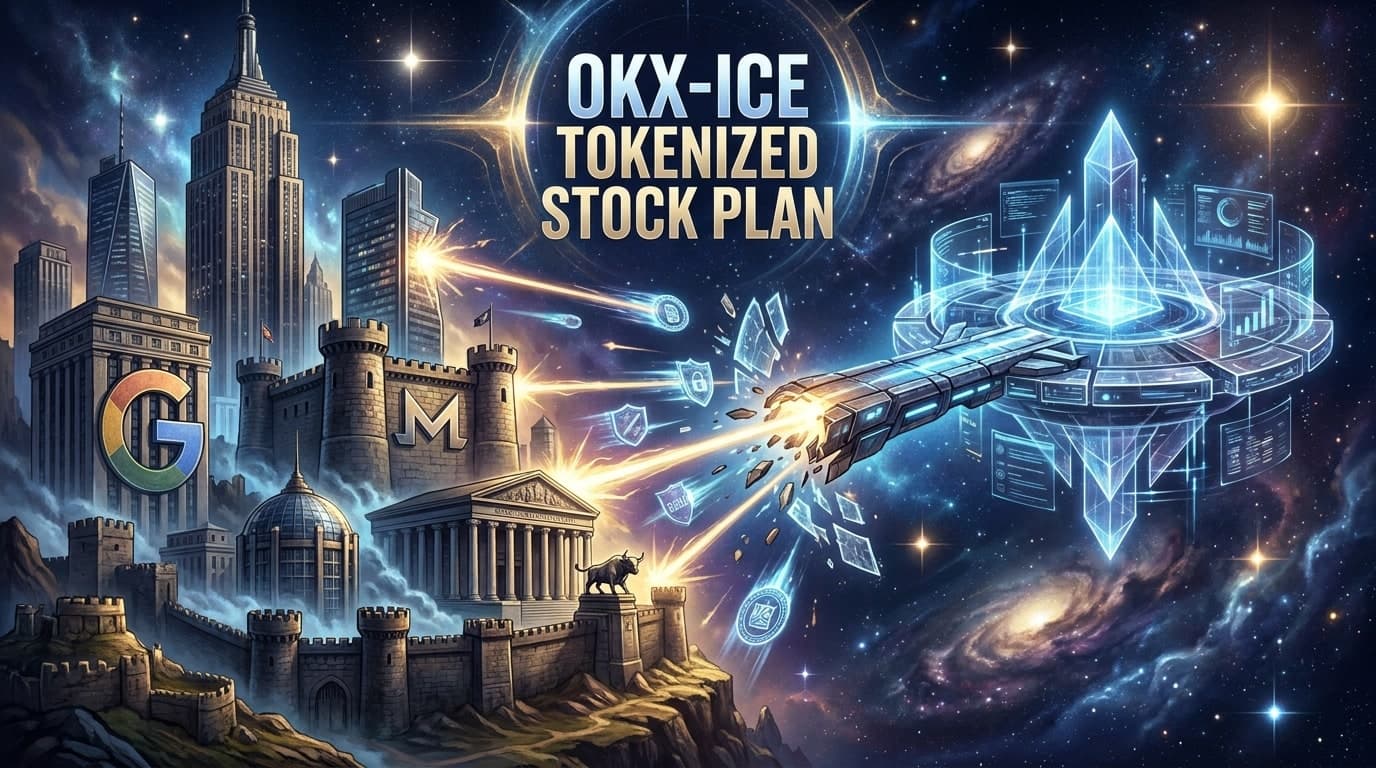
Sixteen major companies, including Microsoft, Alphabet and Goldman Sachs, have objected to trading tokenized versions of their shares on the planned OKX-ICE venue. OKX-ICE co-chair Andrew Cuomo called the pushback expected, not alarming. The dispute shows how traditional firms and crypto markets are testing the rules for round-the-clock, blockchain-based stock trading.
What actually happened
A public notice on Monday, 19 October 2026, showed 16 companies had objected to having tokenized shares traded on OKXICE, a venue planned by OKX and Intercontinental Exchange (ICE). Seven firms were newly disclosed: Microsoft, Alphabet, Goldman Sachs, Qualcomm, Caterpillar, McDonald's and Western Digital. They joined earlier objectors including Broadcom, Verizon and UnitedHealth. Speaking on a press call Tuesday, 20 October 2026, Andrew Cuomo, OKX-ICE co-chair and former New York governor, called the trend a 'natural response.' 'The model was designed to give companies the right to determine whether they want to opt in or opt out,' he said, according to CoinDesk. The objections fall under the SEC's five-year 'Innovation Exemption,' launched about a month earlier, which caps participating stocks and trading volume.
How we got here
Tokenized stock trading lets investors hold blockchain-based versions of company shares, with promises of around-the-clock trading. The SEC's Innovation Exemption, rolled out roughly a month before this dispute, gave venues like OKXICE a five-year window to test automated market makers and liquidity pools for equities, while letting issuers opt out. Securitize, a tokenization firm, announced an offering of 12 tokenized stocks this month, including Microsoft and Alphabet shares, planned for OKXICE. Carlos Domingo, Securitize's CEO, said issuer questions about pricing and shareholder rights reflect 'an important education process.' Vertalo CEO Dave Hendricks said the 30-day objection window is working as the SEC intended.
Why this matters for you
For investors, the objections mean fewer blue-chip stocks may appear on tokenized venues at launch, at least at first. For issuers, the opt-out mechanism gives companies control over whether their shares trade on new blockchain rails, without blocking separate tokenization offers from firms like Securitize. For builders, Vertalo's Dave Hendricks pointed to a missing piece: no system yet synchronizes trading between traditional exchanges and tokenized securities venues. That gap, he said, is why objections are 'the predictable result' for now. Cuomo suggested today's objectors could become tomorrow's participants once that infrastructure exists, meaning the list of eligible stocks may grow as rails mature.
The bigger question
If tokenized trading rails eventually connect smoothly with traditional exchanges, will the companies objecting today reconsider, as Cuomo suggests? Or does today's hesitation reflect a deeper, lasting divide between how public companies and crypto-native venues think about shareholder control, pricing and round-the-clock markets? The answer could shape whether tokenized equities become a mainstream complement to existing stock exchanges, or stay a niche experiment limited to companies willing to opt in early.
What to watch
The SEC's Innovation Exemption runs for five years from its rollout about a month ago, giving OKXICE time to test its sandbox model under caps on participating stocks and trading volume. Securitize's 12-stock tokenized offering, including Microsoft and Alphabet shares, remains separate from OKXICE listing decisions. Watch for further issuer disclosures as the 30-day objection window closes on additional companies, and for any infrastructure announcements addressing the exchange-to-blockchain syncing gap Hendricks described.