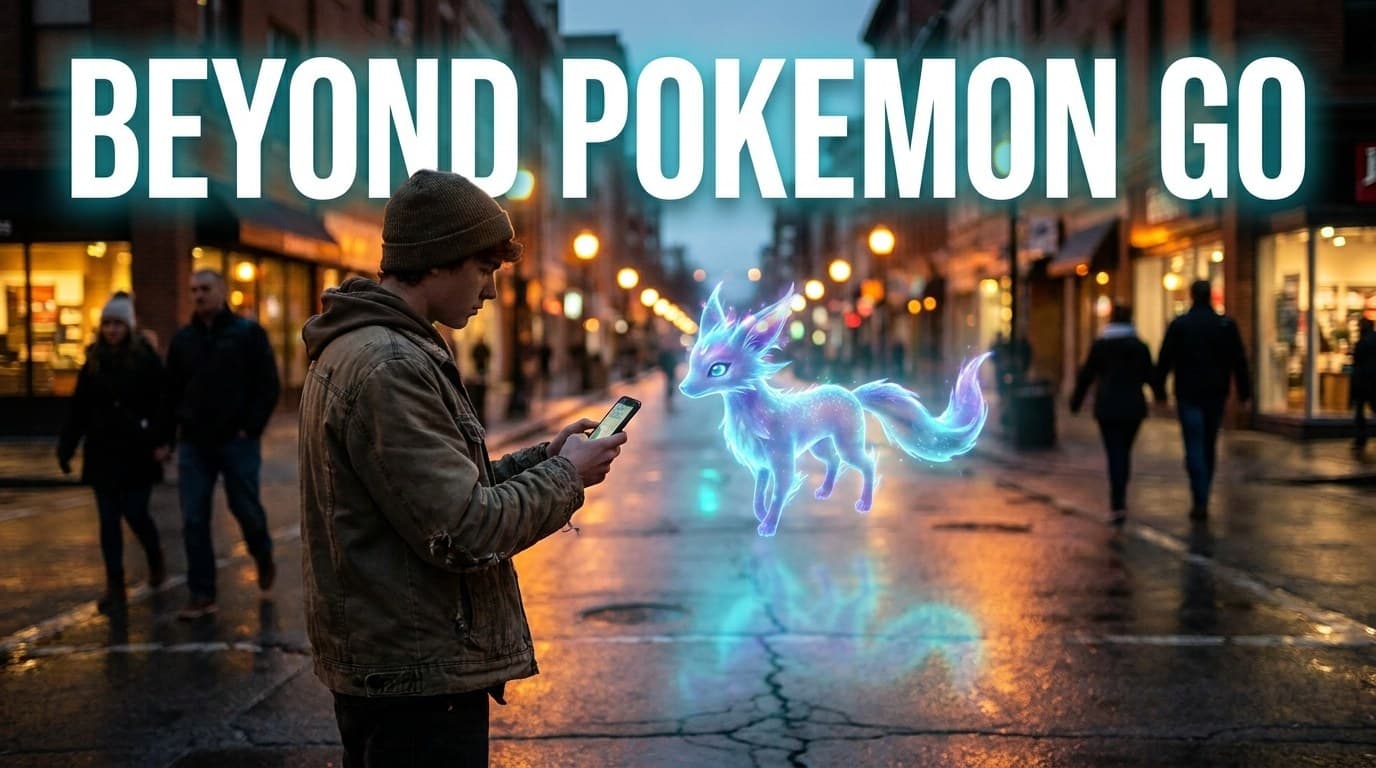
Ask anyone who was a teenager in 2016 what gamification means and they'll say one thing: Pokémon GO. Millions of people walking real streets to catch fictional creatures, with zero explanation needed for why it worked. Nintendo and Niantic didn't invent AR, and they didn't invent loyalty points either. What they did was combine both into something that felt like play instead of a chore, and it turned a niche mobile-gaming category into a mainstream habit almost overnight.
The game is still alive, but its ownership just changed hands in a big way. Niantic sold Pokémon GO and its other titles, Pikmin Bloom and Monster Hunter Now, to Scopely for close to $3.5 billion in 2025, keeping the AI and mapping technology for itself under a new venture, Niantic Spatial. In other words: the games were the product people loved, but the location-intelligence engine underneath, years of crowdsourced mapping data and real-time AR positioning, became the more valuable asset to keep.
Put in perspective, $3.5 billion for a decade-old mobile game franchise is a serious number, on par with entire mid-size gaming studios changing hands. It says the appetite for real-world, location-based play never went away; it just went quiet while the infrastructure caught up. A skeptic would point out that most "Pokémon GO clones" launched between 2017 and 2020 flopped, because copying the mechanic without the emotional hook (an existing universe of characters people already loved) rarely works. That's the lesson brands seem to have actually absorbed this time.
That's the part worth watching. The next generation of consumer apps isn't trying to make another catch-em-all game, it's taking the same ingredients (real-world presence, a sense of progress, a reason to show up somewhere) and building them into things people already use day to day: wallets, loyalty cards, identity systems, fitness trackers. Call it gamification without the game.
That's the bet behind bonuz too: an engagement layer where showing up, completing a quest, or holding a pass earns something real, without needing a decade-old mobile game or a licensed cartoon universe to make it fun. Watch this space over the next year for more loyalty and identity products quietly borrowing the Pokémon GO formula, minus the Pokémon.
What would get you walking outside for a digital reward today?