













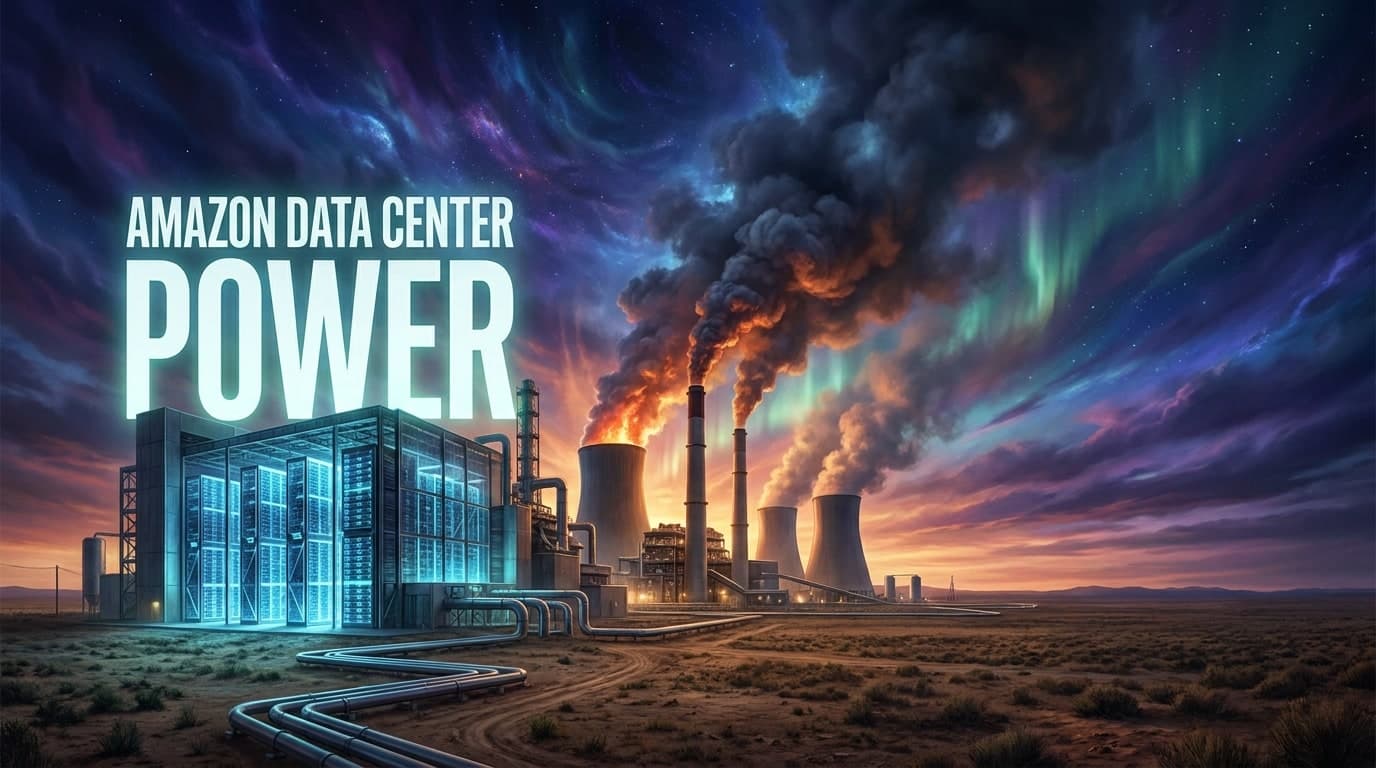
Amazon has bought a Texas gas plant permitted to emit up to 33 million tons of CO2 a year, more than any coal plant in the US. The move ties Amazon's fast-growing AI data center push directly to one of the country's dirtiest power sources, testing its long-standing climate pledge.
What actually happened
The plant, called GW Ranch, sits in Pecos County, Texas. It will run 35 natural-gas turbines producing 7.65 gigawatts of electricity, primarily for Amazon's new West Texas data center, according to The Verge. The site will not initially connect to the Texas power grid. Cleanview, which tracks data centers and their power projects, found that Texas granted GW Ranch a permit allowing up to 33 million tons of CO2 emissions, exceeding the largest US coal plant. Amazon confirmed it purchased the site and will buy power from it. Amazon spokeswoman Margaret Callahan told the New York Times, as cited by The Verge, 'The world looks different now than when we co-founded the climate pledge,' adding 'our commitment hasn't changed.'
How we got here
Amazon, Meta, and Google have all turned to gas, coal, and other fossil fuels to meet surging power demand from AI data centers, per The Verge. The Trump administration has pushed to ease restrictions on polluting power plants, making projects like GW Ranch easier to build. Jeff Bezos pledged in 2019 to make Amazon carbon neutral by 2040 through The Climate Pledge. Despite that promise, Amazon's emissions have risen for several straight years as AI infrastructure expands. Plants rarely emit their full permitted limit, but the permit's looseness signals shifting priorities amid the AI buildout.
Why this matters for you
For Amazon customers and AWS users, this signals more compute capacity but a heavier carbon footprint behind every AI query. For investors, it raises questions about how seriously Big Tech treats its own climate pledges when growth is at stake. For builders in AR and wearable tech relying on cloud AI, cheap, fast power matters more than ever, and gas plants like GW Ranch show how far companies will go to secure it. Regulators, activists, and rival tech firms will watch whether Amazon's approach becomes the norm or draws new restrictions on data center energy sourcing.
The bigger question
If AI's power needs keep outpacing clean energy supply, should companies be allowed to build fossil-fuel plants outside public grids to meet that demand? Amazon's Climate Pledge promised carbon neutrality by 2040, yet its emissions keep climbing. The GW Ranch permit raises a bigger question for the entire tech industry: can rapid AI growth and credible climate commitments coexist, or will one always be sacrificed for the other?
What to watch
Watch for updates on GW Ranch's construction timeline and whether it eventually connects to the Texas grid. Amazon's next Climate Pledge progress report will show whether 2026 emissions kept rising. Regulatory scrutiny from Texas environmental agencies and federal watchdogs could shape future permits for AI-linked power plants. As AR and wearable devices lean more on cloud AI, their environmental footprint will likely draw similar attention.