












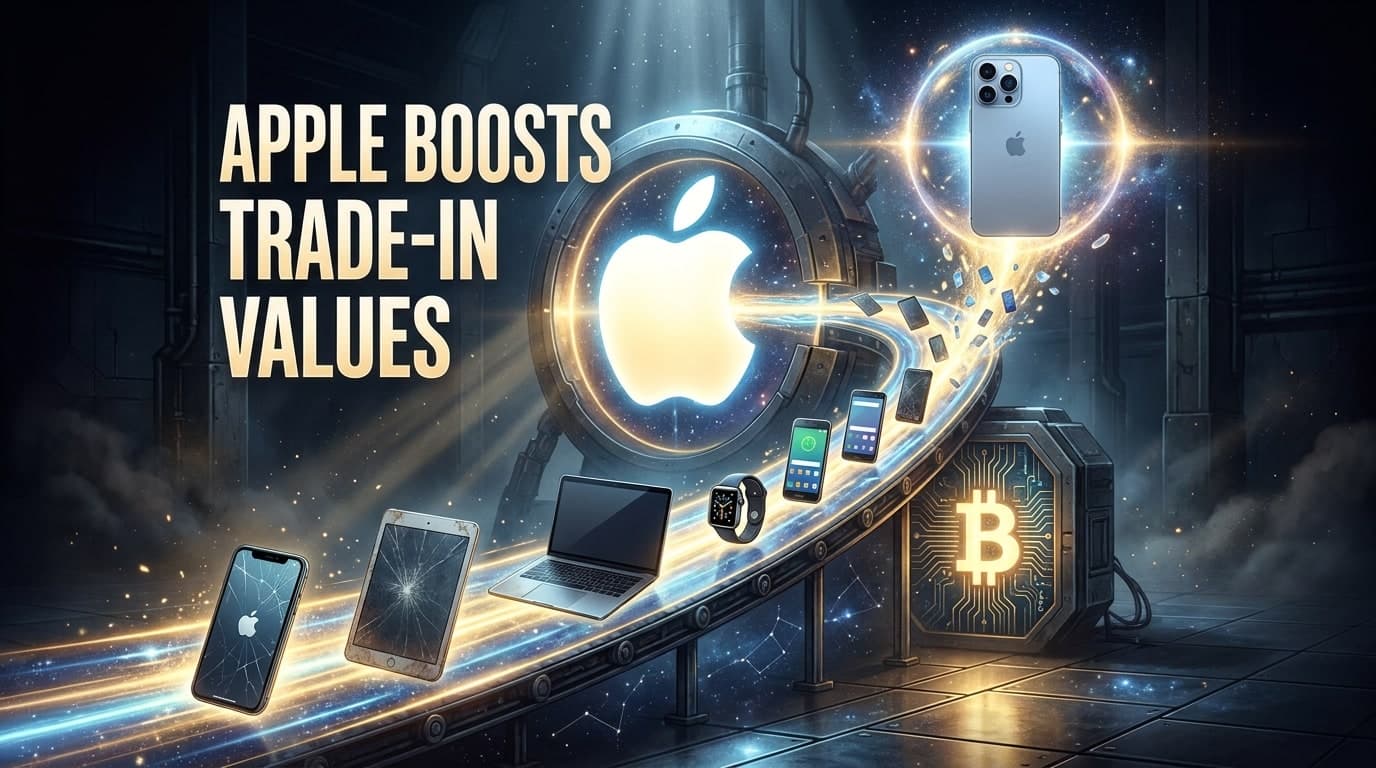
Apple raised trade-in values for iPhones, iPads, Macs, and Apple Watches, and added several new Android phones to its trade-in program. The move matters because it changes the real cost of upgrading, right as device prices keep climbing across the industry.
What actually happened
According to The Verge, citing 9to5Mac, Apple increased trade-in credit for most devices by $5 to $20. Some jumped higher. The Mac Studio's trade-in value rose $260, to $1,305 from $1,045. The MacBook Pro now trades for $855, up from $690. The Mac Pro rose to $2,195 from $2,045. Apple also added new Android trade-ins. The Samsung Galaxy S21 Ultra 5G now earns $95. The Google Pixel 9 Pro XL earns $315, the Pixel 9 Pro $305, and the Pixel 9 $210. The OnePlus 13 earns $250, and the OnePlus 13R earns $165. Not every device gained value. The Samsung Galaxy S22 Ultra 5G dropped to $125 from $130. The Google Pixel 8 Pro fell to $155 from $165.
How we got here
The higher trade-in values follow a wave of Apple price increases announced earlier this year, ranging from $30 to $4,200 (USD) across its lineup, per The Verge. Apple also launched a new Upgrade leasing program last month, aimed at easing the cost of its pricier devices. Trade-in programs have long served as a bridge between old and new hardware. As phones, tablets, and computers get more expensive, credit for used devices becomes a bigger factor in whether people upgrade at all. Apple's adjustments track closely with list price changes, suggesting trade-in value is now part of its broader pricing strategy, not a separate program.
Why this matters for you
For current Apple device owners, this is a modest win. Older Macs and Pros now fetch noticeably more credit toward a new purchase, which could nudge hesitant upgraders. For Android switchers, newer Pixel and OnePlus models now qualify for solid trade-in values, lowering the entry cost into Apple's ecosystem. For builders and hardware makers watching the broader trend, including those developing wearables and AR glasses, trade-in economics matter. As smart glasses and other next-generation devices arrive, resale and trade-in infrastructure will shape how quickly people cycle through hardware generations. Higher trade-in values today could set a pattern for how future device categories get priced and adopted.
The bigger question
As device prices keep rising, will trade-in credit growth keep pace, or will upgrading eventually outpace what most people can recover from their old hardware? Apple's latest adjustments narrow that gap for now, but price hikes have moved faster than trade-in bumps in some cases. If future device categories, like AR glasses, follow the same pricing pattern, will trade-in programs become essential to affordability, or will they remain a minor perk for a shrinking group of upgraders?
What to watch
Apple did not announce a specific date for further trade-in adjustments. The price hikes referenced were announced earlier this year, and the Upgrade leasing program launched last month, per The Verge. Readers watching the AR glasses space should note that trade-in and leasing models like these often preview how companies plan to make future hardware, including smart glasses, more affordable at launch.