











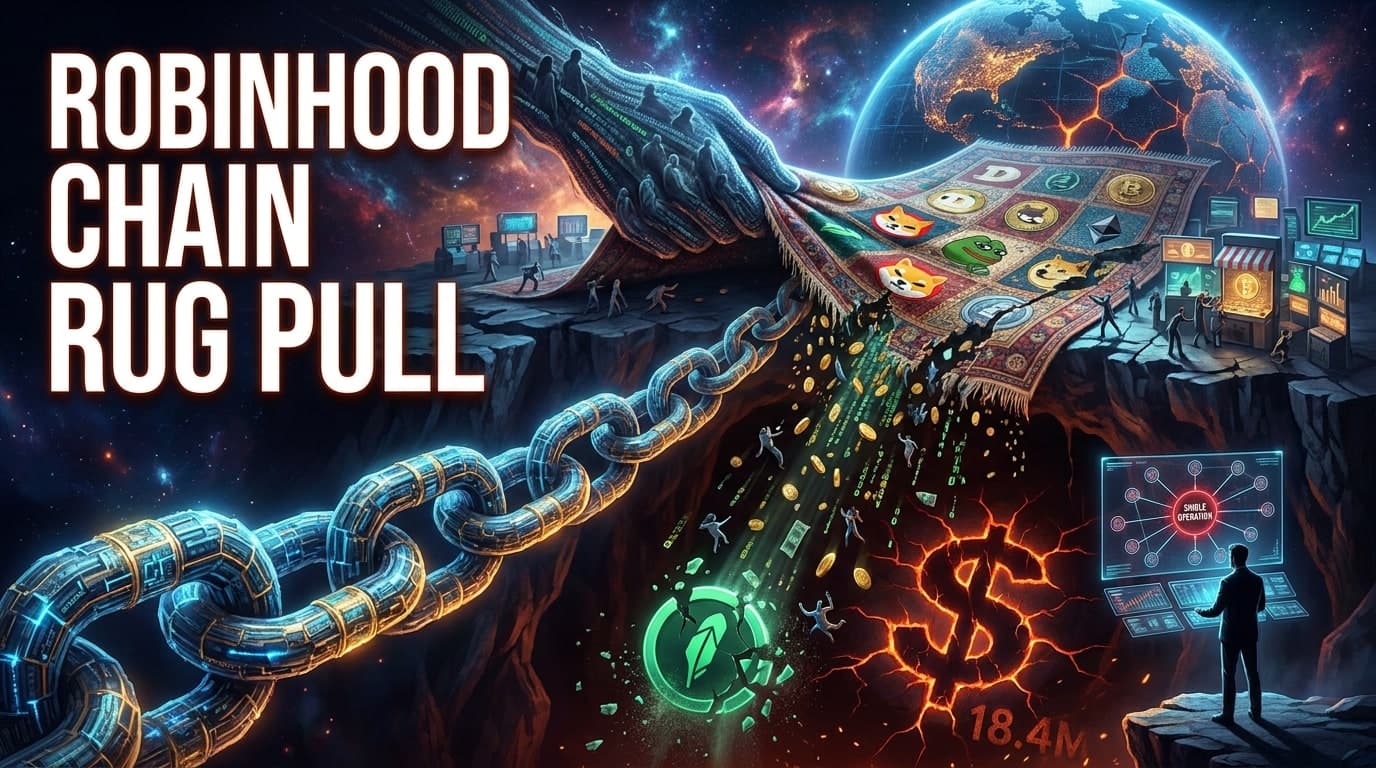
An onchain analyst has linked $18.4 million (USD) in memecoin losses on Robinhood Chain to a single rug-pull operation. The scheme allegedly used 10 Pons V2 token launches and tax-exempt wallets, a warning for anyone trading new tokens on emerging chains.
What actually happened
According to The Block, an onchain analyst traced $18.4 million (USD) in memecoin extractions on Robinhood Chain to one operation. The findings center on 10 separate launches of a token called Pons V2. Each launch included an anti-sniping tax, a mechanism meant to stop early buyers from grabbing supply before public trading begins. Onchain data shows the creators exempted certain wallets from this tax. Those exempted wallets then bought most of each token's supply, according to the report. The pattern repeated across all 10 launches, the analyst found. The report did not name the analyst or the specific wallets involved.
How we got here
Robinhood Chain is a newer blockchain network tied to the Robinhood brand, drawing retail traders eager for early token launches. Anti-sniping taxes became common after earlier memecoin cycles, when bots and insiders bought up supply within seconds of launch, locking out ordinary buyers. Pons V2 marketed itself as protected against this behavior. The wallet exemptions described by the analyst undermine that promise. Rug pulls, where insiders drain value from a token after attracting buyers, have shadowed nearly every memecoin wave since 2021. The scale here, spanning 10 coordinated launches, suggests a repeatable playbook rather than a one-off scam.
Why this matters for you
For traders, this is a reminder that anti-sniping mechanisms only work if creators cannot exempt themselves from them. Anyone buying a new token should check for wallet exemptions before assuming a fair launch. For builders on Robinhood Chain, the report adds pressure to publish exemption lists before launch. For the chain itself, repeated rug-pull reports could slow adoption among retail users who expected a more consumer-friendly reputation. Holders of Pons-related tokens may face further scrutiny or delistings if exchanges act on these findings.
The bigger question
If a blockchain carries a trusted consumer brand name, who is responsible when its tools get used to build a rug pull: the chain operator, the token creators, or the platforms that list the tokens? Robinhood Chain did not build Pons V2, but its reputation is now tied to the outcome.
What to watch
No court filings, exchange delistings, or official Robinhood statements have been reported yet. Watch for whether the analyst or the wallets involved are named publicly. Watch also for any response from Robinhood Chain's operators or from exchanges listing Pons-related tokens.