













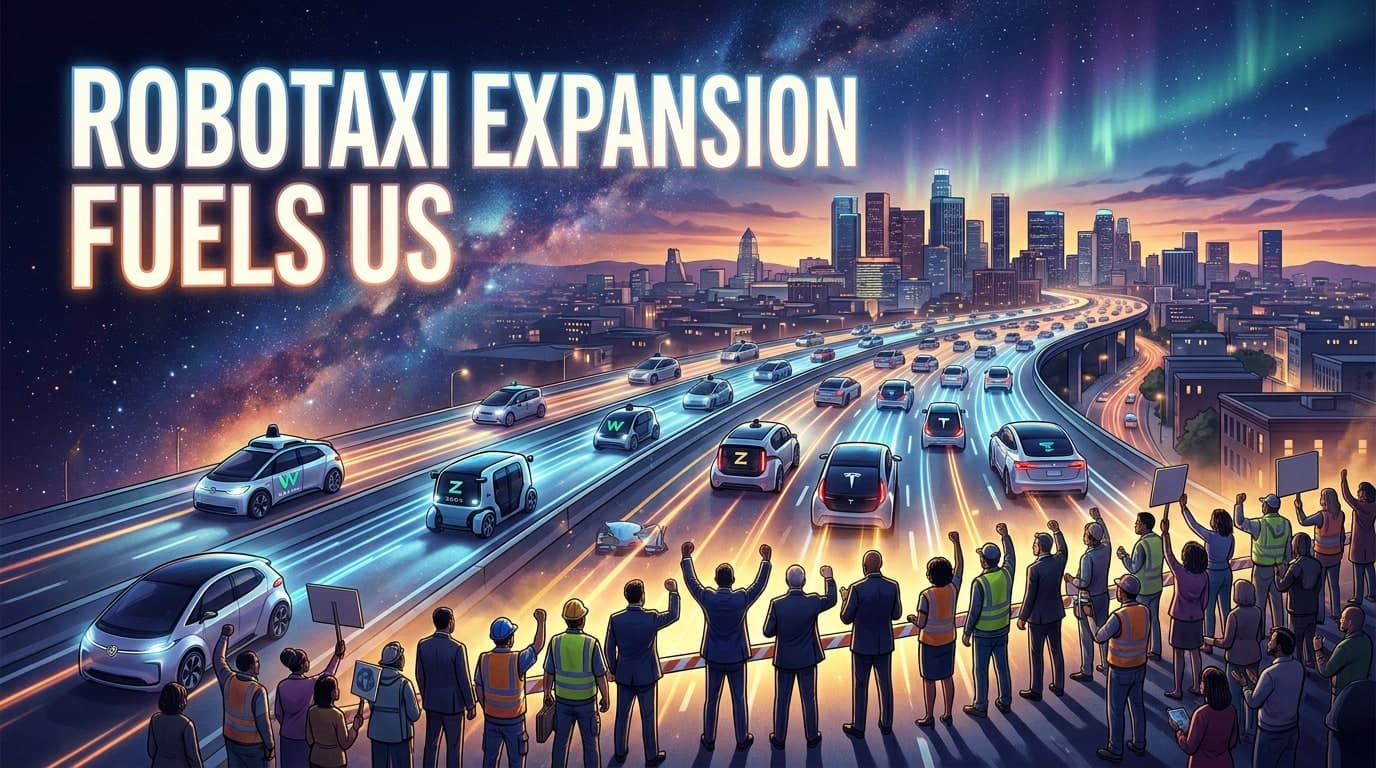
Robotaxi fleets are spreading across US cities, and organized resistance is spreading with them. Waymo, Zoox and Tesla are expanding service while lawmakers, unions and city officials push back over safety, jobs and control. The outcome will decide how fast autonomous vehicles reach streets beyond today's test cities.
What actually happened
In New York, Governor Kathy Hochul withdrew a proposal this year that would have allowed driverless robotaxis outside New York City, after opposition from taxi drivers and unions, according to The Verge. In Washington DC, lawmakers are weighing a 200-vehicle cap and a 15 cent per mile fee. California police can now cite autonomous vehicle makers directly for traffic violations, a policy that began in July. Waymo operates more than 3,500 vehicles across 11 US cities and provides over 500,000 paid rides a week, compared with Uber's roughly 40 million daily trips worldwide. Zoox began paid rides in Las Vegas. Sen. Ed Markey said, "our regulatory structure amounts to this: we hope they're telling the truth."
How we got here
Autonomous vehicle testing has run for years, but 2026 marks a shift from pilot programs to visible commercial fleets. Waymo's steady growth, Zoox's driverless design and Tesla's push toward its Cybercab have moved the technology from research labs onto everyday streets. That visibility has intensified scrutiny. San Francisco Mayor Daniel Lurie, once a robotaxi supporter, now calls for tougher rules after Waymo vehicles disrupted traffic during emergencies. Federal regulators, including NHTSA, have warned companies about vehicles failing to yield to first responders. The jobs debate, raised by unions for years, has grown alongside fleet size.
Why this matters for you
For riders, expansion means more cities may soon offer robotaxi service, though state rules could slow rollout in places like New York. For workers in taxi, trucking and delivery industries, automation fears are intensifying, with groups like the Teamsters pushing for human operators aboard heavy autonomous vehicles. For companies building these systems, new permitting, sensor and safety-reporting rules could raise costs but also legitimize the technology over time. For hardware and sensor builders, stricter standards could open opportunities in vehicle-perception systems, as regulators push back on camera-only setups.
The bigger question
As autonomous fleets grow from thousands to potentially hundreds of thousands of vehicles, who should set the pace: federal regulators, state legislatures, or the cities living with the daily consequences? The current patchwork of rules suggests no clear answer yet.
What to watch
Tesla's Cybercab is expected to launch later this year. Zoox plans to extend its Explorer program to Austin and Miami later in 2026. Washington DC lawmakers continue debating the proposed vehicle cap and mileage fee. New Jersey and New York legislators are reviewing new AV safety proposals in the coming months.