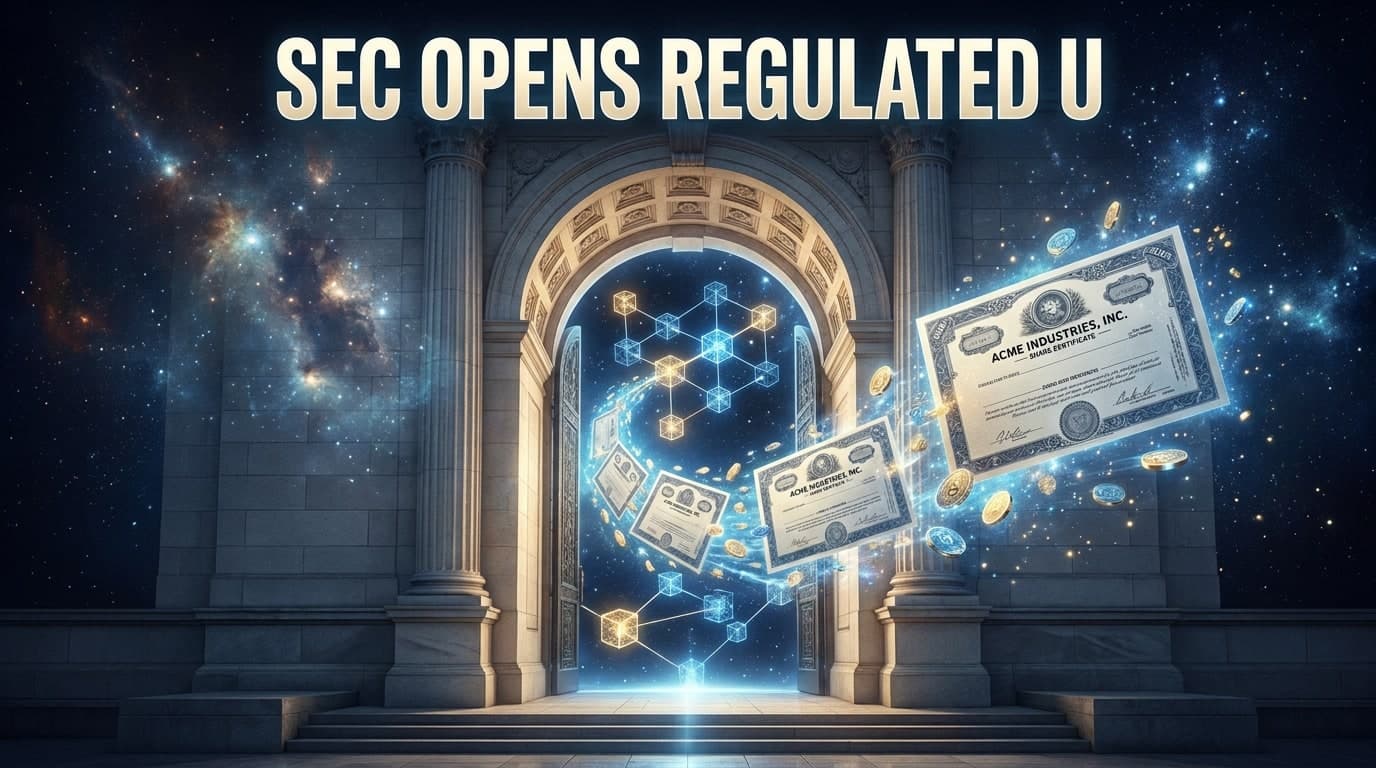













The US Securities and Exchange Commission approved a temporary exemption letting tokenized US stocks trade on blockchain platforms. The decision opens a pilot program that could change how investors buy and hold shares, and it shows regulators are willing to test on-chain markets at scale.
What actually happened
The SEC's Innovation Exemption lets qualified Tokenized Securities Venues trade tokenized National Market System stocks without being classified as exchanges, according to WuBlockchain. SEC Chair Paul Atkins said the exemption also frees certain liquidity providers from the legal definition of a dealer. Four conditions apply. Venues must be US entities following OFAC sanctions rules. Access is permissioned. Synthetic stocks are banned, and tokenized shares must carry the same dividend and voting rights as regular shares. Issuers can block their stock from trading on any venue. AMC Chairman and CEO Adam Aron called it a five-year pilot and urged Robinhood to apply the same investor protections overseas.
How we got here
The tokenized stock approval landed the same week the CLARITY Act failed in the US Senate, falling short of the 60 votes needed to advance. The Federal Reserve also raised rates to 3.75% to 4.00%, and the European Central Bank's Christine Lagarde reportedly blocked Binance's EU license bid through Greece. Regulators worldwide are moving at different speeds. The UK's FCA said banks can keep blocking crypto payments even after new rules start on 25 October 2027. Against that backdrop, the SEC's willingness to greenlight a live pilot stands out as an unusually concrete step.
Why this matters for you
For investors, tokenized shares could mean faster settlement and broader access to US equities from anywhere with an internet connection. For builders, the permissioned framework sets a template other regulators may copy or reject. For crypto platforms and wallet makers, including those building wearable and AR interfaces for finance, a clear on-chain stock standard lowers the risk of designing products around rules that could vanish. Holders of exchange tokens and infrastructure projects tied to tokenization should watch which venues qualify first.
The bigger question
If tokenized stocks succeed under strict US rules, will other regulators adopt the same investor protections, or will looser overseas standards create a two-tier market for the same shares?
What to watch
The SEC will collect public comments before deciding on permanent rules, within a five-year pilot window. The UK's FCA opens authorisation applications on 30 September 2026, with a guidance consultation in October. CoinEx suspends withdrawals on 22 December after nine years of operation. Bonuz will track how tokenized asset rules shape the wearable and Web3 hardware layer as these pilots unfold.