Tether's CEO publicly disputed a Senate Democrats' report accusing the stablecoin issuer of aiding Iran sanctions evasion. He says the probe ignored proactive freezes. The clash matters because it could shape how regulators treat the world's largest stablecoin amid rising scrutiny of crypto's role in illicit finance.
What actually happened
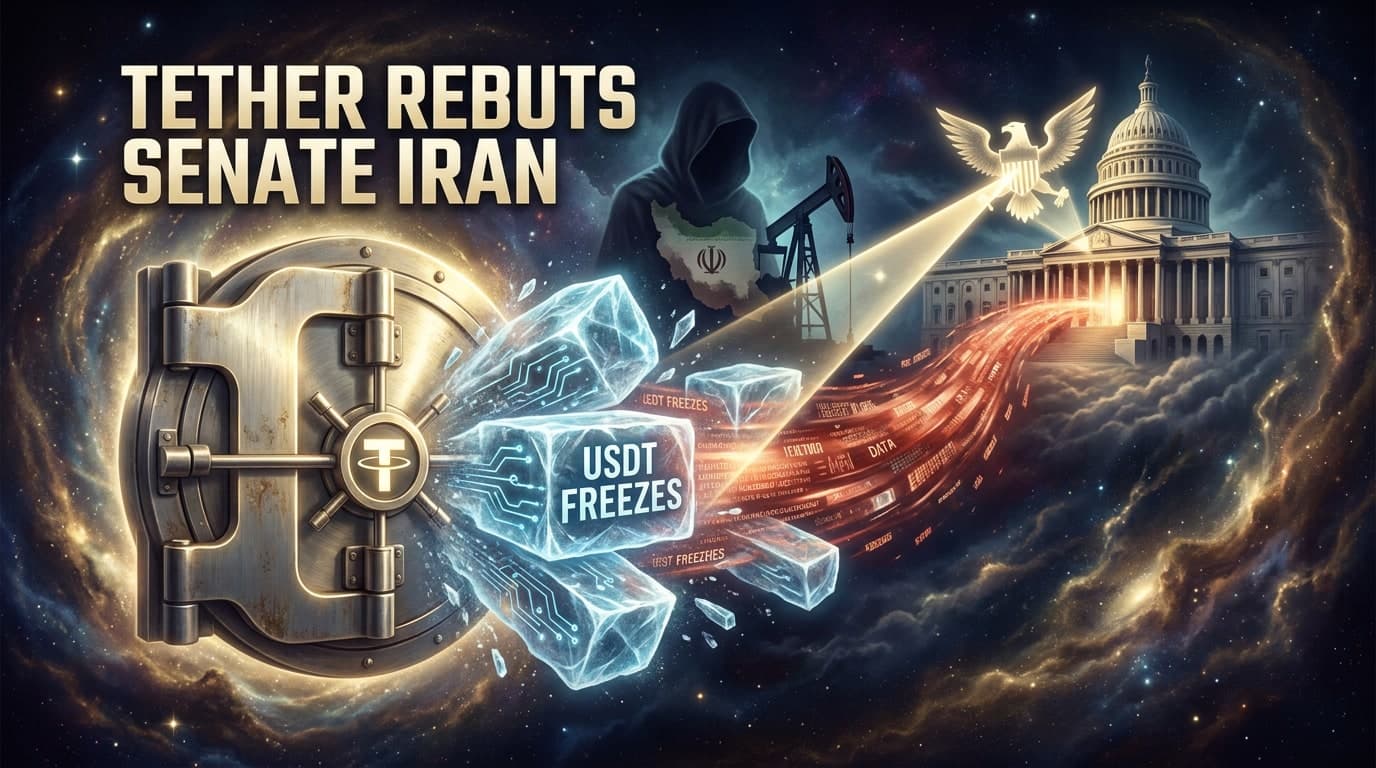
Tether CEO Paolo Ardoino said on 19 October 2026 that a Senate report missed his company's compliance record, according to CoinDesk. He wrote on X that since 2023, Tether froze suspicious addresses on average 4 weeks before the U.S. Treasury's OFAC and Israel's NBCTF issued formal sanctions. He said 99% of frozen addresses were flagged before Chainalysis labeled them. Ardoino said these actions led to a 94% decline in Iran-linked stablecoin volumes. He also spoke remotely at DC Fintech Week the previous Tuesday, criticizing the report's release to media before Tether could review it. "I believe it's important for the public also to hear our side of the story," he said. The Senate report, led by Senator Richard Blumenthal, top Democrat on the Senate Permanent Subcommittee on Investigations, accused Tether of providing "a significant financial lifeline within Iran's shadow banking network."
How we got here
The Senate report covered years before 2024, when it said Tether did not comprehensively freeze flagged wallets. It stated this gap let groups such as Hamas shift from bitcoin to USDT. A separate CoinDesk report detailed a $344 million (USD) USDT freeze tied to U.S. action against Iran's regime. Blumenthal has since expanded his inquiry to Tether's ties with Cantor Fitzgerald, a firm close to the Trump administration. Tether named Bo Hines, Trump's former White House crypto adviser, as CEO of its U.S. division last fall.
Why this matters for you
For USDT holders, continued scrutiny could affect regulatory standing and banking access for the token. For builders, the dispute highlights how compliance speed, not just final sanctions lists, may become a benchmark for stablecoin issuers. For policymakers, the fight over data and timing could shape future crypto sanctions rules. If Democrats regain the Senate majority, Blumenthal could gain expanded investigative power over Tether and similar firms.
The bigger question
Should crypto firms be judged on how fast they act before official sanctions, or only on compliance with formal government designations once issued?
What to watch
Watch for further moves in Blumenthal's inquiry into Tether's relationship with Cantor Fitzgerald. Prediction market Kalshi shows rising odds that Democrats retake the Senate, which could expand Blumenthal's oversight powers. No new hearing date was given in available material.