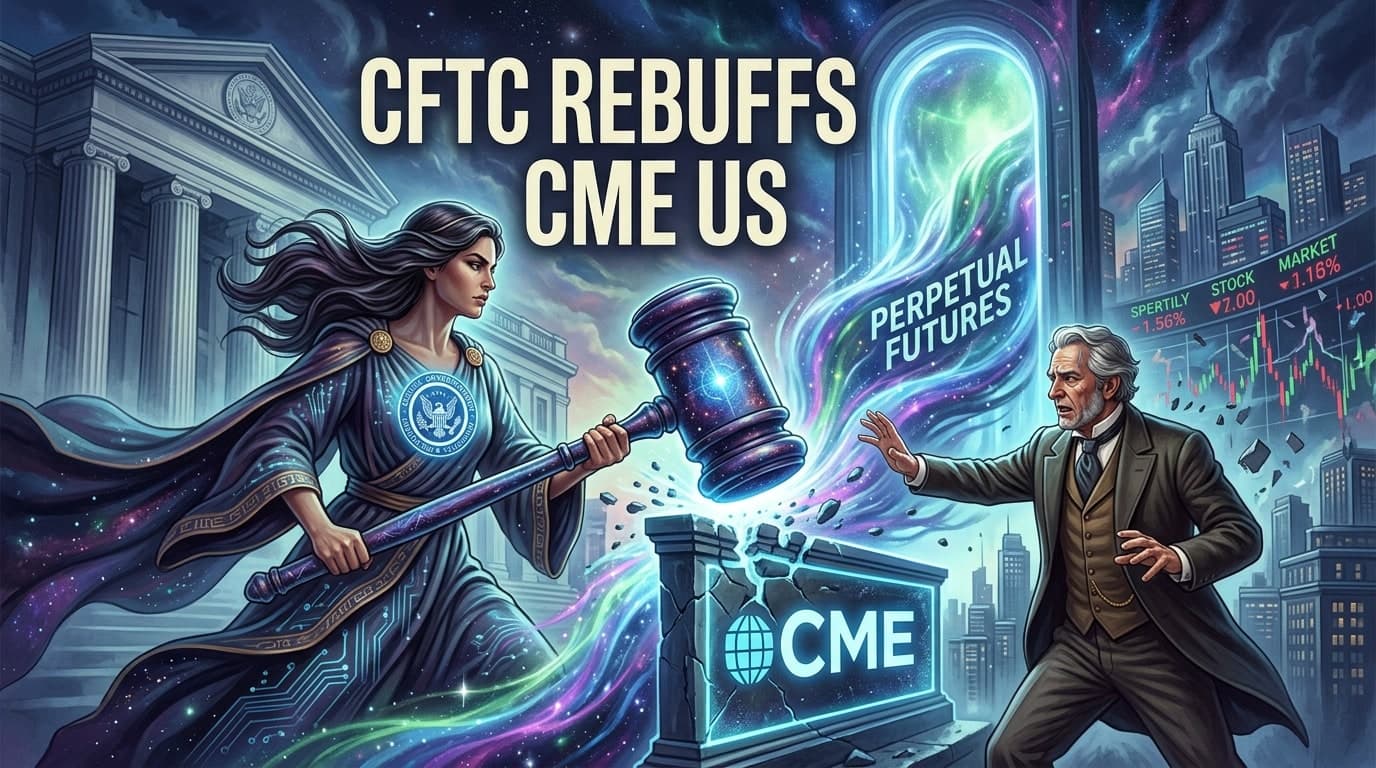
The U.S. CFTC says CME Group has shown no real harm from its new perpetual futures policy, and cannot block it in court. The outcome will decide how perpetual futures trade in the United States, a market already booming overseas.
What actually happened
The U.S. Commodity Futures Trading Commission (CFTC) filed a brief on Friday, arguing that CME Group has not shown real harm from the agency's new perpetual futures policy, according to CoinDesk. The CFTC approved its first bitcoin perpetual futures contract from Kalshi in May 2026, opening the U.S. market to perps. CME sued, claiming the products are swaps, not futures, because they have no expiration date. The CFTC countered that CME 'must plausibly allege an actual or imminent increase in competition' and 'has not even done that.' The agency also said crypto futures volume at CME has risen since the policy shift. CME did not immediately respond to a request for comment.
How we got here
Perpetual futures let traders speculate on an asset's price with leverage and no set end date. The contracts have grown into a major share of global crypto derivatives trading, mostly offshore. In May 2026, the CFTC responded to President Donald Trump's push to bring perps onshore by agreeing to regulate them case by case as futures. CME, which runs the world's largest derivatives exchange, objected in court soon after. The CFTC first asked a judge to dismiss CME's case last month. This brief expands that argument, saying CME cannot claim harm in court while telling investors on earnings calls it sees little demand for perps.
Why this matters for you
If the CFTC prevails, more U.S. firms could launch regulated perpetual futures, giving American traders domestic access to products long available only offshore. That could pressure CME's dominance in crypto derivatives and open space for newer platforms like Kalshi. For builders, the case will decide whether perps face futures rules or lighter swaps rules, shaping product design and compliance costs. For traders, a drawn out legal fight means uncertainty about whether new domestic perp contracts stay available if CME eventually wins and the market must unwind.
The bigger question
Should perpetual futures be regulated as futures, as swaps, or as an entirely new category? The answer will shape how leveraged crypto trading works in the United States for years. It also raises a harder question: can a fast growing market be safely unwound if courts later reverse the CFTC's decision? Regulators, exchanges, and traders all have a stake in how that gets resolved.
What to watch
A federal judge has not yet ruled on the CFTC's motion to dismiss CME's lawsuit. TD Cowen analyst Jaret Seiberg said in a Monday note that perp market growth during the litigation could complicate any future unwind if CME wins. Watch for the judge's decision on standing, and for any new perpetual futures approvals following Kalshi's bitcoin contract.