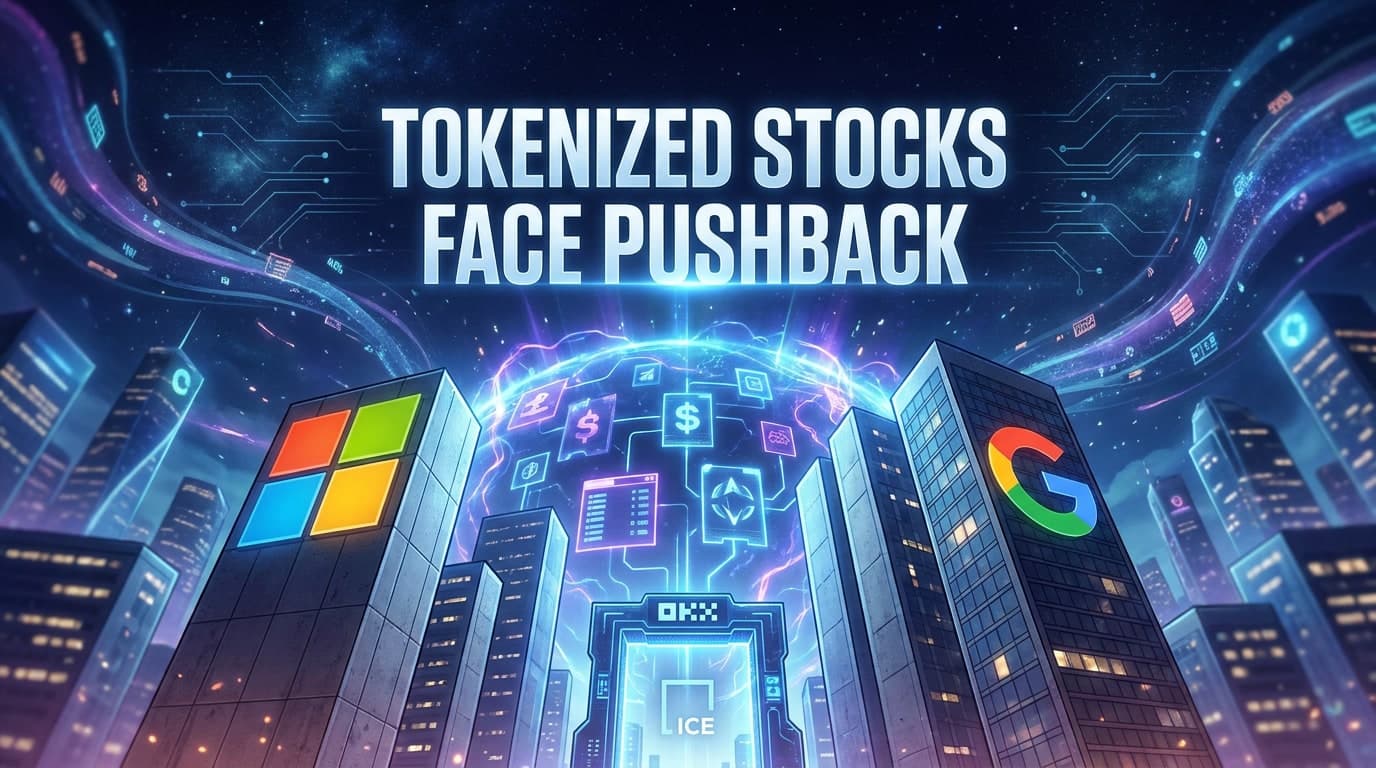
Microsoft, Alphabet, Goldman Sachs, McDonald's and 18 other companies have objected to having their shares traded as tokens on a new U.S. venue built by OKX and the New York Stock Exchange's parent, ICE. The pushback tests whether Wall Street will actually embrace tokenized stocks under a fresh SEC exemption.
What actually happened
The disclosed objector count reached 22 this week, after Microsoft (MSFT), Alphabet (GOOG, GOOGL), Goldman Sachs (GS) and McDonald's (MCD) objected on Monday, followed by Wells Fargo (WFC), Cisco (CSCO) and others on Friday, according to CoinDesk. Under the SEC's innovation exemption, a trading venue must notify an issuer and wait 30 days before listing tokenized shares. Silence counts as consent. Law firm Latham and Watkins has warned that once the window closes, there is no way to object later or withdraw a non-objection. 'Most of these companies had no idea a third party had tokenized their stock until the OKXICE notice went up,' Dave Hendricks, CEO of Vertalo, told CoinDesk. Securitize and BitGo both said they do not plan to object.
How we got here
The SEC's framework emerged about a month ago as the first formal path for trading tokenized U.S. equities, built jointly by OKX and ICE. Advocates hoped it would quickly bring major stocks onto crypto infrastructure. Instead, the first real test produced hesitation. Nasdaq, a vocal tokenization supporter, said it will object to tokenizing its own stock (NDAQ) under this exemption, warning that trading venues outside the National Market System could fragment liquidity and weaken price discovery. Nasdaq is pursuing its own tokenization model inside the existing exchange framework instead, according to CoinDesk.
Why this matters for you
For issuers, the 30-day, irrevocable window makes caution the safer default until legal and investor-relations teams understand custody, dividends and voting mechanics. For tokenization platforms like OKX-ICE, each objection narrows the initial pool of tradable names and slows momentum. For investors eyeing tokenized shares, the upside is still unproven; TD Securities' Reid Noch noted that added demand, especially from overseas buyers, may not yet offset the risks of thin, 24/7 trading outside familiar market structure. Builders in tokenization will likely need to invest in education, as Securitize is already doing, before more issuers say yes.
The bigger question
If objecting costs nothing and staying silent becomes a permanent, irreversible decision, will any major public company ever choose to opt in voluntarily? Or does tokenized stock trading only grow once regulators flip the default from opt-out to opt-in, giving issuers more time and clearer answers on custody, dividends and voting before shares move onchain?
What to watch
Watch for the disclosed objector list to keep growing as OKX-ICE sends more 30-day notices, and for the next tokenized-securities venue to face similar pushback. Securitize has said it is running webinars to educate issuers on custody and shareholder rights. Nasdaq's competing tokenization model, built inside the existing exchange framework, is another track worth tracking as the SEC's exemption evolves.